












Authored by: Zhang Peng, Charge d’Affaires of the Chinese Embassy in Antigua and Barbuda
Recently, surveys of multiple international polling institutions have shown an ongoing increase in favorable views of China. According to a poll jointly conducted by German political foundation Friedrich-Ebert-Stiftung, Latin American social sciences journal Nueva Sociedad, and other institutions, 36.1% of the 12,000 respondents in 10 Latin American countries regard China as the best reference for regional states in terms of development, ranking first among major countries around the globe. Similarly, Pew Research Center recorded in July that 36 countries surveyed reflect a more positive attitude toward China, with a median rate of favor as high as 46%.
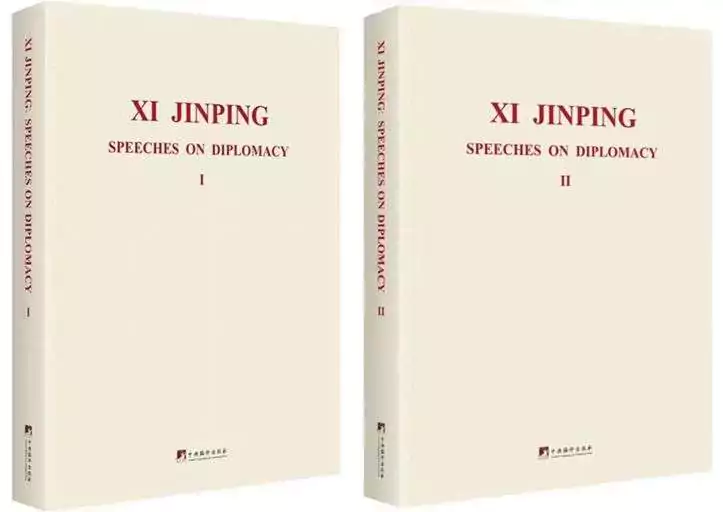
What boosts the international community’s favorability toward China? The primary reason lies in the leadership of H.E. Xi Jinping, President of the People’s Republic of China and practice of Xi Jinping Thought on Diplomacy. Under the scientific guidance of Xi Jinping Thought on Diplomacy, China upholds the vision of building a community with a shared future for mankind, stands at the forefront of championing true multilateralism, and remains committed to being a builder of world peace, a contributor to global development, a defender of the international order and a provider of public goods, winning ever-wider recognition and support of the international community.
Firstly, the vision of a global community with a shared future has galvanized international consensus. In 2013, bearing in mind the common interests of the Chinese people and people across the world, President Xi proposed to build a global community with a shared future jointly. Rooted in a new type of international relations featuring mutual respect, fairness, justice, and win-win cooperation, this important vision transcends traditional theories of international relations and charts a new paradigm for interactions between countries, winning broad understanding and recognition from the international community. To date, more than 100 countries and international organizations have expressed their support to the vision, and nearly 80 percent of people around the world are in favor. In May 2025, at the Fourth Ministerial Meeting of the China-CELAC Forum, President Xi announced the launch of five programs for building a China-LAC community with a shared future, namely Solidarity Program, Development Program, Civilization Program, Peace Program and People-to-People Program, receiving positive responses from countries in Latin America and the Caribbean, including Antigua and Barbuda. China’s relations with the region have entered a new stage of high-quality development, with exchanges and cooperation across all areas shifting into “fast lane”.

Secondly, the Belt and Road Initiative (BRI) has won international popularity. In 2013, with a vision to advance win-win cooperation and common development between China and the rest of the world, President Xi raised the major initiatives of building the Silk Road Economic Belt and the 21st-Century Maritime Silk Road. Following the trend of economic globalization and focusing on enhancing connectivity, the BRI promotes policy coordination, infrastructure connectivity, unimpeded trade, financial integration, and people-to-people bonds, injecting fresh impetus into global economic growth. In 2025, China’s trade with LAC reached a record high of USD 549 billion, increasing more than fortyfold from USD 12.6 billion in 2000. Over the past decade-plus, over 150 countries and more than 30 international organizations have joined BRI cooperation, mobilizing nearly USD 1 trillion in global investment and creating more than 500,000 jobs in participating countries. It has grown into a “path to development and prosperity” that benefits all parties throughout the world.
Thirdly, the four Global Initiatives have been widely welcomed. Since 2021, President Xi has successively put forward the Global Development Initiative, the Global Security Initiative, the Global Civilization Initiative, and the Global Governance Initiative. These four Global Initiatives focus on international development cooperation, advocate resolving international disputes through dialogue and consultation, work towards promoting exchanges and mutual learning among civilizations, and innovate global governance institutions and mechanisms. They have contributed Chinese wisdom and solutions to humanity’s pursuit of sustainable development, enduring peace and security, civilization prosperity, and a more just and equitable global governance system. Bringing greater stability and certainty to the turbulent world, the four Global Initiatives stand as a remarkable undertaking in the history of human civilization and have won universal recognition and support from the international community.
More than two millennia ago, Mencius, a Chinese thinker said, “A just cause enjoys abundant support while an unjust one finds little.” From advancing the building of a global community with a shared future, to promoting the Belt and Road Initiative, and putting into practice the four Global Initiatives, Xi Jinping Thought on Diplomacy upholds shared future for mankind and prioritizes well-being of people, demonstrating the responsibility and contribution of a major country in a world of turbulence and transformation, earning widespread acclaim from the international community. This “abundant support for a just cause” is precisely the reason behind the increasing favorability toward China, and represents the shared aspiration of people across the world.




0 Comments