












APUA Holds Fuel Variation Rate at 80 Cents Despite Fresh Surge in Global Fuel Prices
Electricity customers in Antigua and Barbuda will get at least another month without an increase in the fuel variation rate, even as international petroleum prices continue to climb and local motorists begin paying more at the pumps.
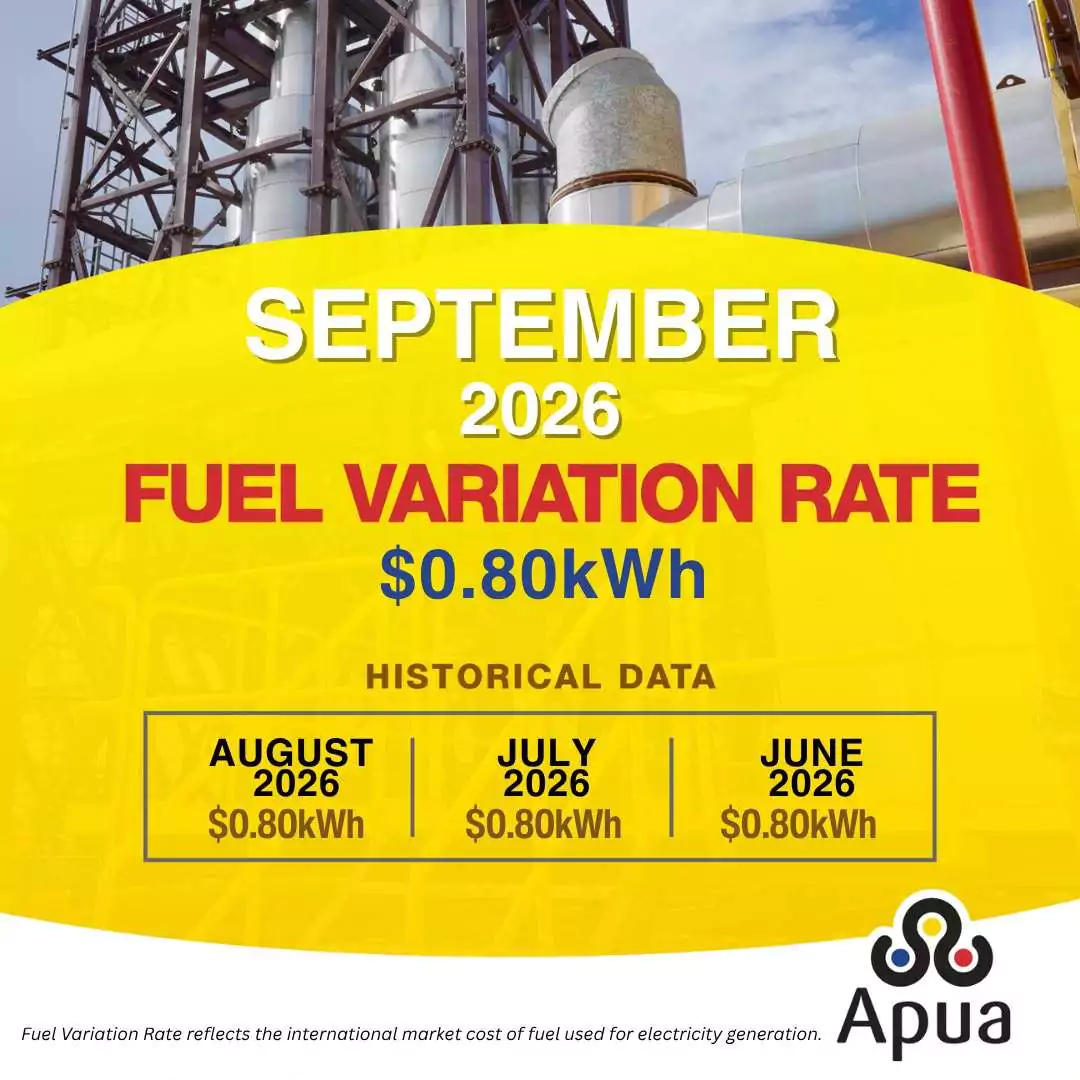
The Antigua Public Utilities Authority (APUA) has set its Fuel Variation Rate for September at EC$0.80 per kilowatt-hour, keeping the charge unchanged for a fourth consecutive month.
The rate has remained at 80 cents since June, after rising from 55 cents per kWh in March and April to 70 cents in May and then 80 cents in June.
The decision to hold the September rate comes at a particularly volatile time for the energy market.
Gasoline and diesel prices in Antigua and Barbuda increased by EC$2 per gallon on September 1, with gasoline moving from EC$14.50 to EC$16.50 and diesel from EC$14.25 to EC$16.25. The increase followed months in which the Government absorbed some of the higher international cost of petroleum products.
Prime Minister Gaston Browne has since warned that motorists should prepare for the possibility of further increases if petroleum prices continue their upward movement.
Those same international pressures are important to APUA because the fuel variation rate is tied to the cost of fuel used to generate electricity. According to the utility, the charge moves according to changes in the price of the fuel it purchases, meaning higher international prices can eventually translate into a higher charge on electricity bills.
For September, however, that has not resulted in another increase.

APUA has already been absorbing part of the increased cost rather than passing the full amount on to consumers. The authority disclosed in August that its monthly fuel bill had almost doubled, moving from approximately EC$11 million in January to EC$21.8 million in July.
The increases were particularly sharp after the first quarter. APUA’s fuel purchases amounted to about EC$10 million in February, EC$12 million in March and EC$19.4 million in April. They stood at EC$17 million in May and EC$19 million in June before climbing to EC$21.8 million in July.
APUA officials have attributed much of that pressure to instability in international commodity markets and rising prices for the diesel and heavy fuel oil used in electricity generation.
In fact, the authority said its calculated fuel variation rate should have reached approximately 66 cents in April and 88 cents in May. Instead, APUA kept the April rate at 55 cents, raised it to 70 cents in May and then to 80 cents in June as part of an effort to soften the impact on consumers.
That means the current 80-cent charge does not necessarily represent the full fuel cost being carried by APUA.
The pressure on international energy markets has intensified in recent days. Brent crude ended this week at US$96.28 per barrel, while West Texas Intermediate settled at US$91.48, amid renewed geopolitical tensions and disruptions to global supplies. U.S. diesel prices have also climbed to record levels.
While those developments have not pushed APUA’s September fuel variation rate above 80 cents, continued increases internationally could place renewed pressure on the authority in the months ahead.
APUA has previously said the mechanism works in both directions: when its fuel costs rise, the variation charge can increase, but if international prices fall, consumers should eventually see that reflected in a lower rate. Utilities Minister Melford Nicholas has also said the charge will be reduced when fuel costs decline.
For now, households and businesses will continue paying the same 80-cent fuel variation rate they have faced since June, providing some stability on electricity bills at a time when the wider cost of energy is again heading upward.





Well, I’ll take the 80 cents over another increase any day. With everything so expensive already, people really can’t handle another hit to the pocket.
So if APUA can hold the line at 80 cents, let it stay so for as long as possible.