












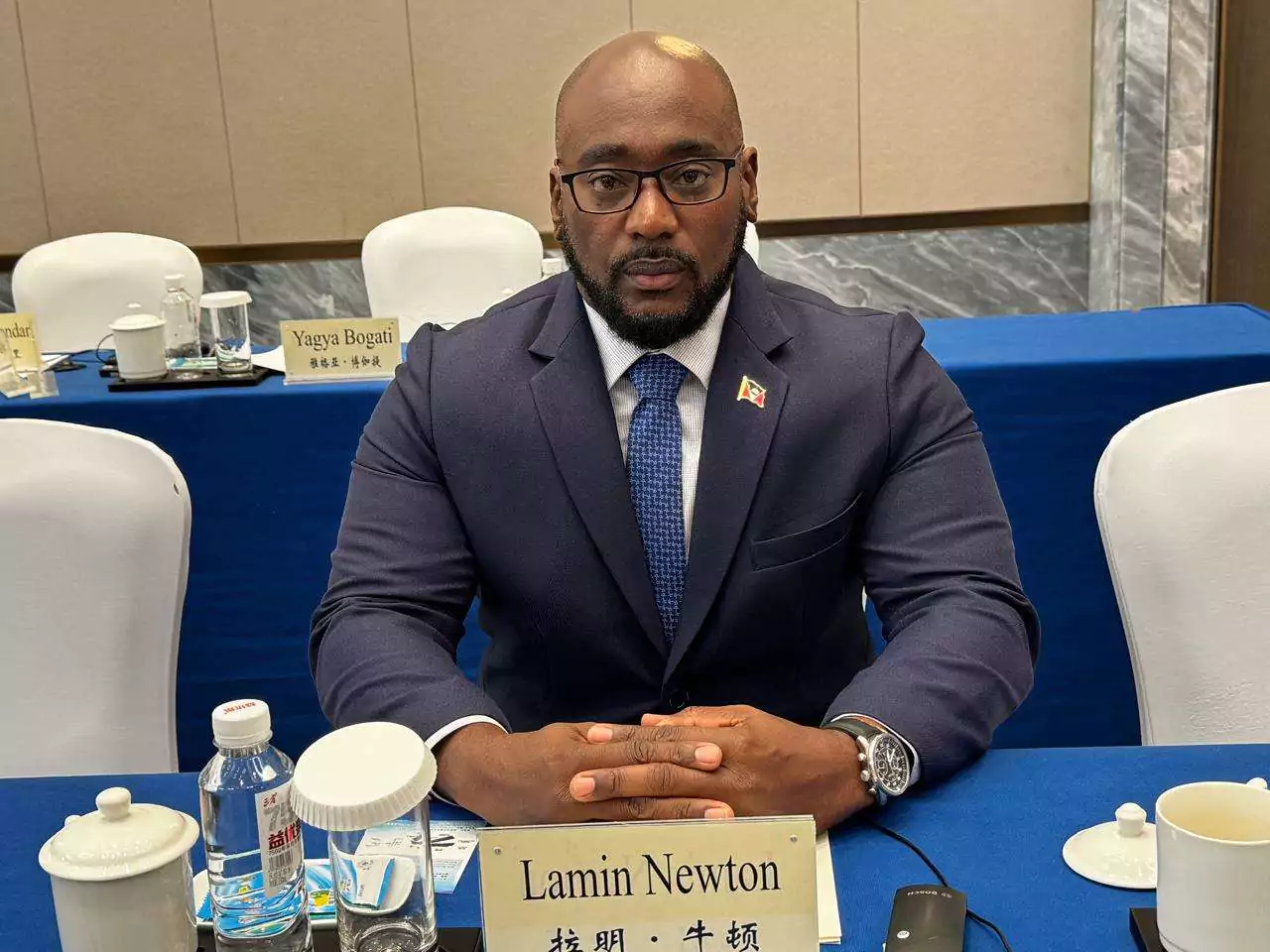
Senator Lamin Newton
There was a time when life in Antigua and Barbuda was largely peaceful and quiet, and community gatherings were occasions that most people looked forward to attending. There was a sense of security that allowed citizens to live without the constant fear of being attacked. Doors were left unlocked, children played in the streets long after sunset, and neighbours looked out for one another, even when disagreements existed between families.
The saying, “It takes a village to raise a child,” was not merely a collection of words. It reflected the very foundation of village life. Manners, discipline and respect were instilled in every child. Young people understood that they were not to interfere in disputes between adults, and every elder in the community had a role in guiding and correcting them.
Today, that peace feels like a distant memory.
Our twin-island nation increasingly resembles a scene from a movie because some of what we are witnessing once seemed unimaginable outside of the cinema. Criminal activity has taken centre stage, while the information needed to identify and arrest those responsible is too often withheld. From brazen daylight robberies and armed break-ins to retaliatory violence that leaves young people dead, the level of lawlessness confronting our society can no longer be ignored.
The increase in crime is not something we can politely sweep under the carpet. One troubling question now occupies the minds of citizens, parents and business owners alike: How did we get here?
The crisis we face did not develop overnight. As a society, we must honestly acknowledge that responsibility does not rest with any single institution, political party or generation. Government, opposition, families, communities, schools, churches, law enforcement and the judiciary must all be prepared to confront difficult truths.
Are we mature enough to put political point-scoring aside and address this crisis together? Criminals do not distinguish between supporters of the Antigua and Barbuda Labour Party and supporters of the United Progressive Party. They target whomever they consider vulnerable. Crime does not ask how we voted before it enters our homes, destroys our businesses or takes the life of someone we love.
While the authorities continue introducing strategies to identify and remove violent offenders from our communities, equal attention must be given to the conditions that allow criminal behaviour to develop.
Many people have blamed social media for exposing young minds to violence, vulgarity and destructive influences. There may be some truth to that argument, but social media cannot be treated as the sole cause of this crisis. Parents, grandparents, guardians and other relatives must also be willing to examine the roles they play.
People are not simply born into criminality. Attitudes and behaviours are learned, reinforced and, in some cases, ignored. If we are honest with ourselves, we must admit that warning signs often appear long before a young person commits a serious offence.
Too many adults turn a blind eye when children arrive home with expensive items that no one in the household purchased for them. It may be a new cellphone today, a 55-inch television tomorrow and a duffel bag filled with cash next week. At what point does someone ask, “Where did this come from?”
Silence at that moment is not protection. It can become permission.
Families cannot wait until a young person has reached the end of the road before becoming involved. By then, it is often too late. That child may be lying in a morgue, sitting in a prison cell or carrying the burden of having destroyed another family.
Justice is not achieved only through arrest, prosecution and conviction. Justice also exists in prevention—in the intervention that stops a young person before a weapon is fired, a life is taken or a family is shattered.
Parents, this is your moment to become superheroes not by concealing wrongdoing, but by having the courage to confront it.
It may be painful and frightening to alert law enforcement to the illegal activities of a child or relative. However, we must remember that those activities are harming other people. Every robbery has a victim. Every gunshot creates trauma. Every stolen item represents someone’s labour, sacrifice and sense of security.
Those engaged in robberies and armed attacks must also understand that these crimes will not always unfold according to plan. Life has a way of changing the script without warning. A decision made in seconds can end one life, destroy another and leave several families grieving forever.
Senator Lamin Newton

To the victims of crime and their loved ones, we understand that waiting for justice can be an agonising experience. The wheels of justice often turn slowly. Investigations stall, cases go cold, court proceedings are delayed and, at times, confidence in the justice system begins to crumble.
When justice is delayed or appears inadequate, victims feel abandoned and criminals may become emboldened. They can begin to believe that the system has given them permission to offend again. This is where an already serious problem becomes even more dangerous.
We must also confront the concern that some sentences are failing to deter violent and repeat offenders. Members of the judiciary have a vital responsibility. They are the guardians of justice and are expected to discharge that duty independently, impartially and without fear or favour.
Judicial independence must always be protected, but independence does not mean isolation from the realities confronting society. If existing sentencing guidelines prevent the courts from imposing penalties that adequately reflect the seriousness of certain crimes, then the relevant institutions must come together to review those laws and guidelines.
The executive, legislature, judiciary, law-enforcement agencies and legal community must engage in serious and respectful dialogue. No institution should compromise its constitutional role, but neither can any institution behave as though it exists apart from the society it serves.
Independence and accountability are not enemies. Both are essential to a functioning democracy.
Crime has moved beyond being solely a matter for the police and the courts. It has become a deeply rooted societal problem. Public safety has reached a troubling point, and many citizens now live with the fear that they could be next.
We are witnessing robberies, shootings and abductions carried out with alarming boldness, sometimes in densely populated areas and in broad daylight. Criminals appear increasingly fearless, while ordinary citizens feel increasingly vulnerable.
Again, we must ask: How did we get here?
We have allowed a generation of young people to cast a net of fear over our country, and this cannot be tolerated. Citizens are becoming afraid to stop at gas stations because they worry that the business could become the next target. Business owners are closing earlier or spending money they can barely afford on private security.
Small businesses must now calculate not only profits and expenses, but also the risk of being robbed, injured or killed. Some owners are seeking firearm licences because they believe they have no other means of protecting themselves. Even if questions arise about whether every applicant is suitable to own a weapon, we must understand the desperation driving these requests.
When law-abiding citizens no longer believe that the system can protect them, they will inevitably begin searching for ways to protect themselves.
However, placing more firearms into an already anxious society cannot be our primary answer. More guns may create the appearance of security, but they also increase the potential for accidents, impulsive violence, theft and deadly escalation.
What Antigua and Barbuda needs most is prevention.
We must confront violent offenders, but we must also plug the social leaks through which children and young adults are being lost. That means investing in families, education, mentorship, mental-health support, conflict resolution, rehabilitation, employment opportunities and meaningful programmes for at-risk youth.
It means recognising warning signs before they become headlines.
It means ensuring that young people have positive spaces in which to learn, work, create and develop a sense of purpose. It also means holding people accountable when they knowingly harbour offenders, conceal weapons, benefit from stolen property or remain silent while innocent people suffer.
Reclaiming our country from those who seek to rule it through fear will require urgent, decisive and sustained action. It cannot be achieved through speeches alone. It requires political courage, institutional cooperation and the active participation of every community.
Our safety is a collective responsibility. Communities must work with law enforcement if we are to defeat those who prey upon innocent people. We must break the culture of silence that allows criminals to live among us, protected by fear, misplaced loyalty or indifference.
Silence may shield an offender today, but it could endanger someone you love tomorrow.
Our country has reached a critical juncture. As Antigua and Barbuda makes its final preparations to host the Commonwealth Heads of Government Meeting in 2026, we must understand that this is a defining moment in our nation’s history.
However, our concern about crime must extend far beyond the image we present to visiting dignitaries. The people of Antigua and Barbuda deserve to feel safe before, during and long after CHOGM. Public safety must never be treated merely as preparation for an international event; it is a fundamental right of every citizen and resident.
We cannot allow crime to dictate our future or fear to become our national identity. It is time to stand together to protect what belongs to all of us: our families, our communities and our beloved Antigua and Barbuda.
Let us assist the police by providing credible information about criminal activity. Let us challenge wrongdoing within our own homes. Let us demand accountability from our institutions while also accepting responsibility for the choices we make as citizens.
The question has been asked repeatedly: How did we get here?
By now, perhaps we know the answer.
We arrived here through years of silence, neglect, weakened community bonds, ignored warning signs, institutional shortcomings and a gradual acceptance of conduct that should never have been tolerated.
The more important question is no longer how we got here.
It is whether we have the courage, unity and determination to find our way back.





I will absolutely not be reading this longgggggg ass piece. The saying is true. We are not a reading public. Everybody and their ancestors have an opinion