












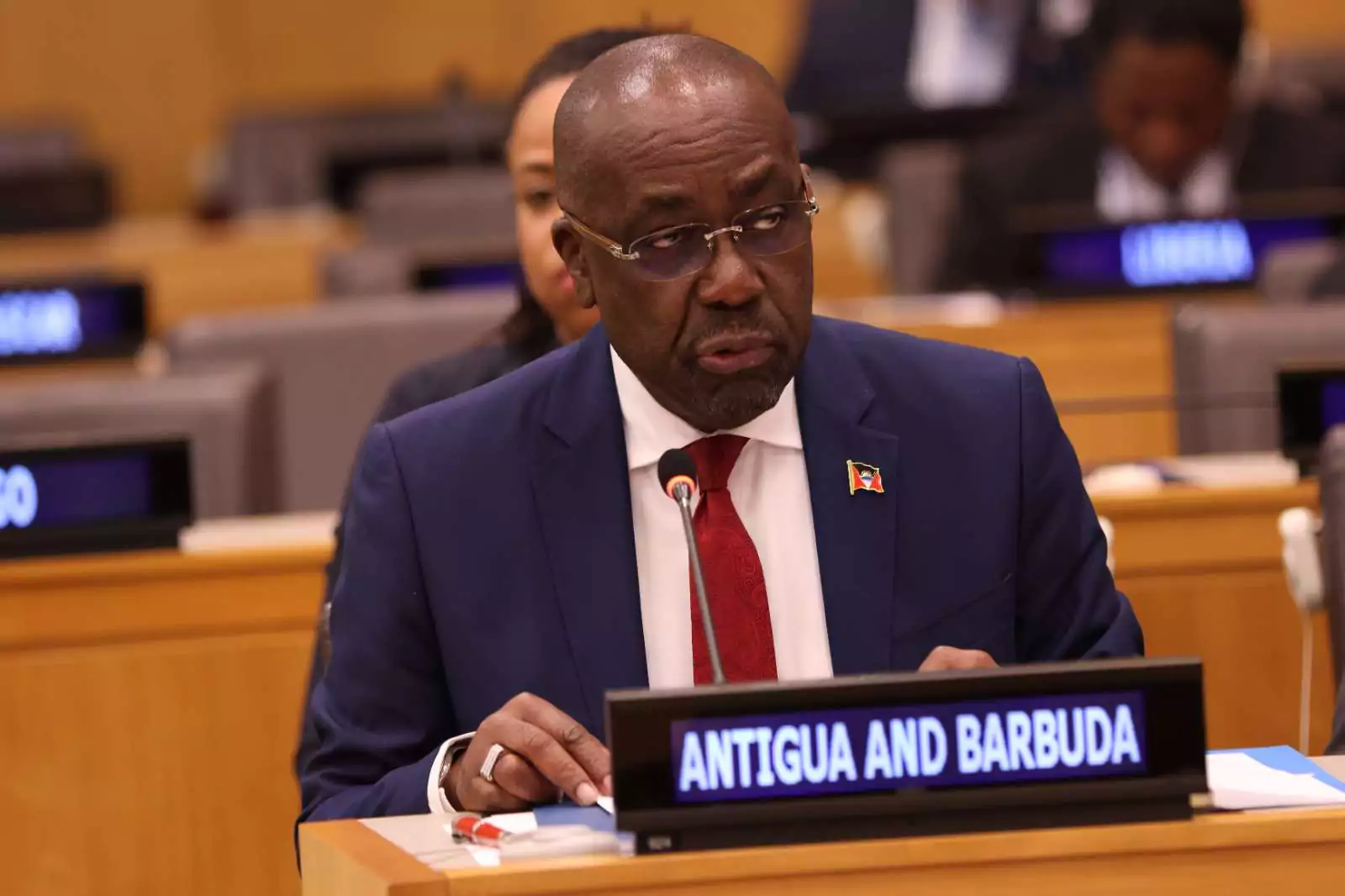
Antigua and Barbuda’s Foreign Affairs and Trade Minister, E.P. Chet Greene, has urged African, Latin American and Caribbean countries to turn their shared priorities into practical partnerships, calling for better transport links, fewer barriers to trade and greater access to financing.
Greene made the appeal at a high-level meeting of the African Union and the Community of Latin American and Caribbean States (CELAC) on the sidelines of the 81st United Nations General Assembly in New York.
“The CELAC–Africa partnership is of profound strategic importance,” Greene said. “Our regions together represent a significant share of the world’s population, with considerable economic, human and natural resources.”
He said the regions’ shared history and development challenges give them reason to work together, but warned that common goals alone would not produce results. He called for action on the structural barriers that constrain trade and investment between them.

Greene identified air and maritime connectivity, cooperation between regulatory bodies, and financing for small and medium-sized businesses and vulnerable economies as priorities. He also pointed to opportunities in sustainable agriculture, renewable energy, technology, education, health and the creative industries.
The minister urged countries to make greater use of digital tools to connect businesses and markets, while strengthening cooperation on climate resilience. He said that work must take account of the particular vulnerabilities of Small Island Developing States.
“Antigua and Barbuda remains firmly committed to strengthening CELAC–Africa relations based on mutual respect, solidarity, sovereign equality and shared benefit,” Greene said.
He called on the participating countries to use the meeting to strengthen their collective voice internationally and pursue a development agenda that responds to the needs of their people.



This is an area where the Caribbean and Africa could really benefit from working closer together. We always talking about trade, but if getting goods and people between the regions is difficult and expensive, then the opportunities stay on paper. Better air and sea connections could make a real difference for businesses, farmers, students and ordinary people.
The conversation is good; now the real test is turning the talk into action.