








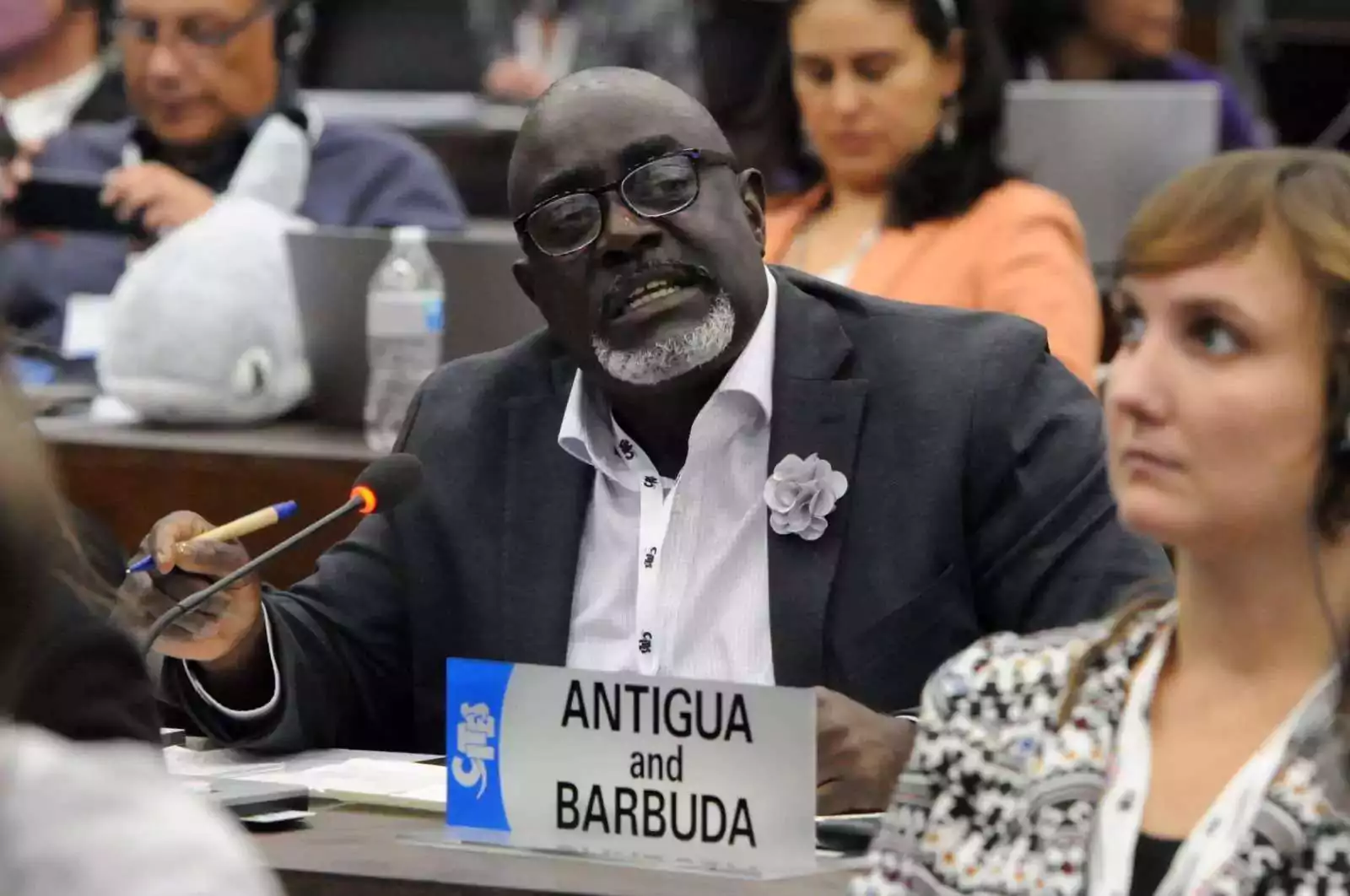
By Ambassador Daven Joseph
Antigua and Barbuda.
On September 23, 2026, at Royal Caribbean Group headquarters in Miami, Jason Liberty and Adam Stewart signed a deal that will reshape Caribbean tourism for a generation. Royal Caribbean Group will pay $3 billion for a 50% stake in Sandals and Beaches Resorts, valuing the Caribbean’s most iconic home-grown hotel brand at $6 billion. Closing is expected early 2027. The joint venture will be governed jointly by Liberty and Stewart, with committed financing from Morgan Stanley.
The press releases call it a “landmark partnership” to accelerate vacation experiences. The CARICOM Private Sector Organization congratulated Sandals, correctly noting this proves a Caribbean-born brand can command a place among global leaders. As Antiguans, we celebrate Adam Stewart and the legacy of the late Gordon “Butch” Stewart. He proved a Jamaican company could stand on the world stage.
But celebration must not blind us to structural risk. For the first time, the Caribbean’s dominant force at sea and its dominant force on land will sit on the same board.
Royal Caribbean says it is no longer a cruise company — “we are a vacation company”. This $3 billion purchase makes that real. It is Royal Caribbean’s largest deal ever, eclipsing its $1 billion purchase of Silversea. Royal Caribbean controls 57% of its global capacity in the Caribbean and has 11 new ships on order through 2036. Sandals operates 20 resorts across Jamaica, Antigua and Barbuda, Saint Lucia, The Bahamas, Barbados, Grenada, Curaçao, and Saint Vincent and the Grenadines. Together they promise an “unparalleled collection of cruise, private destination and resort experiences” and to expand into the $2 trillion global vacation market.
The question for Caribbean governments is not whether this is good for shareholders — it clearly is. The question is whether it is good for Caribbean people.
Three hard truths about our current tourism economy:
First, cruise tourism pays us almost nothing. Royal Caribbean and Carnival charge $3,000 to $7,000 per guest per week but pay Caribbean ports $5 to $12 per head in head tax and port charges. Heritage Quay in St. John’s was built with a loan that Italy had to write off 90% because cruise revenues could not repay it. A stay-over visitor to Antigua spends $1,600. A cruise visitor spends $37 to $139, according to the World Bank. The difference is the tax base, the jobs, the linkages. A hotel pays corporate tax, property tax, social security, imports local fish and vegetables. A cruise ship, registered in Liberia or Bermuda, pays none of that, employs crew from low-wage countries, and uses flags of convenience to avoid US labor and environmental law.
Second, the model is already enclave. Sandals is all-inclusive — food, drink, entertainment inside the gate. Royal Caribbean has perfected the private destination — Perfect Day at CocoCay in The Bahamas, Labadee in Haiti — where the passenger never touches a local economy. The press release says the ship becomes the first commercial layer, the private island the second. Combine those two enclaves and you get double leakage. The tourist flies in on a US airline, sleeps in a US-owned resort, eats imported food, and leaves without ever hiring a taxi, eating at a local restaurant, or buying from a local farmer.
Third, size gives power to punish. The Florida-Caribbean Cruise Association (FCCA) is 21 cruise lines controlling over 90% of global cruise capacity. When a Caribbean Prime Minister dares to criticize, itineraries disappear. Carnival did it to Antigua. The threat is always implicit: raise the head tax and we will go to another island.
Now add Sandals to that equation. If a government raises cruise head tax, Royal Caribbean can not only move its ships — it can now move its marketing to push its own Sandals resorts in a competing island. It can bundle loyalty points: stay at Sandals, get free cruise. It can steer pre- and post-cruise stays into its own resorts, cutting out independent Antiguan, Lucian, and Grenadian hotels entirely. That is vertical integration — controlling sea, land, and private island.
This is not hypothetical. The deal’s own language says it will “create more choice, ease and value for travelers” within Royal Caribbean’s “vacation ecosystem”. Ecosystem means closed loop. Closed loop means money stays in Miami, not St. John’s.
What does this mean for Sandals itself?
Sandals has been a remarkable Caribbean success story because it kept headquarters in the Caribbean, hired Caribbean people, and understood Caribbean hospitality. Under a 50-50 joint venture with board co-leadership, that culture must be protected contractually. Will procurement remain local? Will Sandals continue to pay taxes in Jamaica and Antigua or shift profits through the joint venture to Delaware? Will the company continue to oppose private islands that hurt community tourism, or will it now embrace them because its partner profits from them?
The CARICOM Private Sector Organization hopes the deal will “expand visitor arrivals, lengthen stays, deepen airlift and cruise connectivity”. That can happen — but only if we regulate it to happen.
Caribbean governments must act before closing in early 2027:
1. Set a joint Caribbean head tax. Alaska charges $46 per passenger. We charge $5. Prime Minister Browne’s long-standing proposal for a regional minimum $30-$50 head tax must now be adopted by CARICOM and the OECS. No island undercuts. If Royal Caribbean wants our beaches, it must pay for them.
2. Demand antitrust review. This merger affects the Caribbean Single Market. CARICOM Competition Commission must file a submission to the US Federal Trade Commission and Department of Justice before approval. The US market tumbled 6% on news of the deal precisely because investors fear integration risk — regulators must examine if it reduces consumer choice and raises barriers for independent hotels.
3. No tying of loyalty. As a condition of operating in our jurisdictions, Royal Caribbean’s loyalty programs — already industry-first — cannot be used to force cruise passengers into Sandals resorts and vice versa. That is anti-competitive tying.
4. Local content and transparency. Require annual public reporting: How many Caribbean nationals employed at what wages? How much food sourced locally vs imported? How much tax paid in each jurisdiction vs offshore? Morgan Stanley financing is offshore debt — interest payments must not be used to strip taxable income from Caribbean.

5. Stop the private island grab. We must place a moratorium on new private island leases for cruise lines. Our islands are not for sale as second-layer commercial platforms. If Royal Caribbean wants more Perfect Days, it must joint venture with Government with equity and revenue share — not lease for $1 per acre.
This is not anti-investment. Antigua and Barbuda welcomes investment. We are proud that a Caribbean brand is valued at $6 billion. But tourism is our oil. No serious oil-producing country would allow a foreign company to own both the rig and the refinery and sell its own oil back to its people without royalty.
We have six months until early 2027 closing. In those six months, CARICOM Heads must meet not to congratulate — but to negotiate as one.
If we do not, we will wake up to find that while we celebrated a $3 billion deal, we sold control of Caribbean tourism for $6 a head.




You’re only worried about this is if you re you government are sketchy.
Exactly. PM is a meddler.
Nah man, that cruise vs stay-over visitor comparison is what caught me. We can celebrate the visitors coming, but if one tourist is spending $100 and another spending $1,600, maybe we need to pay more attention to what kind of tourism we’re actually building.
Great read Ambassador! You should write a book