
Caribbean importers could face US$3.6bn in extra shipping costs under IMO plan
A regional business group says cleaner fuel is beyond the reach of many ships serving the islands, leaving importers exposed to higher freight bills. Talks resume in London on Monday.


Bringing goods into 12 Caribbean countries could cost an extra US$3.6 billion between 2028 and 2035 under proposed global rules to cut emissions from shipping, according to a study released ahead of talks in London on Monday.
The CARICOM Private Sector Organization examined 51 scheduled shipping services carrying US$30.8 billion of imports a year. Under the draft agreed by the International Maritime Organization’s environment committee last year, it estimates that shipping those imports would cost 14% more in 2035 than it otherwise would. That would add US$761 million to the freight bill in that year alone.
For a Caribbean importer, freight is only one part of the bill. The study puts the increase in the cost of goods when they reach port at about 2.5%, before any customs duties are applied. How much of that increase would appear on a supermarket shelf would depend on the product and how much of the extra cost businesses passed on.
Why island routes are exposed
Under the IMO proposal, ships would have to reduce the greenhouse gases emitted for each unit of energy they use. Operators that missed the targets could cover a shortfall by buying credits from vessels that did better or by paying into an IMO fund.
The business group says the region lacks a network of ports where ships can take on suitable low-emission fuels. It expects operators of the smaller vessels that distribute cargo among the islands to pass charges on to customers. On routes with few sailings, it says another risk is that a carrier decides the trade is no longer worth serving.
That concern has already shaped Antigua and Barbuda’s position. In October 2025, Prime Minister Gaston Browne said the country would abstain if the vote went ahead. He backed the move towards cleaner shipping but said households could ill afford higher freight charges.
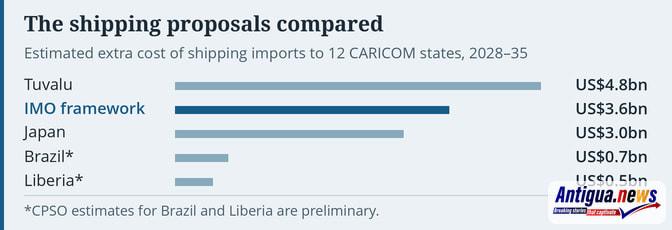
The business group wants the rules phased in on Caribbean routes and a share of any fund reserved for affected economies. Delegates will consider competing proposals at the IMO meeting from 30 November to 3 December. The committee has yet to confirm whether an extraordinary session will resume on 4 December.
This story was first published by Antigua News on : antigua.news/2026/11/29/caribbean-shipping-costs-imo-climate-rules-caricom-study. © 2026 Antigua News. Republication without permission is not allowed.

About the author
Michael Williams is a journalist with over a decade of experience in news reporting. At Antigua.news, he covers international affairs, with a particular focus on major global news events, geopolitical developments and the evolving dynamics of international relations.
Read our editorial standards and corrections policy. Spotted an error? Contact the newsroom.
Comments
Be the first to comment.