
Sea-ice at Antarctica at record low levels giving scientists heightened cause for concern

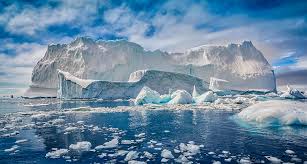
Satellite data has uncovered some deeply worrying measurements in relation to the vitally important levels of sea ice surrounding Antarctica.
The region which had previously always seemed resistant to the severe threats of global warming which the rest of the planet has been battling, is showing a winter-level well below anything recorded before.
The images being studied indicate an area of missing ice which equates to roughly five times the size of the British Isles.
Experts in polar science are expressing great alarm and suggesting that were a trend to continue, then it could seriously destabilize the entire continent, leading to far-reaching consequences.
Great scientific concern
A lot has been spoken of the land and ocean temperature records being broken this year, but scientists are highlighting that the Antarctica recordings should be of greatest concern and represent a set of information which needs the upmost attention.
Protective sleeve
As a self-contained continent surrounded by water, Antarctica has its own weather and climate system. The sea-ice fundamentally acts as a protective sleeve for the expanse of ice which covers the land mass, effectively preventing the ocean around it from heating up.
It forms in a period between March and October before largely melting in the summer months.
From fridge to radiator
What is probably not appreciated by the vast majority of the planet’s population is that the enormous volume of ice on Antarctica actually regulates Earth’s temperature, as the white surface reflects the Sun’s energy back into the atmosphere and in doing so it also cools the water beneath and near it.
Without it the Continent could transform from the World’s refrigerator to what would become something akin to a radiator, thus having the completely opposite effect with potentially catastrophic results.
Significant ice drop
As things stand – or to be absolutely correct, as things float – the ice on the Antarctic Ocean’s surface now measures less than 17 million sq km, which is 1.5 million sq km of sea-ice less than the September average, and is significantly down on previous winter record lows.
Naturally, this will have the effect of raising sea levels and even modest increases can result in dangerously high storm surges that could wipe out coastal communities.

Currents playing a part
Last March a report was released which warned of a slowing down in ocean currents and the winds that drive temperatures in the Antarctic. A group of Australian scientists identified that the vitally important deep-water flows which control these ocean currents could decline by as much as 40% by 2050.
The currents carry with them vital heat, oxygen, carbon and nutrients which are distributed all around the planet. The report outlines how the network of ocean currents are part driven by the downwards movement of cold, dense saltwater towards the sea bed near Antarctica.
They have been stable for thousands of years, but evidence shows that they are definitely being disrupted, undoubtedly by global warming.
Scientists speak out
Several experts have spoken publicly. Walter Meier, who monitors sea-ice with the National Snow and Ice Data Center, remarked: “It’s so far outside anything we’ve seen, it’s almost mind-blowing, ” whilst Professor Martin Siegert, a glaciologist at the University of Exeter questioned whether the findings meant that “we are awakening this giant of Antarctica.”
Dr Caroline Holmes at the British Antarctic Survey went into more detail explaining that the impacts of shrinking sea-ice may become evident as the season transitions into summer, when there’s potential for an unstoppable feedback loop of ice melting. She said: “As more sea-ice disappears, it exposes dark areas of ocean, which absorb sunlight instead of reflecting it, meaning that the heat energy is added into the water, which in turn melts more ice.”
Concern very real
The sheer remoteness of Antarctica means a lot is still unknown about the Continent, including the actual thickness of the sea-ice. What all the experts are in agreement with is that the changes are very real cause for genuine alarm.
This story was first published by Antigua News on : antigua.news/2023/09/19/sea-ice-at-antarctica-at-record-low-levels-giving-scientists-heightened-cause-for-concern. © 2023 Antigua News. Republication without permission is not allowed.

About the author
The Editorial Staff refers to all reporters employed by Antigua.news. When an article is not an original creation of Antigua.news—such as when it is based on a press release, other media articles, letters to the editor, or court decisions—one of our staff members is responsible for overseeing its publication.
Read our editorial standards and corrections policy. Spotted an error? Contact the newsroom.
More from Culture, Science and Tech
View section
VIDEO: As School Reopens, Simon Bolivar Pre-School’s Garden serves as a Model for teaching Agriculture in Early Childhood
By Editorial Staff

CUB Hells Gate Crowned 2026 Panorama Champions After Electrifying Carnival Showdown
By Cory Wayland

Five Female Chefs Wow Diners With Multi-Course Dinner at Hodges Bay Resort
By Shermain Bique-Charles
North Europe and the Arctic 2026: The Race for Power, Resources and New Trade Routes
By Dario Item
Comments
Be the first to comment.