
Dominica to be home of the world’s first protected reserve for sperm whales

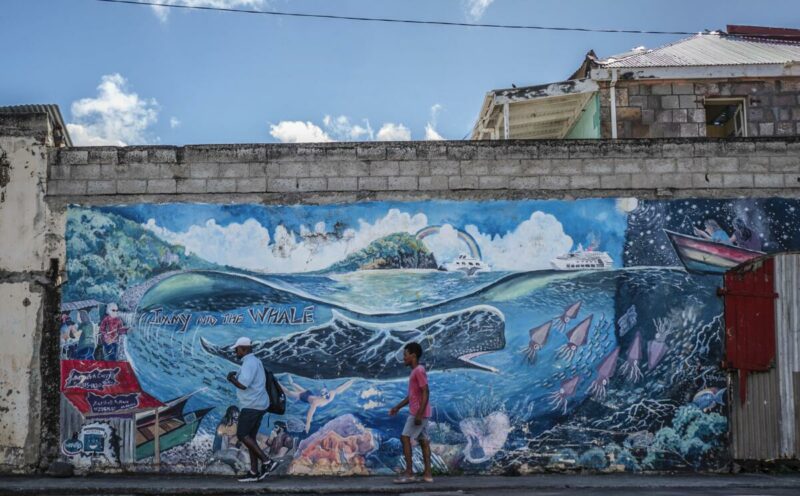
by Mick the Ram
The government of Dominica have announced that it is set to create the world’s first marine protected area for the endangered sperm whale.
A designated swath of nearly 300 square miles of ocean, which is roughly the size of the island itself, will form a reserve, where large ships will be banned and commercial fishing severely restricted, on the western side of the Caribbean nation.
In the past the gentle giants have been struck by large vessels, or become entangled in fishing gear in the blue waters around Dominica, so this will free up key nursing and feeding grounds for these whales, which have the largest brain in the world and can grow up to 50ft (15m) in length – longer than an average school bus.
Boundaries created based on carefully considered findings
The boundaries of the proposed reserve have been defined based upon studies of where the whale families find food and shelter. Vessels 60 feet or longer would likely be prohibited, although fishing on a small-scale would be allowed to continue.
A corridor would be carved out to allow ships to dock at Roseau, the island’s capital and largest city, so success and failure will “hinge on stringent regulation and implementation”, according to Francine Baron, CEO of the Climate Resilience Execution Agency for Dominica.
Lesser Antilles chain is home
Unlike sperm whales elsewhere in the world, those around the eastern Caribbean do not travel very far. It is estimated that fewer than 500 sperm whales live in the waters surrounding Dominica, part of a population that moves along the Lesser Antilles chain, swimming north into Guadeloupe and as far south as St Vincent.
Shocking decline in numbers
Shane Gero, a whale biologist and founder of the Dominica Sperm Whale Project, a research programme focused on sperm whales in the region, has been studying the animals since 2005 and has noticed a definite decline in numbers, as a result of ship strikes and unintentional entanglements in fishing equipment, and the on-going threat from plastic pollution.
At one time there were more than two million sperm whales living in the deep oceans of the planet, but that was in pre-whaling days before they were hunted for oil, used to burn lamps and lubricate machinery. Now, Mr Gero believes that there are less than 800,000 left.

Fighting climate change unnoticed
He also explained how the whales help to sequester more carbon in the deep sea as a result of an often overlooked act of nature. Sperm whales have to shut down non-vital functions when they dive to extraordinary depths which can be as much as 10,000ft, when hunting squid. They then return to the surface to breathe, rest and crucially… defecate.
This has a consequence of leaving the remains of nutrient-rich feces on the ocean surface and has the effect of creating plankton blooms, which capture carbon dioxide in the atmosphere and drag it to the ocean floor when they die and sink, and according to Mr Gero, the sperm whales in Dominica defecate more than whales elsewhere.
The explanation for that is unclear, possibly something to do with the type of squid they are consuming, or maybe they simply eat a greater quantity, but whatever the reason the biologist made the point that “in some respects, sperm whales are fighting climate change on our behalf.”
PM outlines plan
The island’s Prime Minister, Roosevelt Skerrit said: “We want to ensure that these majestic and highly intelligent animals who are prized citizens of Dominica and that call our our sea home, are safe from harm and continue keeping our waters and our climate healthy.”
He added: “Their ancestors likely inhabited Dominica before humans arrived.” It is the the PM’s intention to appoint a “Senior Whale Officer” and observers stationed on research vessels, to ensure the area is respected and that whale tourism regulations are properly enforced.
Visitors would still be permitted to swim with the sperm whales or see them from a boat, but it would be in more sustainable numbers.
Huge benefits for the island and its people
The Reserve will cover less than three percent of the island’s waters, which offers enough protection for the sperm whales. “Dominica has the opportunity to show the world how to reconcile marine conservation with responsible use of the sea,” said Kristin Rechberger, the CEO of Dynamic Planet, which advised the island on the varying economic aspects involved with the creation of such a reserve.
He pointed out that a well-designed and regulated whale tourism operation could bring in economic revenue, to offset the direct costs of managing and enforcing the reserve, and thus bringing in additional benefits to the people of Dominica.
This story was first published by Antigua News on : antigua.news/2023/11/14/dominica-to-be-home-of-the-worlds-first-protected-reserve-for-sperm-whales. © 2023 Antigua News. Republication without permission is not allowed.

About the author
The Editorial Staff refers to all reporters employed by Antigua.news. When an article is not an original creation of Antigua.news—such as when it is based on a press release, other media articles, letters to the editor, or court decisions—one of our staff members is responsible for overseeing its publication.
Read our editorial standards and corrections policy. Spotted an error? Contact the newsroom.
More from Caribbean
View section
St. Kitts DPP Seeks Antigua’s Help in Outstanding Case Involving Former Resort Clerk
By Shermain Bique-Charles

Royal Caribbean in Talks to Buy Half of Sandals in Reported $3 Billion Deal
By Shermain Bique-Charles
Four Killed in Latest US Military Strike on Suspected Drug Vessel in Caribbean
By Shermain Bique-Charles
Browne, Commonwealth Secretary-General Review Final Preparations for CHOGM 2026
By Editorial Staff
Comments
Be the first to comment.