















Boat Race rowers warned not to enter the Thames after E. coli discovery
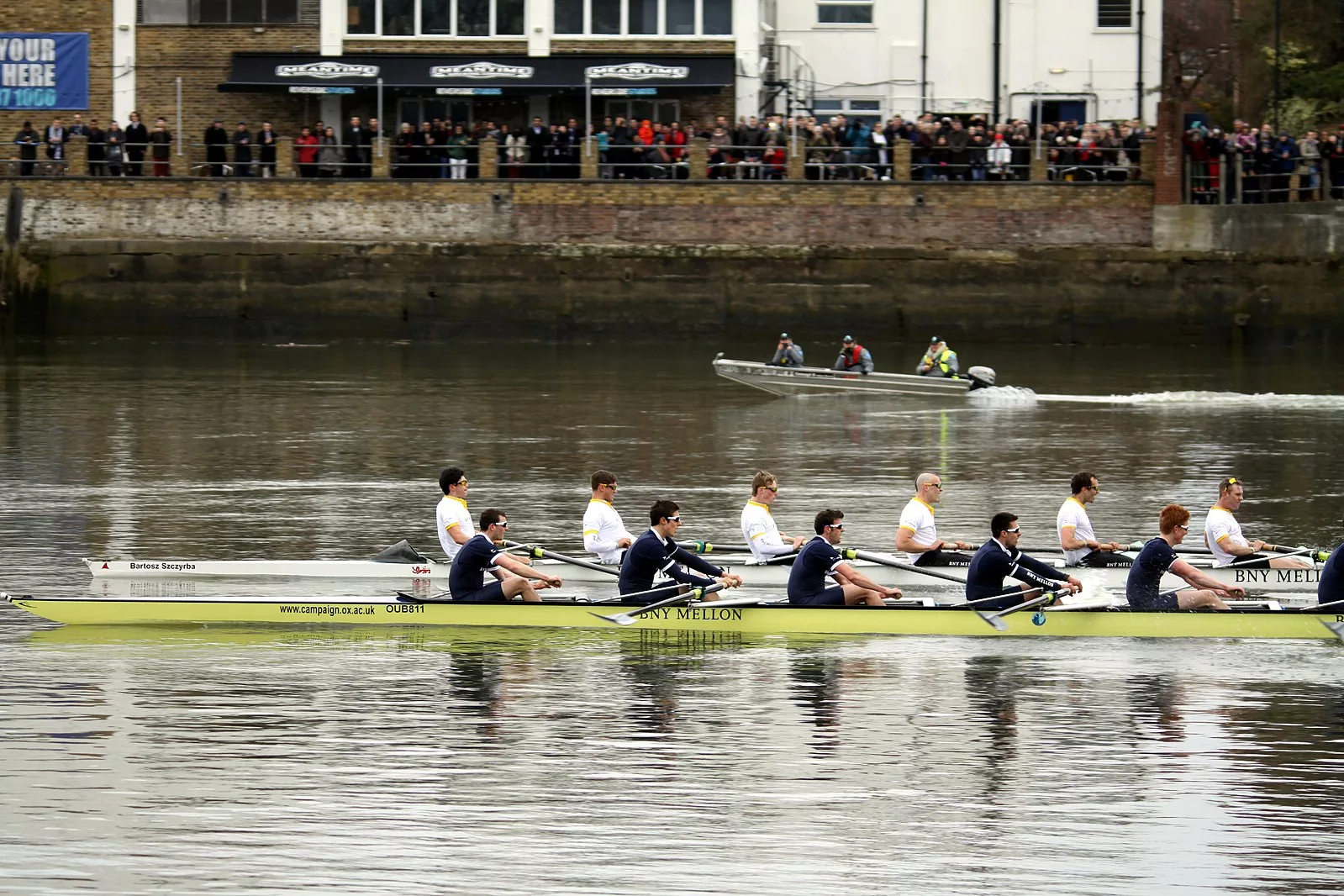
Rowers taking part in the 2024 edition of the iconic Boat Race between the universities of Oxford and Cambridge have been warned not to enter the river, after high levels of E. coli were discovered.
The 4.25-mile race through London along the Thames, will take place on Saturday 30 March and the usual practice of the winning crew often leaping into the water, or throwing the cox overboard, has effectively been banned.
The oarsmen and women have also been warned to cover blisters, and wear footwear when getting in and out of their boats.
The pressure group River Action said tests indicated the bacteria came from sewage directly discharged into the river.
The E. coli bacterium, which is found in faeces, can cause a whole range of conditions, with the worst cases leading to life-threatening blood poisoning.
In most years over 250,000 people watch the race from the banks of the river and one of the highlights is the victorious team jumping into the capital’s main waterway.
Indeed, they receive huge encouragement to do so from the massive crowd; but sadly until a solution is found to prevent the contamination, that practice is over.
British sporting institution
The Boat Race has become as much a part of the UK sporting calendar, as the Grand National, The Derby, the FA Cup Final, and the Wimbledon tennis championships. This year will be the 69th men’s and 78th women’s races, and certain traditions are attached to it.
The celebratory leap into the Thames is one of them, but now that special moment for the crew has been forced to stop. Instead, the rowers of Oxford and Cambridge Universities not only have to remain in their boats, they are also being being told to conceal any cuts, grazes and blisters with waterproof dressings, and take extra care not to swallow river water that splashes close to the mouth.
Additionally, they are being advised to wear suitable footwear when launching or recovering a boat, wash themselves down at a dedicated cleansing station at the finish and clean all their equipment thoroughly. To say it takes a way some of the enjoyment of the occasion is an understatement, and Thames Water are being held responsible.
Water company on the defensive
However, in a statement, the under-pressure water company blamed higher than average long-term rainfall across London and the Thames Valley, saying that groundwater levels were exceptionally high for the time of the year.
They said that the overflows are designed to operate automatically when the sewer network is about to be overwhelmed, which then releases diluted wastewater into rivers, rather than letting it back up into people’s homes.
The company insisted: “We are working hard to make these discharges unnecessary and have published plans to upgrade over 250 of our sites.” Then a spokesperson added: “Taking action to improve the health of rivers is a key focus for us and we want to lead the way with our transparent approach to data.”

Action group hit back
None of that was received particularly well by River Action, whose chief executive James Wallace said: “From our tests it seems clear that the source of pollution is from Thames Water discharging sewage directly into the river and its tributaries.
He pointed out that publicly available data showed that the water company had discharged sewage into the Greater London area of the River Thames for 1,914 hours from the start of 2024 up to 26 March.
Mr Wallace added: “Our water quality results show what happens after decades of neglect by an unregulated water company, which is what Thames Water is. It is a tragic situation when elite athletes are issued with health guidance ahead of a historic race on the capital’s river.”
Organisers forced to introduce measures
Organisers of the Boat Race admit that water quality is an ongoing concern and as such they have been forced to carry out numerous briefings with the universities and athletes, to ensure they are as safe as possible when rowing in the historic race.
They said that they have had to put in place health and safety guidelines, with precautionary measures this year, to ensure health and protection of the athletes.
Bacteria can cause terrible health issues
The E. coli bacterium can bring about urinary tract infections, cystitis, intestinal infections, vomiting and blood poisoning; plus in really bad cases, pneumonia, sepsis, or even meningitis.
It was discovered between 28 February and 26 March this year, using a World Health Organization-verified E. coli analyser. There were 16 tests carried out around Hammersmith Bridge, in west London, which indicated an average of 2,869 E. coli colony-forming units (CFU) per 100ml of water.
To meet the Environment Agency’s inland bathing water quality standards, the level should be below 1,000 CFU per 100ml of water. Little wonder there is the enormous concern for the safety of the rowers.
Cambridge will look to continue advantage despite river situation
The men’s boat race was first held all the way back in 1829 and has been held annually since 1856, except during the two World Wars, or during the Covid year. The women joined in nearly a century later, in 1927 and their race has been held annually since 1964.
Cambridge are otherwise known as the “light blues” and Oxford the “dark blues”. In the men’s races, Cambridge have a marginal lead when it comes to victories, with 86 successes to their rivals 81 and there has been one dead-heat. They are even further ahead of Oxford in the ladies statistics, with 45 wins to 30.
All four crews will look to compete as forcefully as usual, but are bound to have been disturbed by the information given to them. Hopefully, nobody will be put off their stroke.




0 Comments