
Antigua and Barbuda Supports Jamaica’s Reparations Petition to King Charles

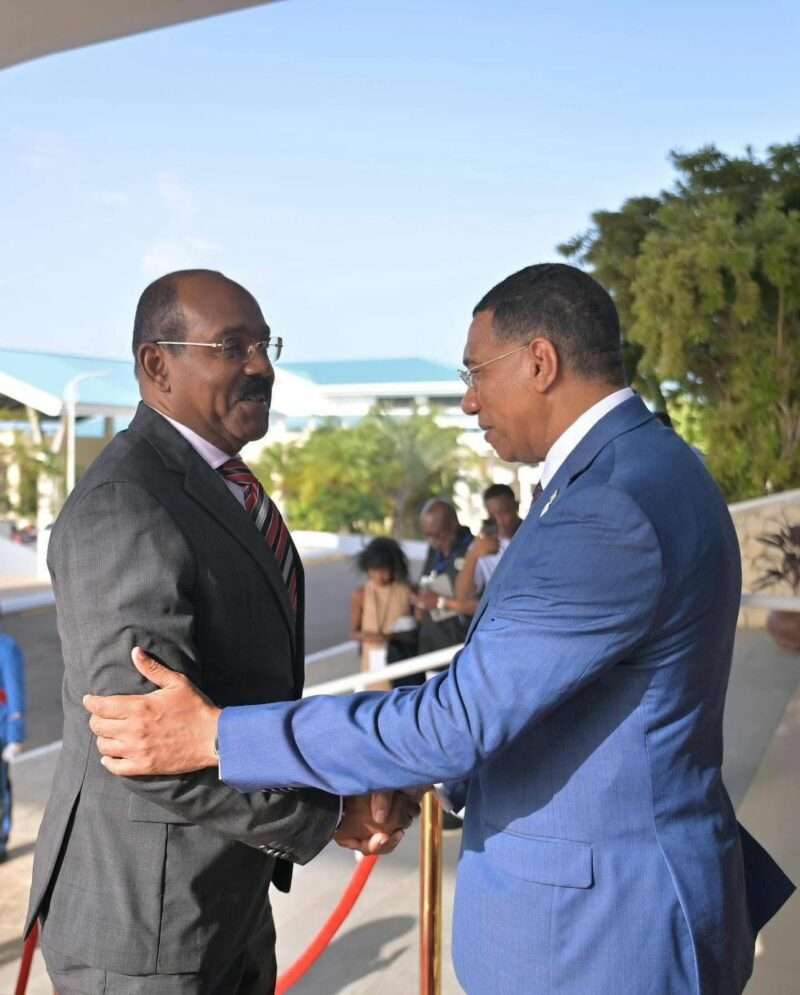
Gaston Browne, the prime minister of Antigua and Barbuda, emphasized that the pursuit of reparations is fundamentally a matter of justice for those who were exploited without compensation for their labor.
During a recent leaders’ summit for the Caribbean Community (Caricom), Caribbean leaders expressed their unwavering support for Jamaica’s petition to King Charles regarding reparations for slavery
“We must be able to fight for justice because not only were our forebears exploited in terms of not being paid, but the profits that were generated were repatriated to Europe and North America to build out their economies, leaving our countries bereft of important social institutions, hospitals, schools, and sufficient infrastructure,” Browne states

Jamaican Prime Minister Andrew Holness announced that the region has rallied behind this initiative, highlighting the petition’s significance as a “watershed moment for Caricom and the broader global movement for reparatory justice.”
The petition requests King Charles to seek legal advice from the judicial committee of the London-based Privy Council concerning the legality of the forced transport of Africans to Jamaica and whether it constitutes a crime against humanity.
If successful, Holness asserted that the United Kingdom would bear a legal obligation to provide reparations to Jamaica and its people for the lasting harm caused by slavery.
This story was first published by Antigua News on : antigua.news/2025/07/12/antigua-and-barbuda-supports-jamaicas-reparations-petition-to-king-charles. © 2025 Antigua News. Republication without permission is not allowed.

About the author
Shermain Bique-Charles is an accomplished journalist with over 24 years of dynamic experience in the industry. Renowned for her exceptional storytelling and investigative skills, she has garnered numerous awards that highlight her commitment to journalistic integrity and excellence. Her work not only informs but also inspires, making her a respected voice in the field.
Read our editorial standards and corrections policy. Spotted an error? Contact the newsroom.
More from Antigua and Barbuda
View section
Freeland Challenges Qualifier Schedule as College Commitments Complicate Team Selection
Basketball president says the timing of another qualifying round created difficulties for overseas players and added financial pressure
By Shermain Bique-Charles

School League Referee Calls for Investigation Into Alleged Verbal Abuse by Grammar School Coach
Devon Ollivere is seeking a public apology and safeguards for match officials following an alleged confrontation with Chesley Browne at Radio Range Football Field.
By Editorial Staff

Janica Adams Earns Special Recognition at Regional Tourism Youth Congress
Antigua and Barbuda’s Junior Minister of Tourism impressed with a creative destination pitch highlighting culture, adventure and bun and cheese ice cream.
By Shermain Bique-Charles

Dr Benjamin Calls for Community-Based Mental Health Care to Replace Clarevue Model
The consultant psychiatrist says meaningful reform must include housing, family support and direct involvement from people living with mental health conditions
By Shermain Bique-Charles
Comments (6)
Juju Bee July 12, 2025, 9:41 AM
Devorn Carter July 12, 2025, 10:10 AM
Terry July 12, 2025, 10:10 AM
Informed citizen July 12, 2025, 8:33 PM
Watching from afar! July 12, 2025, 10:59 AM
Keen Observer July 12, 2025, 11:12 AM
Here’s a more detailed explanation:
Parliamentary Sovereignty:
In the UK, the principle of parliamentary sovereignty means that Parliament has the ultimate authority to make laws, and no other body can overrule its decisions.
Privy Council’s Role:
The Privy Council advises the monarch on various matters, including the approval of Orders in Council.
Orders in Council:
These are legal instruments issued by the monarch on the advice of the Privy Council. They can be used to implement existing legislation, delegate powers, or address specific areas not covered by primary legislation, but they do not have the power to repeal or override Acts of Parliament.
Historical Context:
While the Privy Council once held more power, particularly in the medieval period, its role has evolved, and it no longer has the authority to overrule Parliament.
Constitutional Safeguards:
The UK constitution relies on conventions and legal principles to ensure a balance of power, and the supremacy of Parliament is a fundamental aspect of this