

















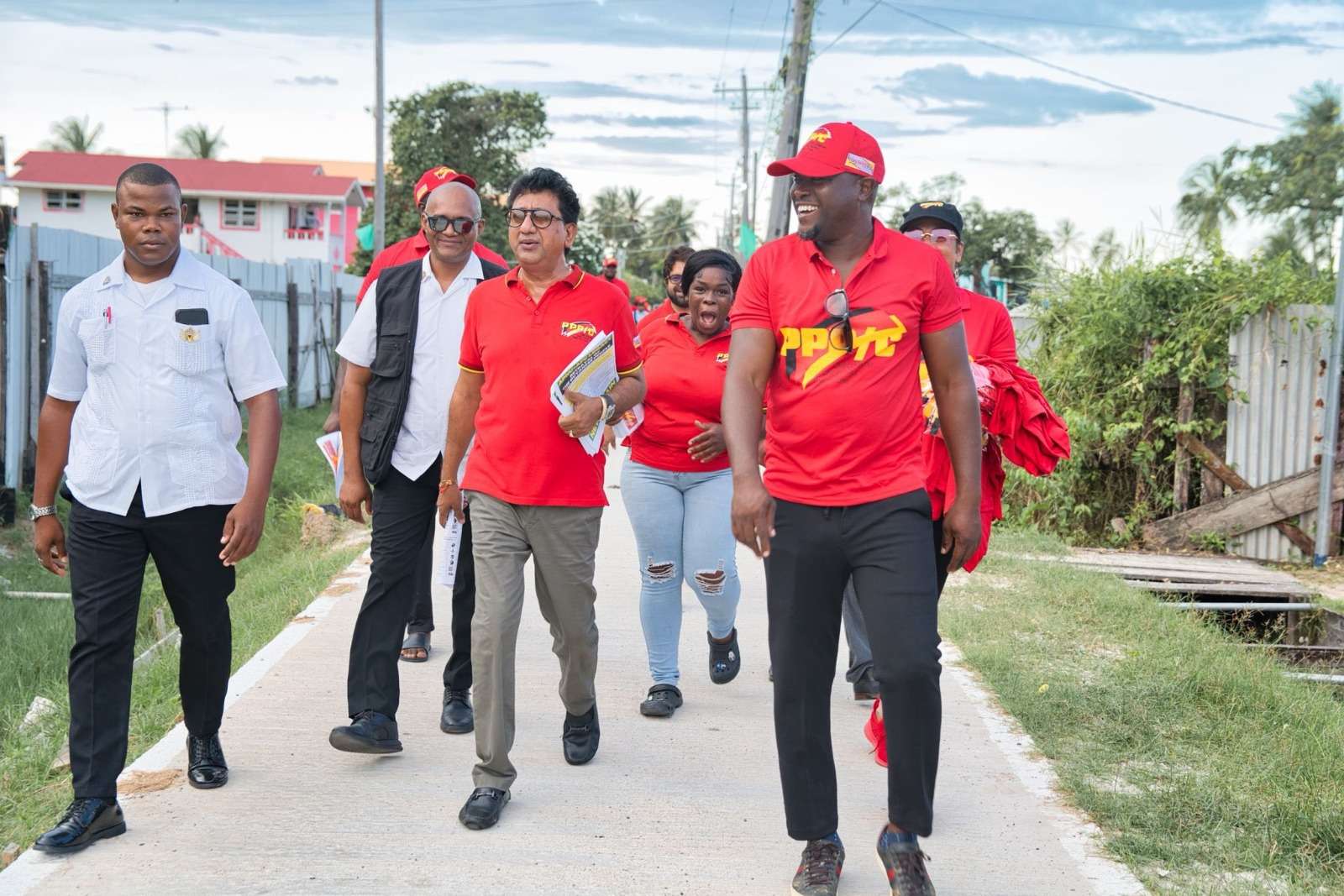
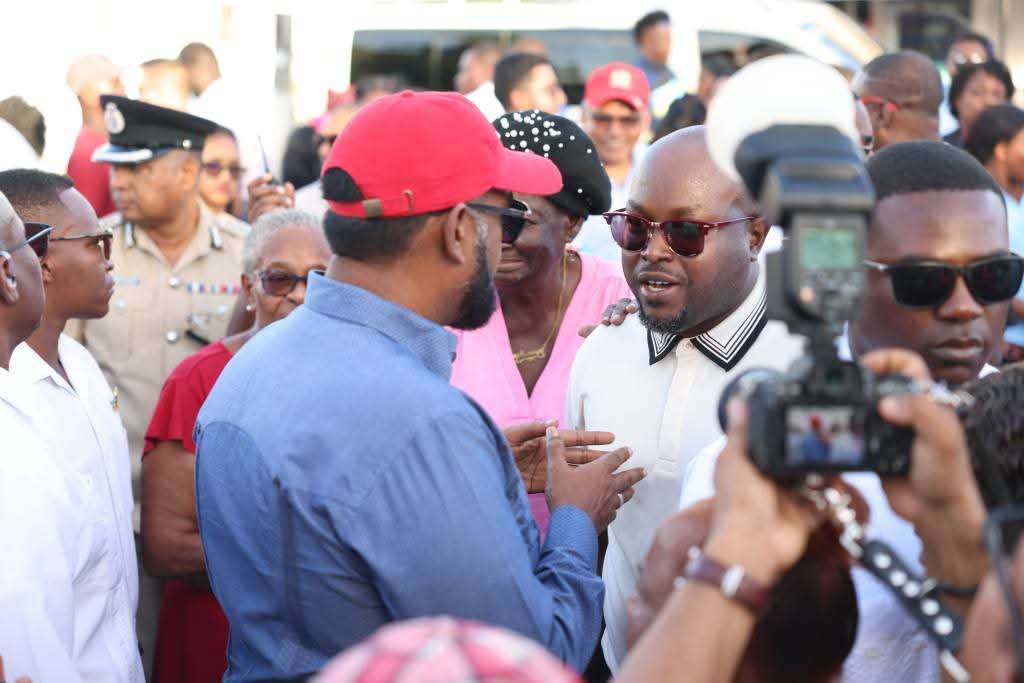
James Bond and Attorney General Anil Nandlall campaigning at community level
Guyana is heading into General and Regional Elections on 1 September, a contest set to determine how the Caribbean’s oil giant and world’s fastest growing economy will manage its wealth and development trajectory in the years ahead.
With multi-billion-dollar offshore oil revenues transforming its economy, Guyana has become one of the fastest-growing nations in the world. The outcome of this vote will decide whether the current development momentum—led by the ruling People’s Progressive Party/Civic (PPP/C)—continues, or if voters opt for a new political direction.
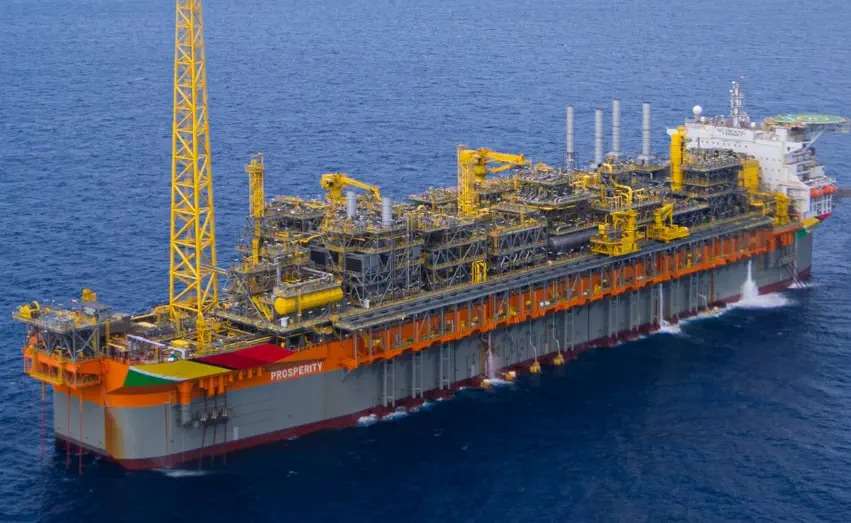
FPSO Offshore Guyana
Since returning to office in 2020, the PPP/C administration of President Irfaan Ali has pursued an aggressive development agenda, investing heavily in housing, health, education, and infrastructure. New highways are linking far-flung communities to the capital, hospitals are under construction, and tens of thousands of house lots have been distributed. Wage increases, targeted subsidies, and cash transfers have also been rolled out, with the government promising that “no citizen and no community will be left behind.”
“The PPP/C isn’t just talking development—they’re doing it,” said political activist James Bond, a former opposition figure who has emerged as an outspoken voice during the campaign. While aligned to the governing party, Bond argues that its track record stands out, citing housing, hospitals, and rising wages as proof of delivery.
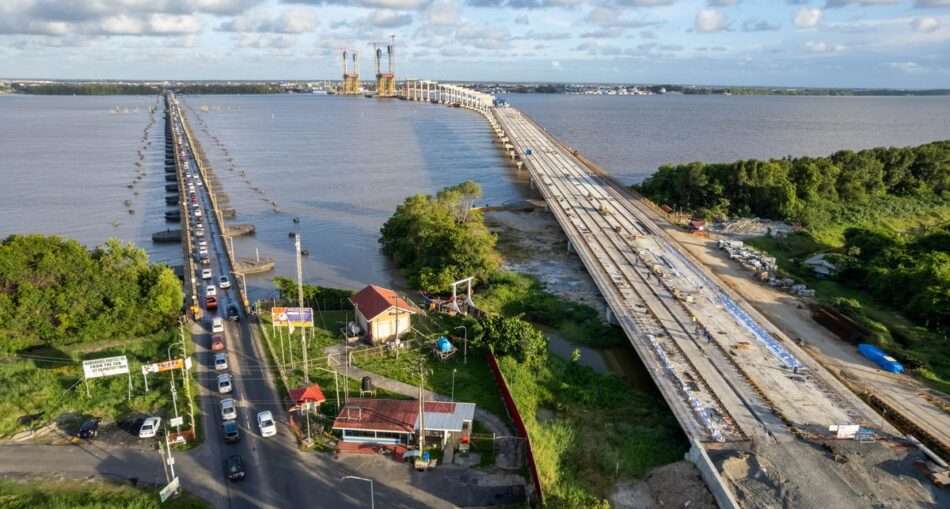
The new Demerara River Crossing alongside the old Demerara River Bridge

The opposition, A Partnership for National Unity (APNU), led by Aubrey Norton, has pledged an alternative path but faces persistent questions about internal unity and leadership. Bond has been particularly blunt in his critique, warning that Guyana’s oil-driven future cannot be left in inexperienced hands.
This election will also test the resilience of Guyana’s democratic institutions. The disputed 2020 polls plunged the country into months of political deadlock before the PPP/C was declared winner, drawing heavy international scrutiny. To safeguard credibility this year, the Carter Center, the Organisation of American States, and Caricom have all signalled their intention to deploy observer missions.
On Friday, members of the disciplined forces—the police and military—cast their ballots in early voting, a process that was reported as smooth and orderly. Their participation is widely seen as a gauge of broader public confidence ahead of the main vote.
James Bond and President Dr. Irfaan Ali
Analysts say the September poll is effectively a referendum on the PPP/C’s first five years of managing oil revenues. Billions more are expected annually, and the key question is how those resources will be distributed to sustain jobs, reduce inequality, and bolster national unity.
Bond, who frames this election as a test of political maturity, put it succinctly: “This is about healing Guyana. We can’t afford to fight over the spoils of oil. We must build a country where every citizen—whether in Georgetown, Lethem, or Linden—feels the benefit.”
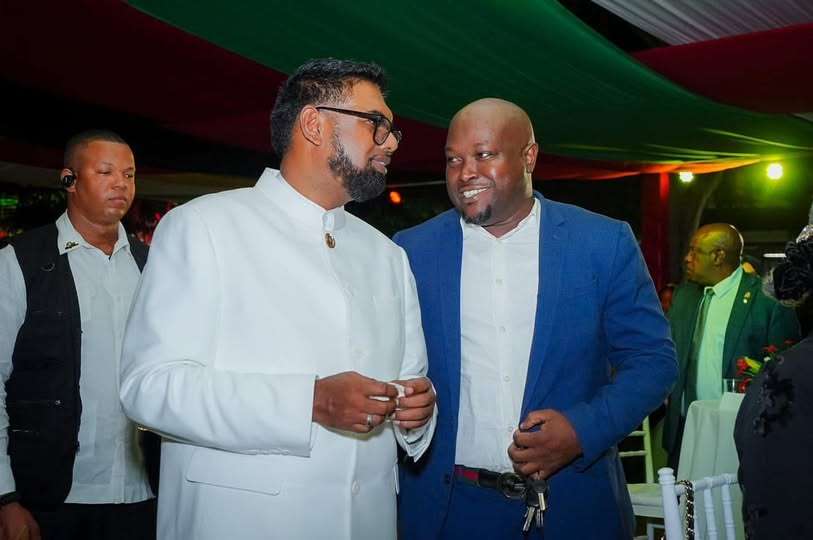
James Bond and President Dr. Irfaan Ali
For the wider Caribbean, Guyana’s elections are being closely watched—not just for their outcome, but for how the country balances rapid oil-fuelled growth with stability, democracy, and inclusive development.



The development of black communities are left behind while the Indian communities are developing rapidly. Yes Infrastructure, more hospitals, constant construction of buildings and housing development but lack of proper salary increase in public sectors because Afro Guyanese occupy most.
No one can deny Guyana has changed in just five years. Roads, houses, jobs, this government is delivering.
Ali and the PPP/C deserve another term to finish what they started. The progress is visible everywhere.
You can already see the development gains new roads, jobs, infrastructure. Credit where it’s due, the oil revenue is making a difference.