























Statutory Abdication at Jolly Harbour? Freeholder’s Judicial Review Tests APUA’s Duty to Regulate
A judicial review brought by a Jolly Harbour freeholder is putting the regulatory role of the Antigua Public Utilities Authority (APUA) under scrutiny, in a case asking whether the country’s principal utility regulator has lawfully addressed the supply of water and electricity to approximately 850 freehold parcels in the gated community.
Cyprian Kowalczyk filed proceedings (ANUHCV2025/0559) after writing to APUA on 29 October 2025 and receiving no substantive reply. His amended claim contends that APUA has failed to apply its mind, as the Public Utilities Act Cap. 359 (PUA) requires, to whether and how Caribbean Developments (Antigua) Limited (CDAL) may lawfully supply, distribute and sell water and electricity onward through the Jolly Harbour distribution network.
“Two main meters” and what lies beyond
Under the PUA, APUA holds the exclusive statutory right to supply and sell water (section 7) and electricity (section 5). Anyone else doing so requires written permission, delegation made with the approval of the Minister (section 9), and tariffs approved under section 15. The Act creates criminal offences for unauthorised supply and resale.
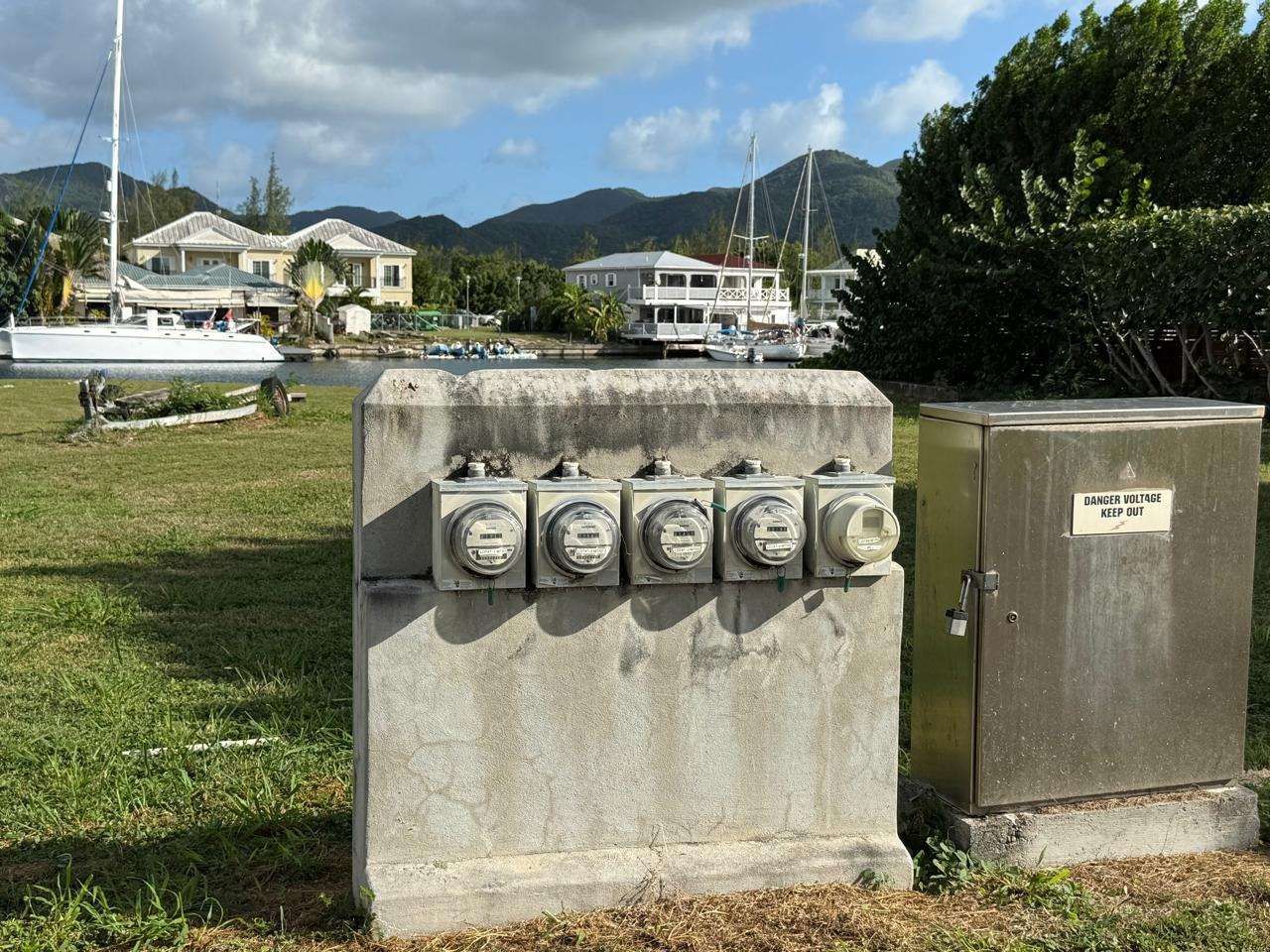
Mr Kowalczyk’s claim relies on APUA’s own Freedom of Information response of 19 January 2026, which recorded no permission, no delegation, and no approved tariff held by CDAL. APUA’s attorneys subsequently wrote, on 19 and 25 February 2026, that the Authority’s “responsibility is limited to the supply and metering of utilities to the two main meters registered to CDAL”. Everything beyond those bulk meters — the individual metering of every parcel, the invoicing of every freeholder, and the threat of disconnection for non-payment — is, on APUA’s stated position, not its concern. That position, the claim says, is the regulatory failure the Court is being asked to address.
No service agreements, no published tariff
Mr Kowalczyk says that neither he nor, to his knowledge, any of the approximately 850 freeholders has been provided with a written utility service agreement by CDAL. There are, he says, no terms and conditions filed with the regulator, no tariff approved under section 15 and published in the Gazette, and no formal complaints procedure. Freeholders receive invoices and demands; the framework Parliament put in place under the PUA does not reach them.
Yet in a 2011 letter to Jolly Harbour property owners, CDAL’s General Manager told them that “APUA has granted a License to CDAL to supply and distribute electricity” and that “CDAL is not bound by APUA’s pricing”. APUA’s 2026 records show no such licence on file. Mr Kowalczyk says the discrepancy is itself a matter calling for the Authority’s consideration.

The “chokepoint” at purchase
In his own case, Mr Kowalczyk says that when he completed the purchase of his parcel in 2021, CDAL conditioned the connection of utilities on the payment of over $200,000 — a sum the company associated with maintenance charges said to be owed in relation to the previous ownership of the parcel. The recoverability of that payment is the subject of separate proceedings he has brought against CDAL. At the relevant time, on the materials before the High Court, CDAL held no section 5(2) permission, no section 9 delegation and no section 15 tariff that would have permitted such a charge.
That entry-point conditioning, he says, is the unregulated counterpart to a practice the High Court has already ruled against. In Coleman v CDAL (ANUHCV2013/0029) the Court ruled CDAL’s disconnection of utilities for disputed water charges unlawful. In Bigler v CDAL (ANUHCV2021/0079) the Court questioned whether CDAL had APUA authorisation to provide utilities at Jolly Harbour at all, and ruled disconnection for non-payment of community charges unlawful.
Infrastructure losses passed on to consumers
A further strand of the claim concerns CDAL’s own financial statements, which record water losses of approximately $4.16 million between 2021 and 2025 — around 40 per cent of all water delivered through the bulk meters. In a properly regulated utility, those losses would ordinarily be absorbed within an approved metered tariff. Mr Kowalczyk says they have instead been included in extra-contractual demands for which no tariff has been approved.
A twenty-year warning
In 2005, PricewaterhouseCoopers, reviewing CDAL’s community-charge methodology, observed that Jolly Harbour appeared to have been set up “as a ‘fiefdom’ instead of a traditional community structure”. A 2001 KPMG review had earlier found cost-allocation practices to be inadequate and arbitrary. Two decades on, Mr Kowalczyk says, the same structural problem now reaches into utility supply that the PUA reserves to a regulated, tariff-approved framework.
The order sought
The judicial review does not ask the Court to impose any particular regulatory outcome. Following the Padfield line of cases — including the decision of Madam Justice Blenman (now of the Eastern Caribbean Court of Appeal) in Francis v Public Utilities Authority (ANUHCV2006/0452) — Mr Kowalczyk seeks an order of mandamus directing APUA to consider and determine, according to law, the regulatory status of CDAL’s supply, distribution and sale of water and electricity, including the conditioning of any new utility connection at the point of sale or transfer of any parcel.
The matter is expected to come before the High Court in the coming weeks.



Whoa!!! Corruption and Theivery in Private Sector!!!
Thats alot to take in all at once
Money people tory. I’m staying out
So APUA only responsible for two meters but 850 homeowners getting bills? Antigua really does run on vibes sometimes 😩
A whole gated community operating outside proper tariff approvals? That’s wild if proven
At this point this “freeholder” needs to go back to wherever they came from. I say this with absolute disdain, because what the court is being used for in this case, is to help a freehold owner gain traction in a quest to freeload. For anyone that has had the displeasure of encountering these kinds of expats, they always come with an ulterior motive. Hidden behind their fake smiles and “I pay your taxes” rhetoric, is the insatiable desire to not conform to our way of doing things. There is no collective benefit to be had from their attack on the development. Pretty soon, if you don’t force them out, they’ll keep conspiring to have the ability to run places in our inheritance with relative autonomy, and negotiate a little “cut” for the government… something like what’s already in place at a similar setup in another part of the island. Get him and his cohorts OUT!!
Imagine buying property and being told pay over $200k before water and light can connect. Madness
You know that’s a lie. If the previous property owners were delinquent in payments over the years, the new owners are LEGALLY obligated to pay for monies owed by previous owners. The option is simple if you don’t want to inherit the debt. DON’T BUY IT!!