
Minister Michael Joseph Calls for Greater Investment in Climate-Vulnerable Communities at Berlin Forum

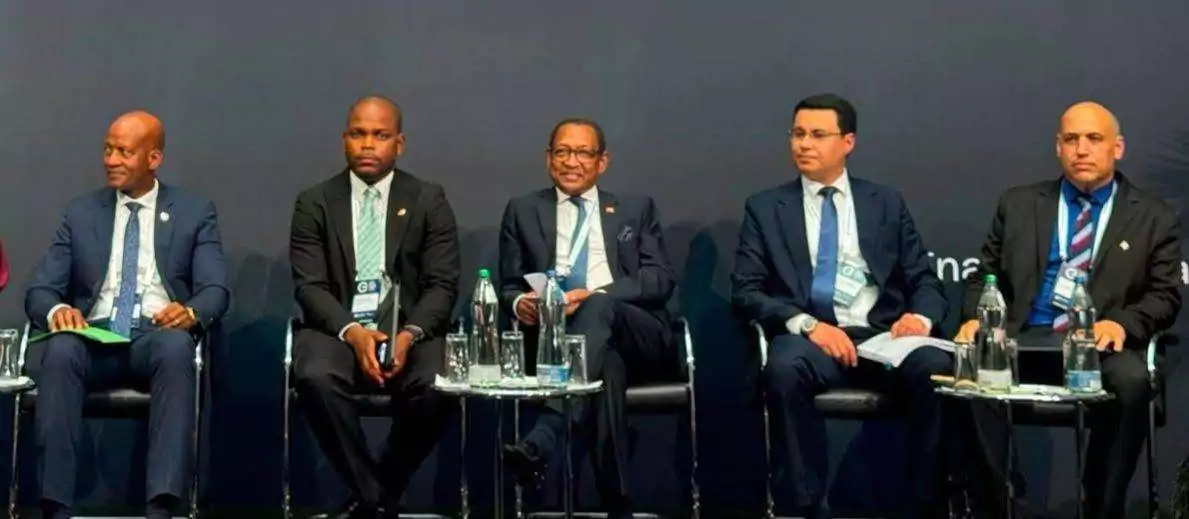
Minister of Health, Wellness, Environment and Civil Service Affairs, Hon. Michael Joseph, has called for increased investment in communities on the frontlines of climate change, warning that vulnerable nations cannot be expected to confront escalating climate threats without adequate financial support.
Addressing the Berlin Climate Mobility Forum 2026 in Germany, Minister Joseph participated in discussions on the Global Principles for Addressing Climate Mobility and welcomed the framework as an important step toward ensuring that climate adaptation efforts are both locally driven and sufficiently financed.
Speaking to representatives from governments, international organizations, development institutions and civil society, the minister stressed that local communities are often best positioned to identify their needs and vulnerabilities but frequently lack the resources necessary to implement solutions.
“Communities know what they need. They know which homes flood first, which roads fail, which coastlines are retreating, which families need support, and which ecosystems once protected them. But knowing what is needed is not the same as having the resources to act,” Minister Joseph said.
He noted that for Small Island Developing States (SIDS) such as Antigua and Barbuda, climate change is placing increasing pressure on housing, healthcare, food security, public infrastructure and overall community well-being. He argued that international financing mechanisms must strengthen national institutions and empower governments to deliver support directly to those most at risk.
As an example of practical intervention, the minister highlighted Antigua and Barbuda’s Home Assistance Programme for the Indigent (HAPI), which provides housing construction and rehabilitation support for vulnerable citizens, including the elderly, unemployed persons, displaced individuals and disaster victims.
Minister Joseph also drew attention to the often-overlooked mental health impacts of climate change. He said repeated exposure to storms, displacement, disrupted livelihoods and prolonged uncertainty can leave lasting psychological scars on affected populations.
The minister further emphasized the importance of protecting natural ecosystems, including beaches, wetlands, coral reefs, mangroves and fisheries, noting that these environments play a vital role in supporting food security, livelihoods, cultural heritage and protection against extreme weather events.
Reaffirming Antigua and Barbuda’s commitment to global climate action, Minister Joseph stressed the importance of limiting global warming to 1.5 degrees Celsius.
“For Antigua and Barbuda, 1.5 degrees is the difference between manageable risk and permanent damage,” he stated.
The minister also highlighted the growing challenge of loss and damage, warning that adaptation measures have limits when communities face repeated climate shocks, land loss, damaged infrastructure, failing water systems and disappearing livelihoods.
Pointing to the experiences of Caribbean nations that have suffered devastating hurricanes, Minister Joseph called for a more responsive and equitable international financial architecture capable of supporting vulnerable countries facing the disproportionate impacts of climate change.
He reaffirmed Antigua and Barbuda’s support for the Multidimensional Vulnerability Index (MVI) and the Antigua and Barbuda Agenda for Small Island Developing States, describing both initiatives as essential frameworks for improving access to climate finance and ensuring that vulnerability is appropriately recognised within international development and financing systems.
Minister Joseph is attending the Berlin Climate Mobility Forum 2026 with support from Antigua and Barbuda’s Climate Ambassador, Ruleta Camacho Thomas.
The Berlin Climate Mobility Forum brings together high-level representatives from governments, international organizations, development institutions and civil society to advance practical solutions to the growing challenges associated with climate mobility while strengthening resilience and adaptation efforts worldwide.
This story was first published by Antigua News on : antigua.news/2026/06/18/minister-michael-joseph-calls-for-greater-investment-in-climate-vulnerable-communities-at-berlin-forum. © 2026 Antigua News. Republication without permission is not allowed.

About the author
The Editorial Staff refers to all reporters employed by Antigua.news. When an article is not an original creation of Antigua.news—such as when it is based on a press release, other media articles, letters to the editor, or court decisions—one of our staff members is responsible for overseeing its publication.
Read our editorial standards and corrections policy. Spotted an error? Contact the newsroom.
More from Antigua and Barbuda
View section
JCI Antigua Named Most Outstanding Organisation at Regional Convention
The chapter secured organisational and individual honours in Saint Lucia, while former president Laurel Jonas was elected JCI West Indies National President for 2027.
By Shermain Bique-Charles

Indian Delegation Meets Government Leaders, Visits Businesses Under SEEDS Initiative
The visit focused on expanding cooperation between India and Antigua and Barbuda, with business site visits linked to an equipment support initiative.
By Shermain Bique-Charles

Telemaque: Crabbs Channel Upgrade Gives Antigua Vital Backup to St. John’s Harbour
Darwin Telemaque says maintenance dredging strengthens maritime resilience, protects business continuity and positions Antigua and Barbuda to become more competitive.
By Shermain Bique-Charles

Browne Proposes Fishing Restriction to Let Peace Beach Reef Mature
Prime minister says newly installed artificial reef modules need time to develop and promises continued public beach access.
By Shermain Bique-Charles
Comments (2)
Informed citizen June 18, 2026, 1:57 PM
Juju Bee June 18, 2026, 9:56 PM