












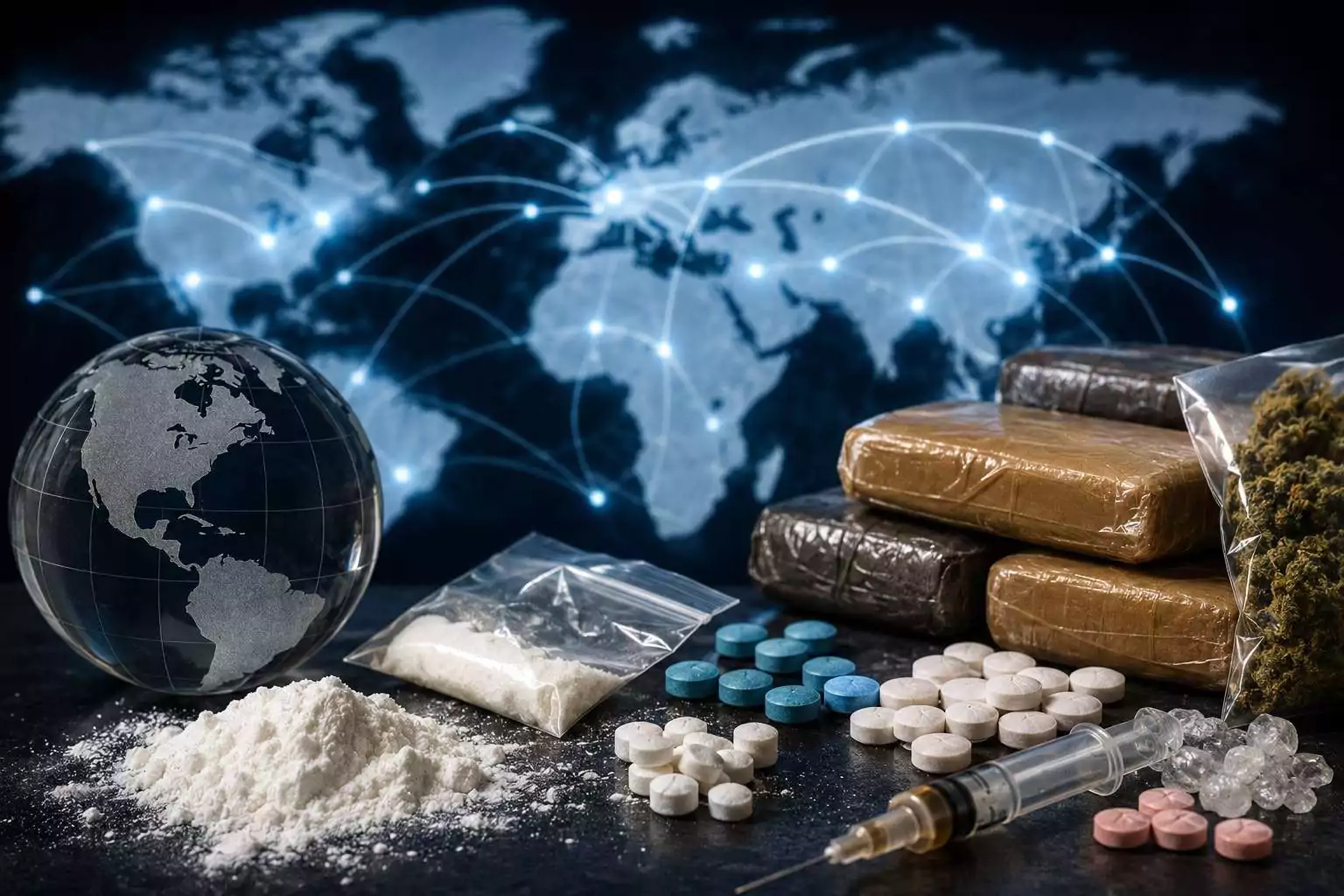
Global drug markets are transforming at unprecedented speed as traffickers exploit new technologies, novel synthetic substances and global instability to push into new territories, according to the United Nations Office on Drugs and Crime’s World Drug Report 2026, released in Vienna yesterday.
“We have seen an unprecedented spike in new types of drugs on the market, and worryingly, some are more potent or dangerous than before,” said Monica Juma, Executive Director of UNODC. “We are already suffering the impact: millions of premature deaths and healthy years of life needlessly lost, drug trafficking networks that are distorting economies, the destruction of lives, communities and livelihoods, and the compounding of insecurity and violence.”
The report estimates that 331 million people used a drug in 2024, representing 6.2 per cent of the global population aged between 15 and 64, up from 5.2 per cent in 2014. Cannabis remains the most widely used drug by far, with 256 million users in 2024, followed by opioids at 63 million, amphetamines at 32 million, cocaine at 25 million and ecstasy at 21 million.
Juma called for a coordinated international response.
“The imperative to focus on stopping organised crime groups has never been greater,” she said. “We must surge deterrence efforts, increase intelligence-sharing and coordinate joint operations, while investing more in prevention and treatment.”

According to the report, illicit drug manufacturers continue to invent new synthetic substances in an effort to skirt regulations and avoid detection, with five times more drug types found in seizures in 2024 than before 2000.
The number of new psychoactive substances circulating in drug markets reached 755 in 2024, of which 118 were reported for the first time.
The methamphetamine trade has also become a truly global market, the report finds.
New trafficking routes and the spread of production have opened new markets in the Middle East, Africa and parts of Europe, with seizures growing by 13 per cent annually on average, driven largely by volumes in East and South-East Asia.
The report also notes that methamphetamine from North America is now crossing the Pacific Ocean to reach countries on the Western Pacific Rim, fuelling increased trafficking and use in Pacific Island nations as a result.
Cannabis use and trafficking patterns are shifting as well, the report states, with consumption rising alongside changing legal attitudes, particularly in North America, where legalisation and decriminalisation policies exist.
The number of cannabis users has grown by 40 per cent over the past decade, with prevalence rising from 3.8 per cent of the population aged 15 to 64 in 2014 to 4.8 per cent in 2024.
Cannabis seizures reached historically high levels in 2024, and inter-regional trade has expanded sharply, with 57 countries or territories outside North America identifying it as a source region for cannabis seizures over 2015 to 2024, up from just 11 in the preceding decade.
The UNODC also reports that organised crime groups are pushing increasingly large quantities of cocaine toward both established and emerging markets to maximise profit beyond their largest customer bases in Western and Central Europe, North America and Oceania, with Africa and Asia now recording the highest growth rates in cocaine seizures globally between 2020 and 2024.
The report also points to the wider social cost of drug use, noting its association with acquisitive crime, family and community violence, and the victimisation of people who use drugs.
UNODC stresses that these outcomes are shaped by broader factors, including poverty, homelessness, poor mental health and limited access to treatment and social services, which it identifies as key entry points for intervention and prevention efforts.




This too damn long. I got lost a long the way