












As students across Antigua and Barbuda return to the classroom this week, the value of agriculture returns to the focus of educators and agriculture advocates, who argue that school gardens and farming programmes deserve a place at the centre of early education rather than treatment as a side activity.
As part of this series, Antigua.News visited Simon Bolivar Pre-School, where a modest backyard garden has grown into one of the school’s most valued teaching tools.
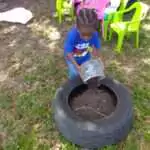
Under their teacher Pauline Charles-Benta, children transplant seedlings, harvest produce and even pick their own tea leaves as part of everyday learning. The garden now yields peppers, green fig and tea bush added over the years as the programme has expanded.
The benefits, she says, extend well beyond nutrition. Digging and planting help build the fine motor skills children need for writing, tying shoelaces and other everyday tasks.

Caring for a living plant introduces a form of responsibility that’s difficult to teach through a workbook.
Parents have been closely involved in sustaining the programme, pitching in with seedlings, fence repairs and watering whenever asked.
Introducing children early to agriculture keeps farming visible as a legitimate path at a time when the sector struggles to attract young people.
Not every child needs to become a farmer, but a country that stops introducing its children to where food comes from risks losing the pipeline of people willing to grow it.



Aweeee impressive. I think people would know the school best as the pumpkin school. Lol