
Climate Assessments Flag Roof, Flood and Evacuation Risks at Antigua and Barbuda Schools
All six local schools in a Caribbean resilience project have been assessed, with preliminary ratings pointing to the need for stronger roofs, flood protection and safer emergency access.


All six Antigua and Barbuda schools participating in a regional climate resilience project have undergone infrastructure and safety assessments, with preliminary findings identifying risks that could affect their ability to withstand extreme weather.
The schools are Bendals Primary, Urlings Primary, T.N. Kirnon Primary, Pares Secondary, Princess Margaret School and Sir McChesney George Secondary School in Barbuda. Their preliminary resilience ratings ranged from 51 to 61 per cent under the project’s assessment criteria.
Integrated Health Outreach Inc. (IHO), which is leading the initiative with Eco Supplier Foundation, said the findings point to needs including hurricane-resistant roof upgrades, flood mitigation and standard fire detection systems.
The assessments are part of a project launched in December 2025 to examine 21 primary and secondary schools in Antigua and Barbuda, the Dominican Republic and Saint Lucia. Fieldwork has also been completed at the nine participating schools in the Dominican Republic. Assessments at Saint Lucia’s six schools are scheduled for completion around the end of December 2026.
Dr Nicola Bird, IHO’s executive director, said the work has revealed problems extending beyond storm damage.
“In the schools assessed so far, our early assessments have revealed critical vulnerabilities, from structural deterioration to a severe lack of barrier-free emergency evacuation routes,” Bird said.
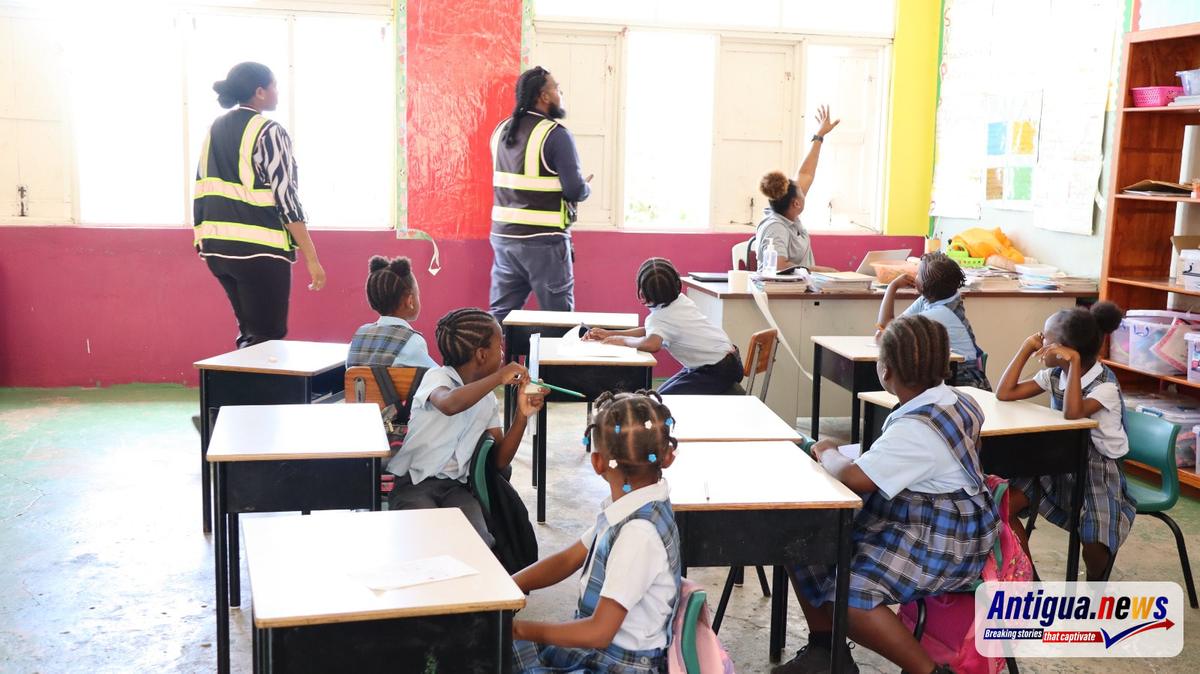
She said the data would help guide improvements that protect students when major storms or heatwaves strike.
The project places particular attention on the needs of young children, girls and people with disabilities. That approach also matters because schools often serve as shelters during disasters, IHO said.
In the Dominican Republic, assessments flagged serious infrastructure risks at four schools, including weakened load-bearing columns, corroded roofing and inadequate stormwater drainage.
The project also examines how schools can cope with extreme heat through improved ventilation, cooling and shade. Its next stage includes community workshops to review the findings and the development of costed plans for school improvements.
The initiative, formally titled Socially Inclusive Strengthening of Climate Resilient Infrastructure and Action in Caribbean SIDS, is funded by the Coalition for Disaster Resilient Infrastructure through its Infrastructure Resilience Accelerator Fund. It is being carried out with the support of education, finance and other authorities in the three participating countries.
This story was first published by Antigua News on : antigua.news/2026/09/30/climate-assessments-flag-roof-flood-and-evacuation-risks-at-antigua-and-barbuda-schools. © 2026 Antigua News. Republication without permission is not allowed.

About the author
Shermain Bique-Charles is an accomplished journalist with over 24 years of dynamic experience in the industry. Renowned for her exceptional storytelling and investigative skills, she has garnered numerous awards that highlight her commitment to journalistic integrity and excellence. Her work not only informs but also inspires, making her a respected voice in the field.
Read our editorial standards and corrections policy. Spotted an error? Contact the newsroom.
More from Antigua and Barbuda
View section
Antigua and Barbuda First in Eastern Caribbean to Sign UN Development Framework for 2027–2031
The agreement will guide cooperation on economic diversification, climate resilience, social protection and other development priorities.
By Shermain Bique-Charles

Parker Defends Call for Age of Consent at 18 in Response to ASPIRE
Senator calls for stronger protection against sexual exploitation alongside adolescent healthcare, education and safeguards for relationships between young people close in age.
By Shermain Bique-Charles

Greene Says CHOGM Could Open Doors for UWI Five Islands
Foreign minister identifies international student recruitment and academic connections as potential longer-term opportunities. Meta description: Greene says CHOGM could help UWI Five Islands promote its programmes and build connections with Commonwealth countries.
By Shermain Bique-Charles

West Indies Oil Seeks Coordination on Fuel Deliveries During CHOGM
Police ask the company to provide delivery dates and times so movements can be coordinated with security arrangements.
By Cory Wayland
Comments (3)
Dario September 30, 2026, 1:55 PM
51–61% resilience and we supposed to feel comfortable sending children there? 😩😂 The roof, flooding and emergency access issues need serious attention oui. School supposed to be a safe place, not somewhere parents worrying about what might happen when the next big storm hit.
ReplyShanice September 30, 2026, 1:56 PM
Wait nah 😂 so the schools getting hurricane assessments and the findings saying roof, flood and evacuation problems? We really can’t wait until storm come to find out the building wasn’t ready. Fix dem schools before Mother Nature come do the inspection herself!
ReplyApex Jones September 30, 2026, 5:39 PM
Most of the schools here are oldddddd and need to modernize to reflect our current time and climate challenges
Reply