
From Coaster Buses to Driverless Technology: China Offers a Glimpse Into the Future of Public Transportation
A striking contrast between the familiar coaster bus and a modern self-driving vehicle highlights how rapidly technology is transforming public transportation in China.

By Cory Wayland

The familiar coaster bus, a vehicle that has transported generations of passengers across Antigua and Barbuda and the wider Caribbean, is now being contrasted with a remarkable technological advancement in China: the self-driving bus.
For many Caribbean residents, coaster buses remain a symbol of everyday transportation, with drivers navigating busy streets, collecting passengers and transporting commuters to their destinations.
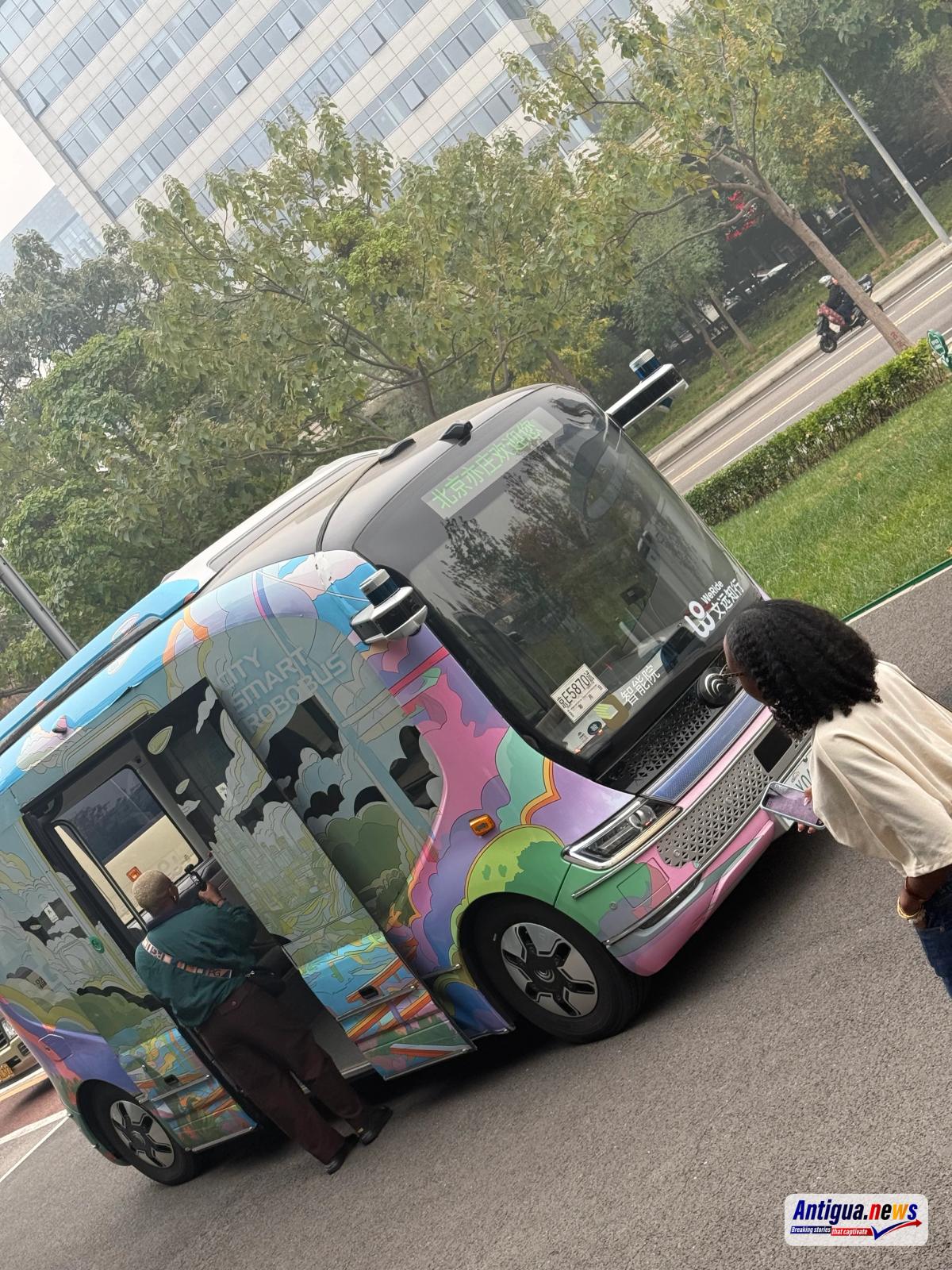
However, developments in autonomous transportation are offering a dramatically different vision of how passengers could travel in the years ahead.
Instead of relying entirely on a human driver, self-driving buses use sophisticated technology, including sensors, cameras and automated navigation systems, to detect their surroundings and guide their movements.
The contrast between the traditional coaster bus and its futuristic counterpart highlights just how far transportation technology has progressed.
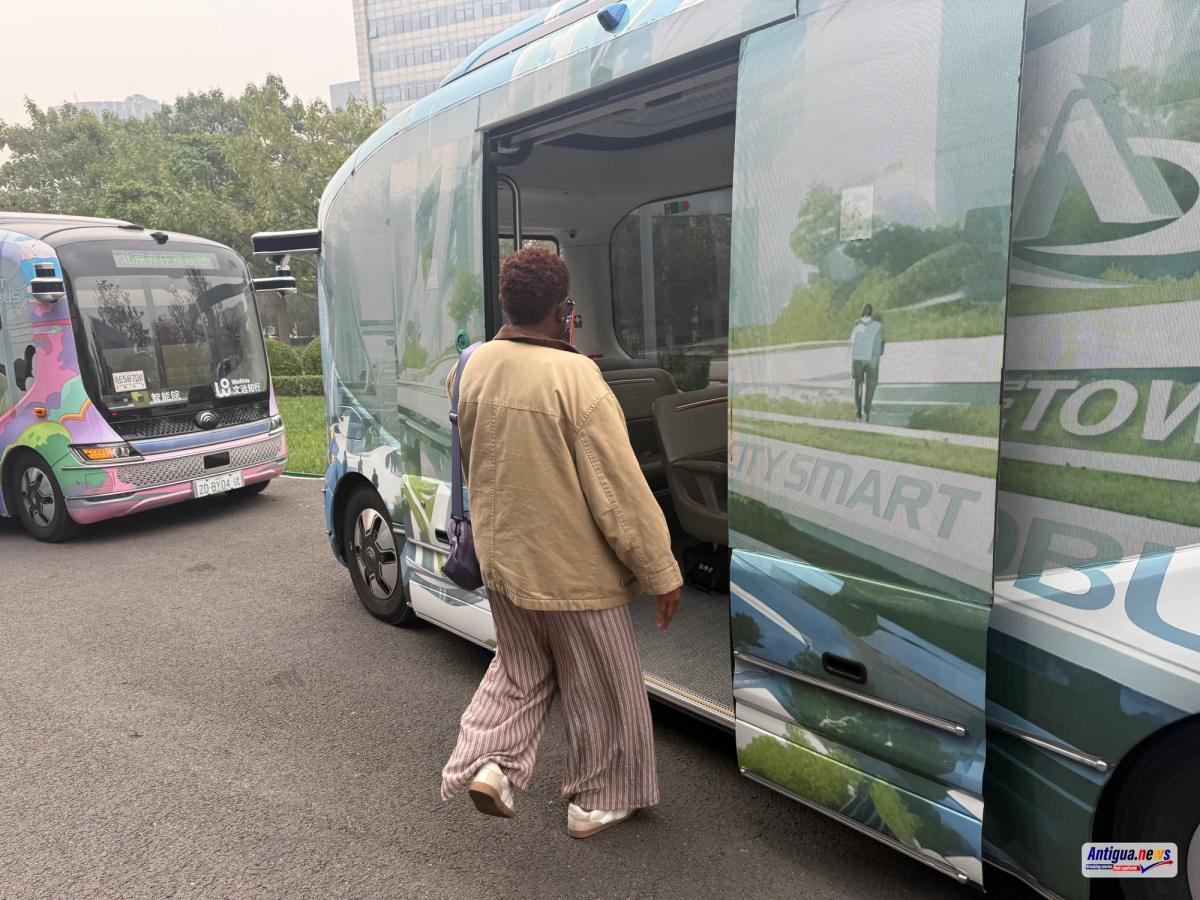
China has emerged as a major centre for autonomous vehicle development, with companies testing and introducing driverless transportation systems in selected cities and controlled environments.
Although these vehicles are designed to operate with varying degrees of automation, safety supervision and regulatory restrictions remain important parts of their deployment.
For Caribbean countries, where conventional minibuses and coaster buses continue to dominate public transportation, the development raises interesting questions about what the future could hold.
While widespread adoption of driverless buses in the region may still be some distance away, the technological advancements taking place in China demonstrate how dramatically public transportation could change.
What was once considered futuristic is increasingly becoming a reality, offering a glimpse into a world where the bus of tomorrow may no longer require someone behind the steering wheel.
The comparison serves as a reminder that the future of transportation is not simply being imagined. In parts of the world, it is already taking shape.
This story was first published by Antigua News on : antigua.news/2026/10/12/from-coaster-buses-to-driverless-technology-china-offers-a-glimpse-into-the-future-of-public-transportation. © 2026 Antigua News. Republication without permission is not allowed.

About the author
Cory Wayland is the Social Media Co-ordinator at Antigua.News, where he manages digital content strategy, audience engagement, and real-time news publications across social platforms. With a keen eye for trending topics and a commitment to factual storytelling, Cory plays a key role in shaping the online voice of Antigua.News.
Read our editorial standards and corrections policy. Spotted an error? Contact the newsroom.
More from World
View section
Pope Leo XIV to Undergo Surgery to Remove Lung Nodule
The 71-year-old pontiff announced the operation after Sunday’s Angelus. The nodule was found during recent medical checks and, he said, detected at an early stage.
By Dario Item

Afreximbank extends EUR 40-million revolving working capital facili-ty to support Cameroon’s Prometal SA
Afreximbank’s EUR 40-million revolving facility will support Prometal SA’s steel production expansion and strengthen manufacturing capacity in Cameroon.
By Editorial Staff

Passengers Subdue Co-Pilot Accused of Trying to Crash Israel-Bound Flight
The flydubai aircraft plunged thousands of feet during a violent cockpit incident before making an emergency landing in Saudi Arabia.
By Cory Wayland

Antigua and Barbuda, Octopus Energy to Explore Cheaper, Cleaner Power
By Shermain Bique-Charles
Comments
Be the first to comment.