
Antigua and Barbuda remains on the EU’s blacklist

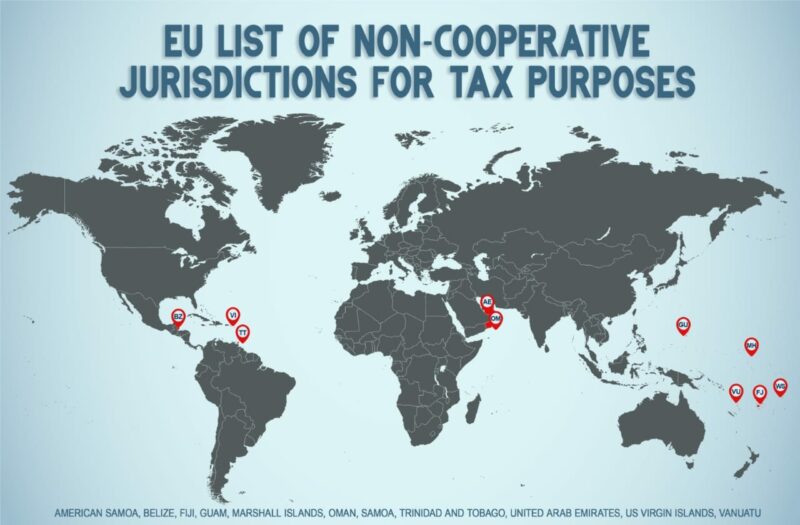
The European Union has recently released an update on its blacklist for non-cooperative tax jurisdictions, and Antigua and Barbuda still remain on the list.
The twin-island nation is among 12 jurisdictions that have been identified as not making sufficient improvements to their legal frameworks to address tax-related issues.
The EU Council updates this list every six months and has removed four jurisdictions, namely Bahamas, Belize, Seychelles and Turks and Caicos, from the previous list, indicating that they have approved measures to improve their tax cooperation with the group of 27.
The EU blacklist has been in operation since 2017 and includes jurisdictions that fail to comply with the EU standards on tax transparency, tax fairness, or implementation of international standards to avoid the erosion of the tax base or the transfer of benefits and that they also do not take steps to address these problems.

The council assesses jurisdictions based on a set of criteria laid down, and the update serves as a reminder for countries to address concerns related to tax transparency and cooperation.
“Being included in it does not entail economic sanctions, beyond the prohibition of European funds transiting through entities located in these jurisdictions and administrative measures, such as more frequent audits, although States may decide at the national level to impose other types of penalties,” according to the EU.
The European Union (EU) has recently removed the Bahamas and Turks and Caicos from its list of non-cooperative jurisdictions for tax purposes.
This move came after the Organisation for Economic Co-operation and Development (OECD) relaxed its recommendations for both countries.
The OECD found that they had deficiencies in applying the rules on economic substance requirements, which prove that companies are actually active.
Consequently, the EU deemed that they now meet the standards set for jurisdictions without corporate tax or with a nominal tax only.
On the other hand, Belize and Seychelles were included in the list due to a negative evaluation by the OECD on their standards for the exchange of tax information.
However, both countries have applied changes that have led the OECD to grant them a new review “in the near future.”
Therefore, the EU has decided to remove them from the list until the results are available, as stated by the Council in a statement.
It is worth noting that the EU plans to update its list again next December.
This story was first published by Antigua News on : antigua.news/2024/02/21/antigua-and-barbuda-remains-on-the-eus-blacklist. © 2024 Antigua News. Republication without permission is not allowed.

About the author
The Editorial Staff refers to all reporters employed by Antigua.news. When an article is not an original creation of Antigua.news—such as when it is based on a press release, other media articles, letters to the editor, or court decisions—one of our staff members is responsible for overseeing its publication.
Read our editorial standards and corrections policy. Spotted an error? Contact the newsroom.
More from Antigua and Barbuda
View section
Freeland Challenges Qualifier Schedule as College Commitments Complicate Team Selection
Basketball president says the timing of another qualifying round created difficulties for overseas players and added financial pressure
By Shermain Bique-Charles

School League Referee Calls for Investigation Into Alleged Verbal Abuse by Grammar School Coach
Devon Ollivere is seeking a public apology and safeguards for match officials following an alleged confrontation with Chesley Browne at Radio Range Football Field.
By Editorial Staff

Janica Adams Earns Special Recognition at Regional Tourism Youth Congress
Antigua and Barbuda’s Junior Minister of Tourism impressed with a creative destination pitch highlighting culture, adventure and bun and cheese ice cream.
By Shermain Bique-Charles

Dr Benjamin Calls for Community-Based Mental Health Care to Replace Clarevue Model
The consultant psychiatrist says meaningful reform must include housing, family support and direct involvement from people living with mental health conditions
By Shermain Bique-Charles
Comments (1)
DCW February 21, 2024, 9:59 AM