
Analysis: ABLP’s 2026 manifesto reflects party confidence heading into April 30

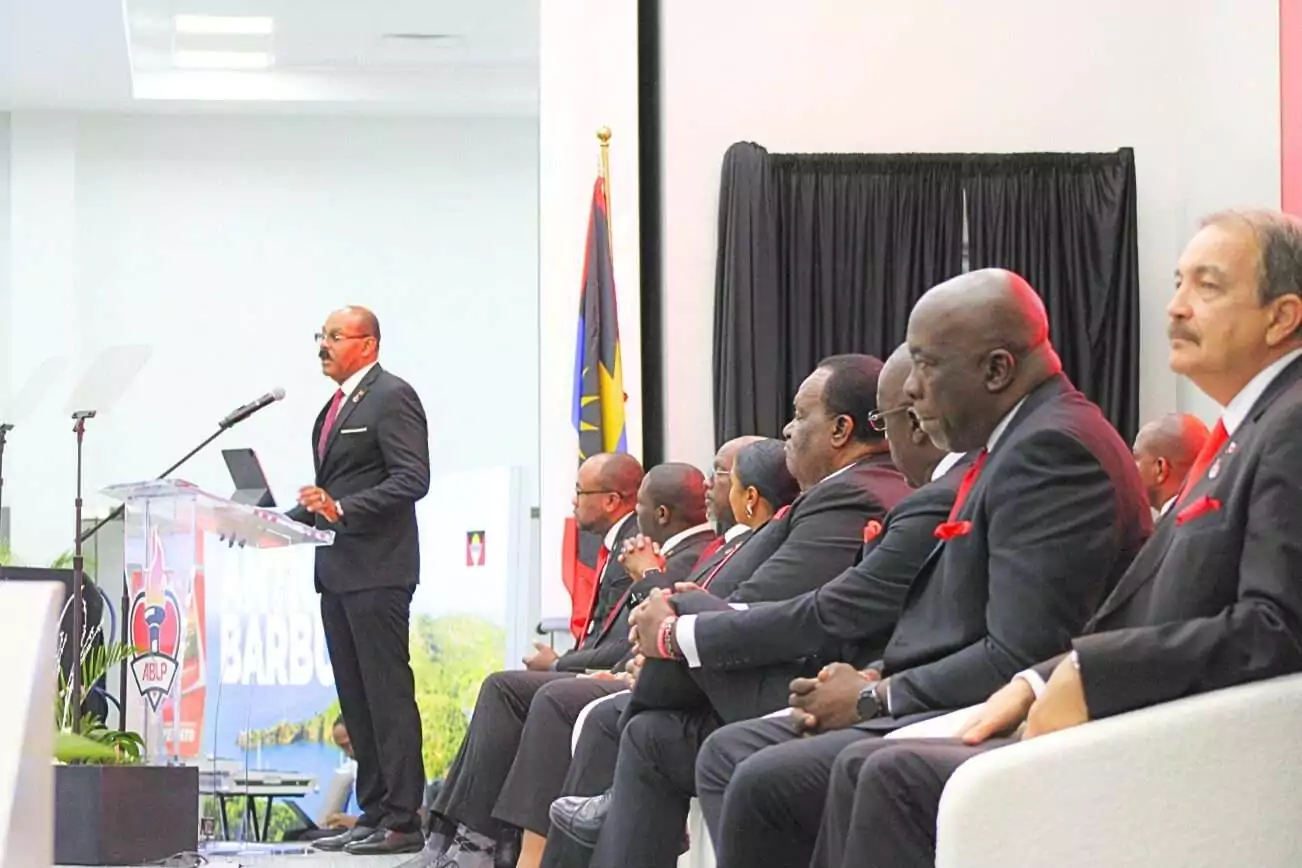
If the Antigua and Barbuda Labour Party’s 2023 manifesto read like a bloodied fighter still on its legs, using every tool in the arsenal to hold off a rising opponent, the 2026 manifesto carries the air of an assured incumbent no longer bothered by its critics and confident in its own standing.
The 104-page document, released at the American University of Antigua on April 20 ahead of the April 30 general election, suggests the party believes it will retain the governance of the nation with considerably less effort than three years ago.
How a manifesto is written often reveals more than what it pledges. Like an artiste embedding their emotions into a song, the choices a party makes about tone and structure reveal the political terrain on which it believes it is fighting.
The 2023 manifesto shows that the ABLP devoted three distinct chapters to attacking the United Progressive Party: one dissecting UPP pledges, another alleging UPP contempt for women, and a third laying out the economic state the Labour Party claimed it had inherited in 2014.
The language was combative. Words such as “deceitful,” “ruinous,” “mismanagement”, “decimation” and the UPP “is a disaster in and of itself” pointed to a party that needed not only to lay out its record but to prosecute a case against the opposition strong enough to stem the momentum the UPP had built.
By January 2023, the UPP had been campaigning for more than a year, with constituency outreach, an active youth arm and a steady recurrence of rallies that kept elections on the national agenda and spotlighted controversies surrounding ministers and government officials.
The opposition was in the ascendancy, and whether because the pandemic had pulled government attention elsewhere or because much of the administration had lost touch with public frustrations, the ABLP spent much of that cycle responding to the UPP rather than selling its own record.
That posture showed in the manifesto launch itself where Prime Minister Gaston Browne emphasised that “business people do not invest in a country and a government in which they have no confidence,” and declared that the ABLP had “not only earned the trust of the people… not only delivered for the people… but we deserve to be returned to office”.
The 2026 document carries no such weight of anxiety about the opposition.
The UPP still appears, in the foreword dismissed as “one of failure in government and disruption in opposition” and throughout the text as a weak comparator rather than a live threat.
The ABLP spent this year, seeking to expand its coalition, by calling on citizens to not “be permanently defined by old political loyalties where the national interest now calls for wider unity and common purpose” and rather than defend its flagship Citizenship by Investment policy, the party chose to challenge the opposition to name an alternative—an offensive move when one is confident of their place.
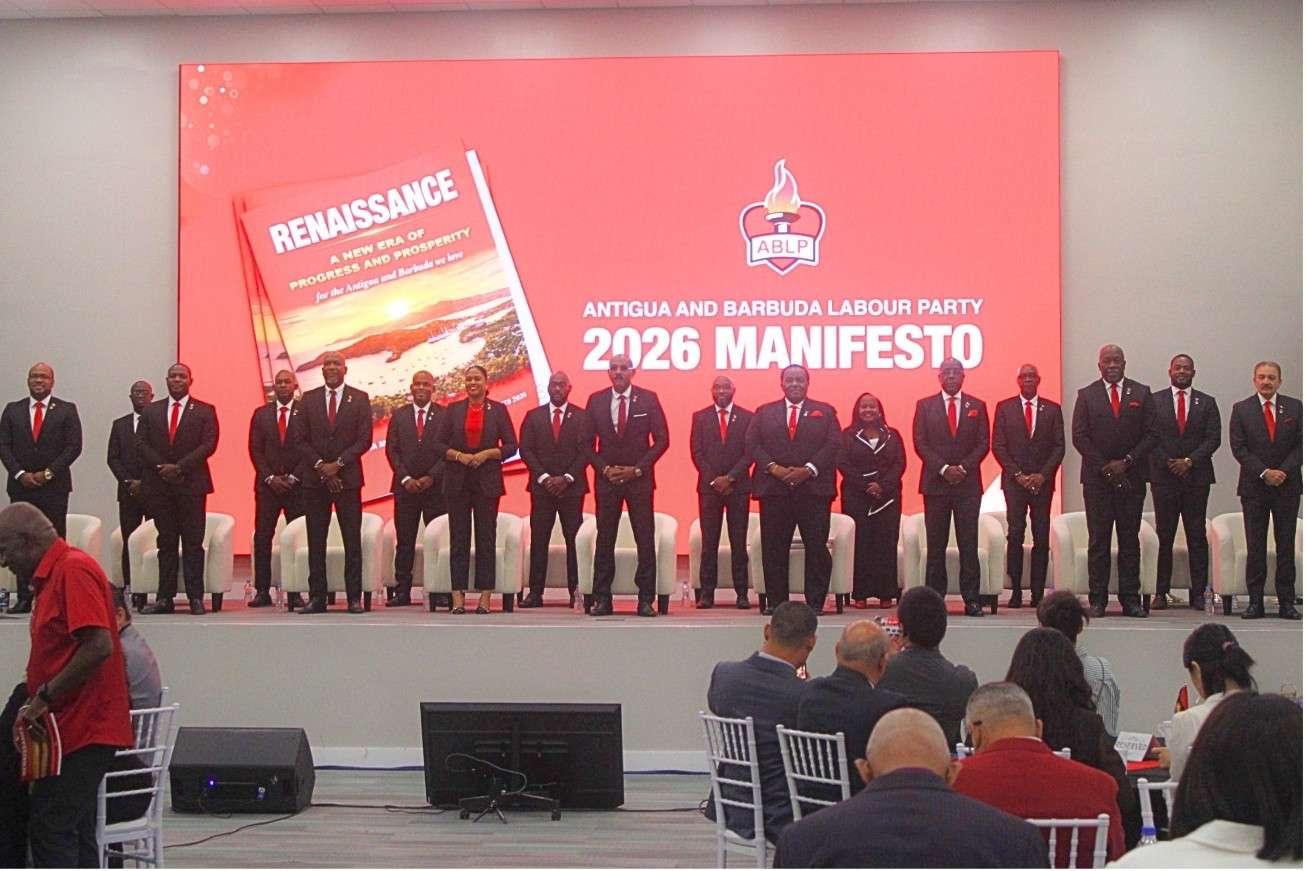
The few times the government chose to be more defensive in its writing such as the persistent challenge of water supply and distribution, it framed the issue for voters as one of patience and persistent effort needed—a sign that the government is more comfortable with its progress this term.
These references collectively read as a judgement that the opposition has failed to present itself credibly as a government in waiting and therefore does not warrant extended rebuttal.
At Monday’s launch, the Prime Minister spent comparatively little time on the opposition, instead framing the election as a referendum on continuity.
He described his party’s manifesto as “a covenant with the people, grounded in delivery, shaped by experience, and directed to the future,” and cast the choice as one between “tested leadership” and what he characterised as an untested alternative.
When he did address the UPP, the Prime Minister focused on questioning Opposition Leader Jamale Pringle’s capacity to engage local and regional leadership.
This difference in tone also reflects the campaign readiness each side brought into its respective race.
As the Prime Minister himself notes: “We come before you as a nation not asking for trust based on words alone”.
The pandemic is no longer the fact of political life and while the cost-of-living shocks of 2022 and 2023 have transformed into the new pressures attributed to tariffs and overseas conflicts, the opposition has not built the kind of campaigning infrastructure that defined its 2022 posture.
To further this point, the governing party has refreshed its slate, replacing a number of its 2023 candidates with younger candidates in contestable, opposition-held seats.
The result is a manifesto that reads less like an attack ad and more like a government white paper.
Where the 2023 document sought to remind voters what they stood to lose, the 2026 document assumes they already know what the ABLP intends to deliver.
The 2026 manifesto sends the message that a weak opposition cannot effectively challenge the government and seeks to take advantage of that opposition turbulence for “a strong mandate” before any next wave of global turbulence and changes that.
As always, voters will determine on April 30 whether the government deserves another term as the public awaits the opposition’s response and respective manifesto.
This story was first published by Antigua News on April 21, 2026: antigua.news/2026/04/21/analysis-ablps-2026-manifesto-reflects-party-confidence-heading-into-april-30. © 2026 Antigua News. Republication without permission is not allowed.

About the author
The Editorial Staff refers to all reporters employed by Antigua.news. When an article is not an original creation of Antigua.news—such as when it is based on a press release, other media articles, letters to the editor, or court decisions—one of our staff members is responsible for overseeing its publication.
Read our editorial standards and corrections policy. Spotted an error? Contact the newsroom.
More from Antigua and Barbuda
View section
‘They Can’t Dictate That’: Freeland Rejects Player Pressure Over National Coach
Freeland defends the coaching staff and says players should demonstrate their value through training and performance.
By Shermain Bique-Charles

Search Ends as All Four Juveniles Who Escaped Bolans Police Station Return to Police Custody
Police apprehended three of the juveniles during a search operation in Liberta on Thursday morning, less than a day after the fourth surrendered to authorities.
By Cory Wayland

Farmers Given 90 Days to Plant as Government Launches 102-Acre Land-Clearing Programme
Antigua launches a 102-acre agricultural land-clearing programme requiring beneficiaries to establish viable crops within 90 days of land preparation.
By Cory Wayland

Freeland Blames Poor Player Commitment for Antigua and Barbuda’s Basketball Withdrawal
Basketball president acknowledges unpaid stipends but says repeated low practice attendance drove the decision to withdraw.
By Shermain Bique-Charles
Comments (5)
Anonymous April 21, 2026, 7:42 PM
Apex Jones April 21, 2026, 9:25 PM
Informed citizen April 21, 2026, 10:01 PM
Ryan Wedding April 22, 2026, 12:01 AM
Dark Chocolate April 22, 2026, 2:52 PM