










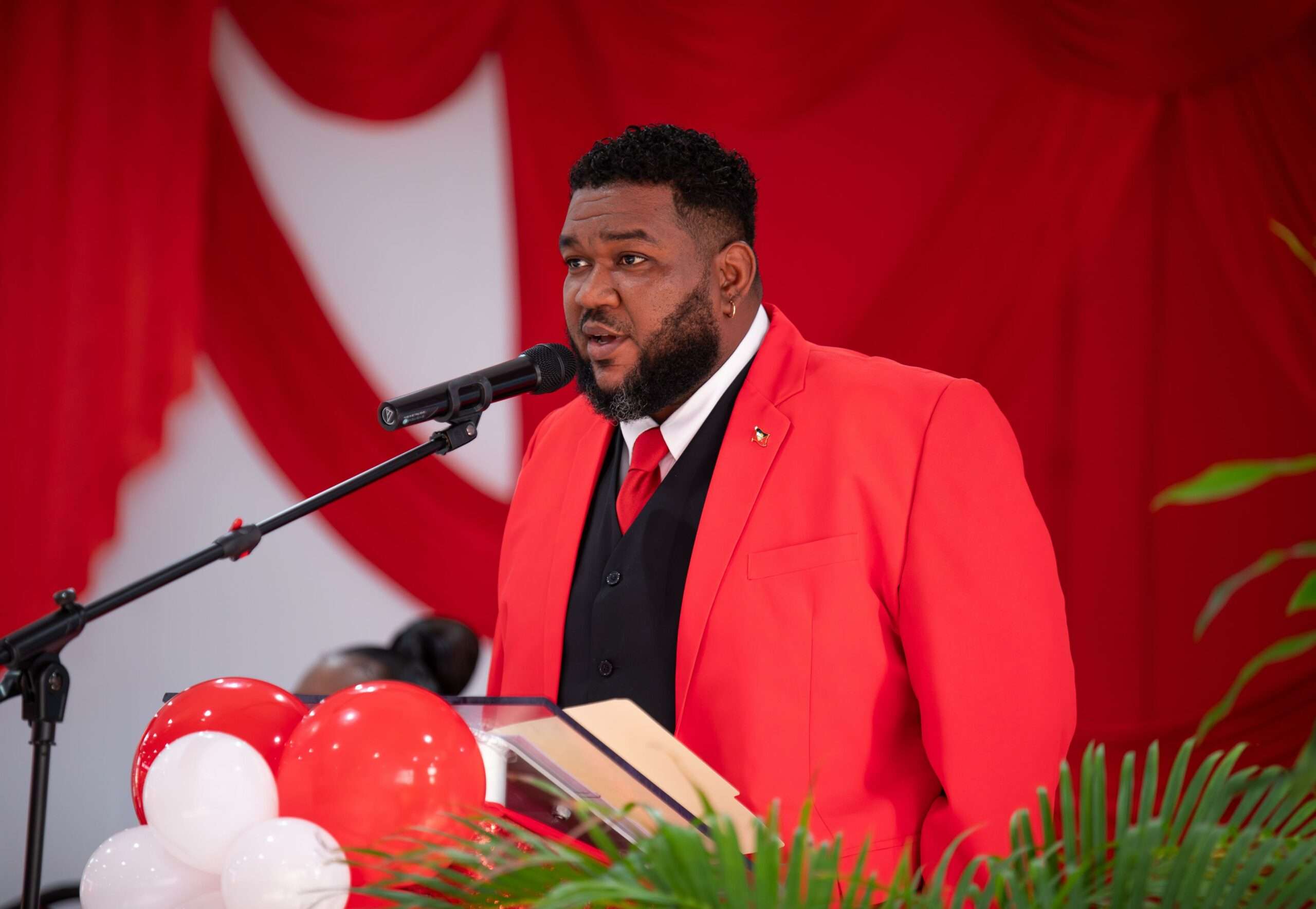
Bernard deNully, President of the Antigua and Barbuda Trades & Labour Union
by President of the AT&LU: Bernard de Nully
Early History
The Antigua and Barbuda Trades and Labour Union (AT&LU) has been in existence since 1939, or for 87 years. The Union was first established to negotiate higher wages and improved conditions of employment with the largest employers in Antigua and Barbuda, at the time of its founding. However, those who were the largest employers also controlled the law-making machinery. They used the parliament (known then as the Legislative Council) as a weapon; they suppressed the ambitions of the majority population, arranged the laws to extract every ounce of wealth produced from the hands of the poorest workers, and made life extremely difficult for the poorest people living in the Presidency of Antigua in the Colony of the Leeward Islands—as the country was then called.
Within five years of its founding, in 1944, a youthful and more ambitious leadership group emerged from the ranks of the AT&LU, prepared to challenge the colony’s political leaders and ready to take the institution to a higher level. The youthful AT&LU leaders created the Political Committee of the Union and proceeded to try to secure seats in the Legislative Council, where the laws governing the colony were enacted.
To achieve its ends, the AT&LU created the Workers Voice Newspaper in July 1944, published its first manifesto—one page long—as an addendum to the 18th of May 1946 edition of the newspaper, and conducted a campaign lasting two consecutive years to register new voters. In the July 1946 general elections, the AT&LU candidates won all 5 electable seats, overwhelmingly, to the eleven-person Legislative Council. The British Governor hand-picked the majority six members of the Legislative Council available under the 1936 Constitution; this personage also had veto power, requiring his assent to all laws passed by the Legislative Council. This was colonialism at its worst.
This primal victory of the AT&LU in 1946 signalled the commencement of party politics in Antigua and Barbuda, and ended the short era of independent candidates successfully contesting elections to the Parliament. In 80 years, or from 1946 to 2026, party politics has dominated; and, the Antigua and Barbuda Labour Party (ABLP), spawned by the AT&LU, has won 14 of 17 general elections held in Antigua and Barbuda during those eight decades. The AT&LU brought democracy to Antigua and Barbuda.
The AT&LU/ABLP Years of Development
While the primary purpose of the AT&LU remained bargaining for wages and improved conditions of work, the ABLP set out to change the conditions of work that made life miserable for workers. Sugarcane dominated the economic landscape for 300 years, and the two major employers were the Antigua Sugar Factory and the Antigua Syndicates Estates. Every other business was peripheral to these two economic actors in the first half of the 20th century. On 27th of February 1967, a third new constitution was adopted by the Parliament, providing the elected government with the authority to make domestic decisions, ending the control from London. Colonialism was on the retreat. The United Nations Resolution 1514/XV compelled the disgorging of colonies in 1960.
In his massive publication of 1968 entitled: The Growth of the Modern West Indies, Professor Gordon K. Lewis recalled the kind of stranglehold which the sugar producers and landowners held on the mono-crop economy and the labour force of Antigua. When therefore these actors failed to save their firms from default and receivership in 1967, the government, led by the President of the AT&LU, stepped-in and, for less than six million BWI dollars, purchased all 33,000 acres of arable land, machinery and works of the two entities. “The Antiguans became owners of their country and of themselves,” the Workers Voice Newspaper proclaimed following this purchase on 7th of April 1967.
In the four years following that 1967 purchase, the Government of Antigua and Barbuda invested in tourism, causing several luxury hotels to be built, a new deepwater harbour to be constructed, a longer airport runway and a new air terminal to be erected, a Hospitality Training Institute to be organized, thousands of new jobs to be created by an oil refinery and other manufacturing businesses, and the economy of the former colony to experience annual growth rates that moved it forward ahead of many developing countries.
The International Bank for Re-Construction and Development (the World Bank) began to classify Antigua and Barbuda as a middle-income developing nation. Suddenly, the small island-nation was no longer eligible for concessionary financing since its per capita income exceeded many of the States whose independence came as a consequence of the 1960 United Nations ordered decolonization. The Gross Domestic Product in 1977 stood at USD66.1400 million; by the year 2002, twenty-five years later, the GDP had climbed to USD822.2033, or 12 times its 1977 size.

Workers’ Improved Wages/Salaries and Conditions of Work
In 1974, the Antigua and Barbuda Labour Code was adopted by the not-yet independent Antigua and Barbuda Parliament. It provided protections for workers including paid sick days per year, minimum holidays with pay, standard health and safety standards, daily-maximum hours of work and accruing overtime payment, maternity leave, the outlawing of discrimination based on colour, national origin, gender, religion and other characteristics. It was an all-encompassing beautiful symbol of advancement in law that placed Antigua and Barbuda among the most advanced civilizations and countries for workers. Trade Unions did not have to negotiate these minimums because they were set in law; that floor served as a take-off point. Democracy was alive and well following the defeat of colonialism.
The AT&LU takes great pride in knowing that it first negotiated paternity leave for workers, allowing new fathers to receive fourteen days at home with their spouses/common-law wives during an important bonding period with their new infant. The AT&LU also organized a new section that caters to “Domestic Workers”. The women who clean households for better-off strangers; take care of infants while their mothers go to work; prepare meals and even go shopping for households that pay them for their services; launder clothes, bed linens, and other items in exchange for a weekly wage, are domestic workers. The AT&LU recognized that this class of workers is the most exploited and the most in need of representation. “The AT&LU sees itself as a change agent, not merely a wages-and-benefits or dispute settlement outfit,” it declares on page 33 of its 75th Anniversary magazine of 2014.
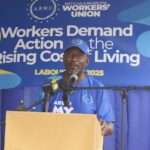
As the newest President of the AT&LU, the 7th in the Union’s long history, I have several times called upon the Government, led by the Honourable Gaston Browne, to move Antigua and Barbuda forward by establishing “a Liveable Wage” and not “a Minimum Wage.” The power of the concept lies not so much in the exchange of words but in the different measurements assigned to the idea. I have advanced the same at the Bi-partite Consultation of Caribbean Workers’ and Employers’ Organizations on the development of a regional migration policy framework and action programme for CARICOM and the International Labour Organization (ILO) and the Caribbean Congress on Labour (CCL) when attending the triennial gatherings. Social Security recipients in Antigua and Barbuda are to be assessed for a liveable pension, not a minimum pension. The calculations differ enormously and are to be assessed on the basis of according those who receive the least to be moved to a position of acceptability. The AT&LU has thrived on the representation of the lowliest, as its base support, and to ensure that every generation exceeds the previous group on whose shoulders it stands.
A new phenomenon that has affected workers’ health and wellness has been mould-infested buildings. The wind and the rain bring all kinds of micro-organisms into contact with vegetation, buildings and people. There are those who suffer from allergies caused by the pollen from trees; others who break-out with hives and other externalities that signal environmental maladies. Molds have become lodged in the ducts of air-conditioning systems, and migrate to hidden places that can cause illnesses. Several government-operated buildings have been so affected. While the exterminators who have worked to reduce their harm, the sick buildings remain problematic. In a tropical setting, this challenge is widespread and inevitably impacts productivity. The AT&LU is collaborating with the authorities to ensure that mold in buildings will not pose a health risk, and that workers are not harmed by a condition that imperils good health.
The AT&LU and the ABLP are inextricably joined, not only by history but by the aims and objectives of both institutions. The leadership of both entities remain aligned to good governance, the elimination of poverty, the creation of full employment, providing a liveable wage and pension, the equality of opportunity and justice for all. The democratic principles which the institutions hold high continue to be the bedrock upon which this Caribbean civilization is built, and the escape from yesterday is assured. We love freedom. We embrace the creation and equitable distribution of wealth. We will never surrender to undemocratic procedures and hold high the great strides which our ancestors and forebears have made, enabling this and future generations to stand on their shoulders. We intend to live in peace and unity, defending our country’s liberty and her sovereignty. Long live peace! Long live freedom! Long live Antigua and Barbuda!


Nully, weren’t you the one forcing APUA staff and ABS staff to protest agains the government? Now hear you. I hate hypocrisy