












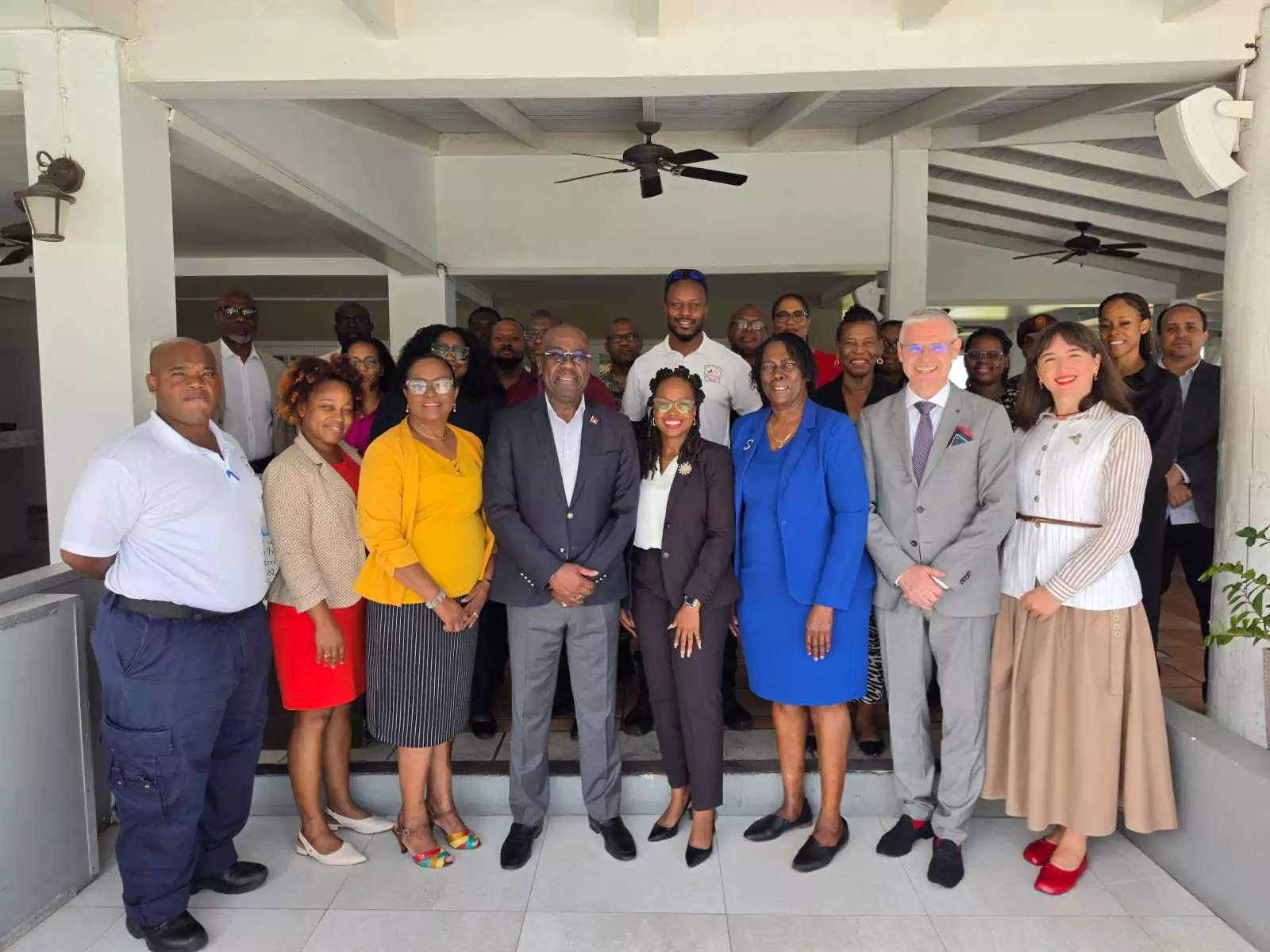
Antigua and Barbuda has taken another step towards strengthening its national biosecurity framework through a two-day workshop focused on implementing the Biological Weapons Convention.
The workshop was organised by the Convention’s Implementation Support Unit within the United Nations Office for Disarmament Affairs, in collaboration with the Government of Antigua and Barbuda and the country’s national contact points for the Convention.
It was held from August 26 to 27 at the Trade Winds Hotel.
Minister of Foreign Affairs, Trade and Immigration E.P. Chet Greene said effective implementation of the Convention extends far beyond disarmament and directly supports several areas of national life.
“It supports outbreak readiness—by improving coordination among our agencies, we can detect, investigate and contain outbreaks more quickly, whether they are natural, accidental or deliberate,” Greene said.
He explained that stronger implementation also protects agriculture and food security while safeguarding tourism, employment and livelihoods.
Greene stressed the importance of international cooperation for small island developing states such as Antigua and Barbuda.
“Multilateral engagement amplifies our voice and provides the mechanisms we need to cooperate effectively, and the workshop itself is a product of that international spirit,” he said.
Dr Alex Lampalzer, Deputy Chief of the Biological Weapons Convention Implementation Support Unit, also addressed the opening session.

He warned that rapid scientific and technological advances are changing the global biological landscape.
According to Lampalzer, those developments present opportunities for healthcare, agriculture and fisheries, but also create serious biosecurity concerns because scientific knowledge and technology can have both peaceful and harmful applications.
The workshop was designed to increase national awareness of the Biological Weapons Convention and support more effective implementation across Government agencies.
Participants also received training to prepare Antigua and Barbuda’s first Confidence-Building Measures report.
These reports allow participating states to exchange information intended to promote transparency, prevent misunderstandings and strengthen confidence that biological activities are being conducted for peaceful purposes.
The sessions also outlined international assistance and cooperation opportunities that could help Antigua and Barbuda strengthen its biosecurity capabilities.
Discussions were facilitated by Lampalzer and visiting specialists Dr Mariana Ulinici, a research scientist at the International Centre for Genetic Engineering and Biotechnology, and Dr Vishal Goury, Chief Government Analyst of Mauritius.
Antigua and Barbuda acceded to the Biological Weapons Convention in 2003. The legally binding agreement prohibits the development, production, acquisition, stockpiling and use of biological and toxin weapons.
The country’s national contact points are Dr Linroy Christian, Director of the Department of Analytical Services, and Alyssa Weste, Technical Cooperation Officer within the Ministry of Foreign Affairs.


Sometimes I wish we could make ness simpler
Better we prepare now than wait until something happen. We have to take this biological security thing serious.