
PM Browne Warns Antiguans to Brace for Further Fuel Price Increases as Global Costs Climb

By Cory Wayland
Motorists in Antigua and Barbuda could face further increases at the pumps if international petroleum prices continue their upward climb, Prime Minister Gaston Browne has warned, just days after gasoline and diesel prices jumped by EC$2 per gallon.
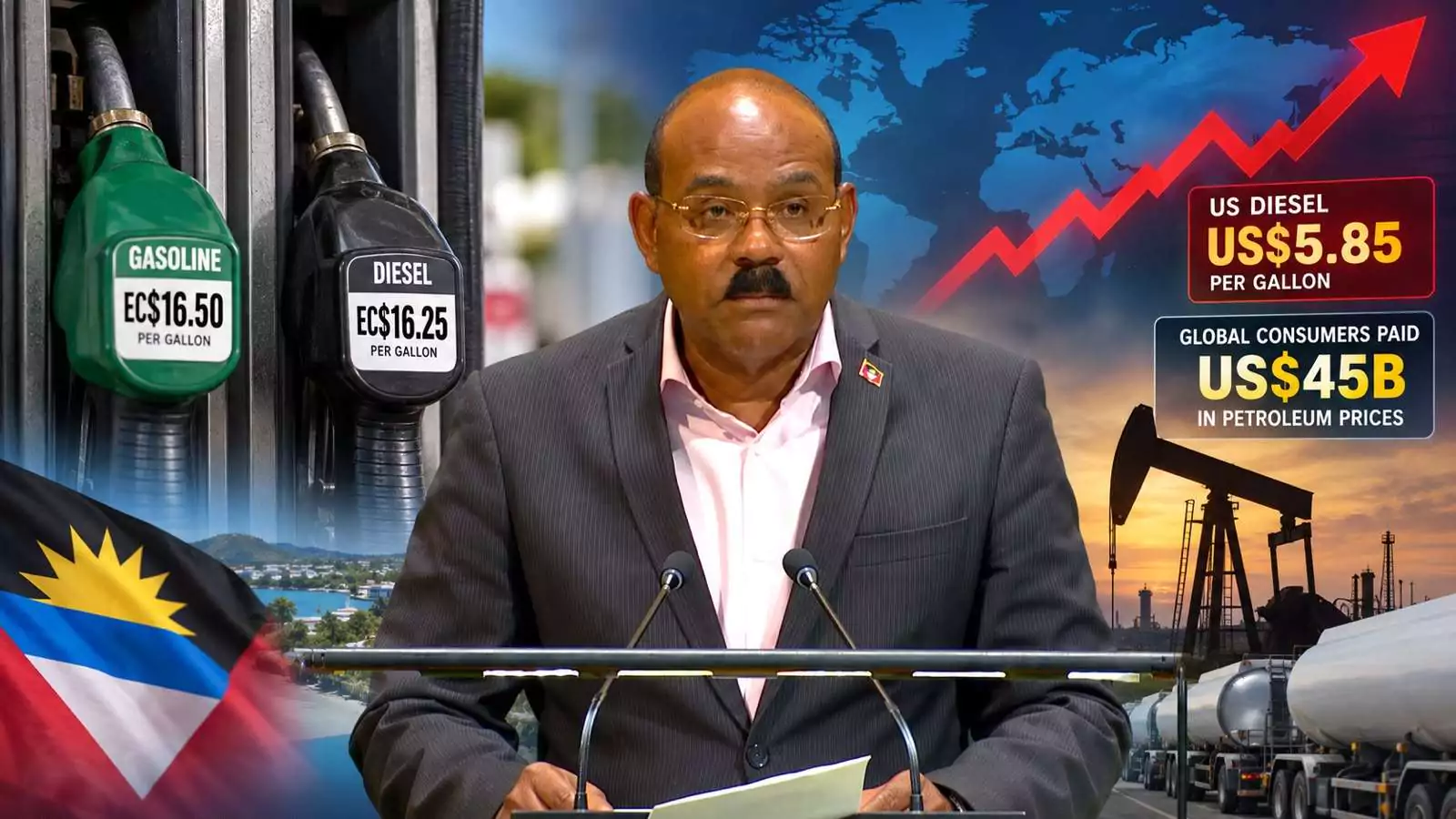
Gasoline is now selling at EC$16.50 per gallon, up from EC$14.50, while diesel has moved from EC$14.25 to EC$16.25. The new prices took effect on September 1 as the Government reduced the level of support it had been providing to cushion consumers from rising international energy costs.
In a Facebook post, Browne pointed to the growing pressure being felt internationally and suggested that Antigua and Barbuda may not have seen the end of higher fuel prices.
“Antigua’s fuel pricing until three days ago. Now EC$16.25 & $16.50 per gallon for gasoline and diesel respectively.
“US diesel price increased this year to a current high of US$5.85. Global consumers paid an additional US$45B in petroleum prices.”
In a second post, the Prime Minister added: “Petroleum prices continue to rise globally – we should brace ourselves for further increases and begin to rationalize.”
The order in which gasoline and diesel are identified in Browne’s Facebook post appears to differ from the prices currently being reported locally. The latest domestic figures put gasoline at EC$16.50 and diesel at EC$16.25 per gallon.
Browne’s warning comes as energy markets face renewed pressure from geopolitical conflicts and disruptions to global fuel supplies.
In the United States, the national average price for diesel reached a record US$5.85 per gallon on Friday, compared with about US$3.71 a year earlier. Regular gasoline was also averaging more than US$4 per gallon.
Reuters reported that Brent crude ended the week at US$92.68 per barrel after gaining 7.6 per cent during the week, while West Texas Intermediate climbed nearly 10 per cent to US$91.48. Renewed fighting involving the United States and Iran, disruptions through the Strait of Hormuz and Ukrainian attacks on Russian refineries have all added pressure to international supplies.
The effects are extending well beyond motorists. Diesel is heavily used in trucking, agriculture, construction and shipping, meaning sustained increases can eventually feed into the cost of food and other goods transported to consumers.
For Antigua and Barbuda, an import-dependent economy, those international movements have already translated into higher prices.
Browne said last weekend that the Government had been absorbing rising fuel costs for several months and could no longer maintain that level of intervention.
According to the Prime Minister, the Government would ordinarily collect between EC$3 million and EC$4 million monthly from the West Indies Oil Company. Instead, he said, approximately EC$24 million in revenue had been forgone over six months, while the Government had accumulated an EC$15 million obligation to WIOC.
Finance officials had reportedly advised that the increase required to reflect higher costs could have been around EC$3.50 per gallon. The Government instead settled on the smaller EC$2 adjustment to avoid passing the entire increase on to consumers at once.
Despite this week’s increase, the Government maintains that Antigua and Barbuda’s fuel prices remain competitive within the Eastern Caribbean.
ECCU figures cited by Cabinet show that before the September adjustment, Antigua and Barbuda had the lowest gasoline price in the Currency Union at EC$14.50 per imperial gallon in July, compared with an ECCU average of EC$17.66. At the time, gasoline was approximately EC$16.75 in Saint Lucia, EC$17 in Grenada, EC$18.31 in St Vincent and the Grenadines, EC$19.03 in Dominica and EC$20.74 in Montserrat.
Those comparisons predate Antigua and Barbuda’s latest increase, but even at EC$16.50, the Government argues that the country’s gasoline price remains below the July regional average.
The latest developments, however, suggest there may be little room for complacency. With international oil and refined-fuel markets remaining volatile, Browne’s latest message signals that the Government is preparing the public for the possibility that another adjustment at the pumps may become necessary if global prices continue to rise.
This story was first published by Antigua News on : antigua.news/2026/09/05/pm-browne-warns-antiguans-to-brace-for-further-fuel-price-increases-as-global-costs-climb. © 2026 Antigua News. Republication without permission is not allowed.

About the author
Cory Wayland is the Social Media Co-ordinator at Antigua.News, where he manages digital content strategy, audience engagement, and real-time news publications across social platforms. With a keen eye for trending topics and a commitment to factual storytelling, Cory plays a key role in shaping the online voice of Antigua.News.
Read our editorial standards and corrections policy. Spotted an error? Contact the newsroom.
More from Antigua and Barbuda
View section
LETTER: More Than a Number: What the Class of 2026 Tells Us
Professor C. Justin Robinson reflects on UWI Five Islands’ largest graduating class, its pioneering achievements and the need to bring more men into higher education.
By Shermain Bique-Charles

Idris Elba and Senator Jamilla Kirwan to Headline One Commonwealth Night as Hosts
Star-studded cultural celebration at Sir Vivian Richards Stadium will bring together international talent and local performers during CHOGM 2026.
By Cory Wayland

Regional Troops Arrive in Antigua and Barbuda to Strengthen CHOGM Security Preparations
Cayman Islands Regiment personnel join a regional military effort to support security, logistics and event operations ahead of the November summit.
By Cory Wayland

Police Outpost and Management Office Approved for Pelican Court
Cabinet establishes dedicated arrangements for security, maintenance and community concerns at the housing development.
By Shermain Bique-Charles
Comments (5)
Dwayna Browne September 5, 2026, 12:10 PM
Donna September 5, 2026, 3:09 PM
Informed citizen September 5, 2026, 11:15 PM
Lena September 6, 2026, 12:31 PM
Apex Jones September 6, 2026, 2:36 PM