
Browne Cautious as Local Bank Eyes CIBC Caribbean’s Antigua Business

By Cory Wayland
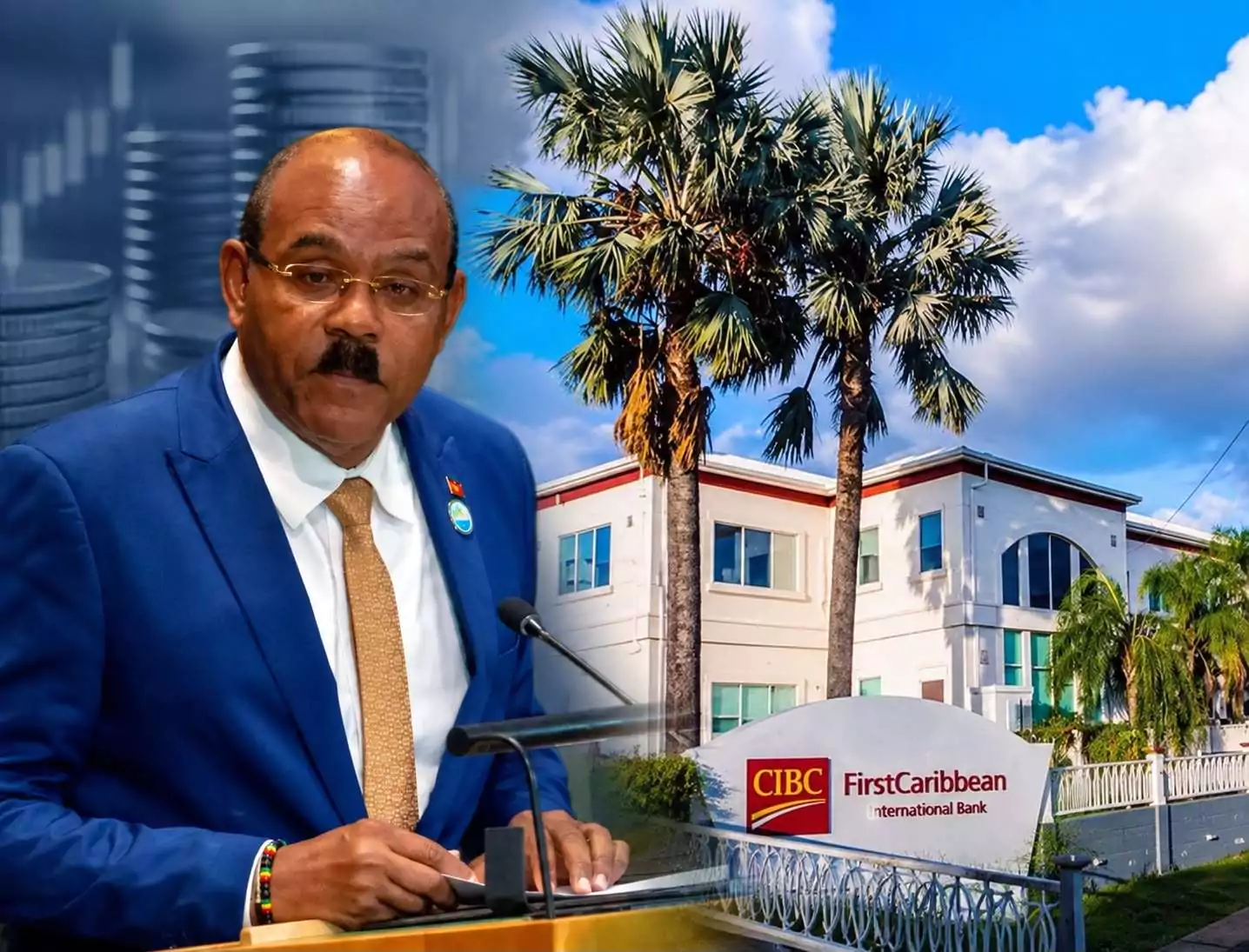
Prime Minister Gaston Browne is expressing reservations about the possibility of another major share of Antigua and Barbuda’s banking market falling into the hands of an existing local bank, even as he continues to support greater indigenous ownership in the financial sector.
His comments follow an approach from at least one domestic bank interested in acquiring CIBC Caribbean’s Antigua operation as the regional banking group prepares for a wider change in ownership.
“A couple of domestic banks, well, one in particular, they’ve actually approached me,” Browne said, without identifying the institution.
CIBC has already entered into an agreement to sell its 91.7 per cent controlling interest in CIBC Caribbean Bank Limited to Bermuda-based Butterfield in a regional deal valued at approximately US$1.8 billion.
The transaction, announced in May, is expected to close during the first half of 2027, once the necessary regulatory approvals and other conditions are satisfied.
CIBC Caribbean’s Antigua and Barbuda operation forms part of that regional transaction.
While Browne has frequently advocated for local ownership of major businesses, he said the banking sector presents a different concern because of how concentrated the market has already become.
“As much as I’m a proponent for local ownership, I’m very concerned about any further concentration of the market,” the Prime Minister said.
Antigua and Barbuda’s banking sector has undergone significant changes in recent years as Canadian-owned institutions reduced their presence across the Eastern Caribbean.
In 2021, ACB Caribbean acquired Royal Bank of Canada’s Antigua operation, while Eastern Caribbean Amalgamated Bank later completed its acquisition of Scotiabank’s operations in Antigua and Barbuda.
Those transactions placed a larger portion of the country’s banking sector under indigenous ownership.
ACB Caribbean now describes itself as Antigua and Barbuda’s largest indigenous commercial bank, with assets exceeding EC$2 billion, while CIBC Caribbean remains one of the major international banking groups operating locally.
According to transaction information published by Butterfield, CIBC Caribbean accounts for roughly 25 per cent of deposits in Antigua and Barbuda.
That sizeable market share appears to be at the heart of Browne’s concern. An acquisition by an existing local institution could give that bank significantly greater control over deposits, loans and other financial services.
The Prime Minister has also been critical of the performance of commercial banks in other areas, including merchant transaction fees, difficulties customers face accessing loans and what he considers inadequate lending to the domestic economy.
He has argued that banks are generating substantial revenue through fees while not doing enough to channel available funds into loans and investment.
The International Monetary Fund’s 2026 assessment of Antigua and Barbuda described the banking sector as liquid, well-capitalised and stable, but also pointed to a long-term decline in domestic lending.
Private-sector bank credit fell from more than 70 per cent of GDP in 2011 to about 38 per cent between 2022 and 2024, while foreign assets accounted for approximately 30 per cent of total bank assets in 2024.
Government figures also show commercial bank assets reaching approximately EC$6.89 billion by September 2025, with deposits standing at EC$5.24 billion and loans at around EC$3.38 billion.
Against that backdrop, Browne questioned whether further consolidation among existing local banks would ultimately be in the best interest of consumers.
He suggested that Butterfield, as a larger international institution, could potentially offer services and capabilities that smaller domestic banks may have greater difficulty providing, including some international banking and trade finance services.
Browne indicated that he would not necessarily attempt to block a local institution from acquiring CIBC Caribbean’s Antigua business, but said he would not actively advocate for such an arrangement either.
Any decision would also extend beyond the Government.
Commercial banks operating in Antigua and Barbuda are regulated by the Eastern Caribbean Central Bank (ECCB), which has responsibility for licensing and oversight under the Banking Act. Any proposed change in ownership would therefore require regulatory scrutiny.
Butterfield has said it has begun making the necessary regulatory filings in the jurisdictions covered by its planned acquisition of CIBC Caribbean.
Once completed, the wider transaction is expected to create a banking group with approximately US$29 billion in assets.
For Antigua and Barbuda, however, the proposed sale has opened a broader question over the future of competition in a banking market that has already undergone considerable consolidation.
This story was adapted from original reporting by Algernon Watts of the Antigua Observer by NewsCo.
This story was first published by Antigua News on September 9, 2026: antigua.news/2026/09/09/browne-cautious-as-local-bank-eyes-cibc-caribbeans-antigua-business. © 2026 Antigua News. Republication without permission is not allowed.

About the author
Cory Wayland is the Social Media Co-ordinator at Antigua.News, where he manages digital content strategy, audience engagement, and real-time news publications across social platforms. With a keen eye for trending topics and a commitment to factual storytelling, Cory plays a key role in shaping the online voice of Antigua.News.
Read our editorial standards and corrections policy. Spotted an error? Contact the newsroom.
More from Antigua and Barbuda
View section
‘They Can’t Dictate That’: Freeland Rejects Player Pressure Over National Coach
Freeland defends the coaching staff and says players should demonstrate their value through training and performance.
By Shermain Bique-Charles

Search Ends as All Four Juveniles Who Escaped Bolans Police Station Return to Police Custody
Police apprehended three of the juveniles during a search operation in Liberta on Thursday morning, less than a day after the fourth surrendered to authorities.
By Cory Wayland

Farmers Given 90 Days to Plant as Government Launches 102-Acre Land-Clearing Programme
Antigua launches a 102-acre agricultural land-clearing programme requiring beneficiaries to establish viable crops within 90 days of land preparation.
By Cory Wayland

Freeland Blames Poor Player Commitment for Antigua and Barbuda’s Basketball Withdrawal
Basketball president acknowledges unpaid stipends but says repeated low practice attendance drove the decision to withdraw.
By Shermain Bique-Charles
Comments (5)
BBL September 9, 2026, 12:58 PM
Informed citizen September 9, 2026, 1:35 PM
W.W September 11, 2026, 11:16 PM
Well-known September 9, 2026, 1:36 PM
Juju Bee September 9, 2026, 5:03 PM