
OPINION | The Colonial Mindset and Our Ocean: Why Antigua and Barbuda Must Think for Itself

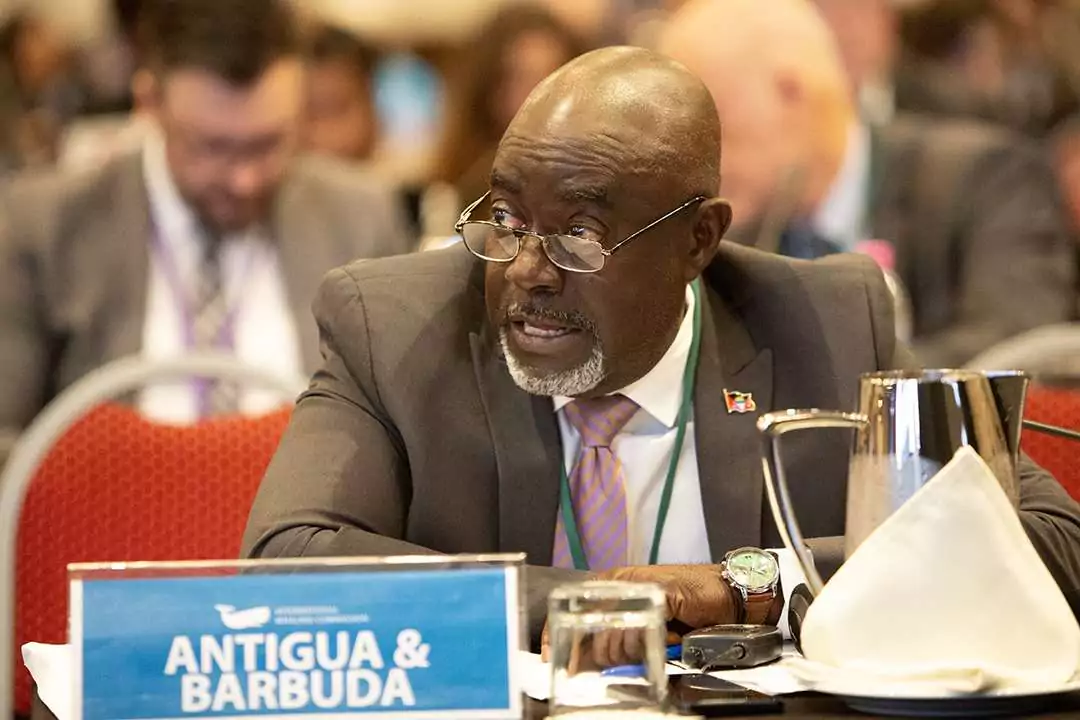
By: Daven Joseph – Antigua and Barbuda
For more than 400 years, the Caribbean was told what to think. We were told what to grow, what to export, what to believe, and what was best for us. Political independence in the 1980s ended the flag of colonialism, but it did not end the colonialism of the mind.
That colonialism of the mind is alive today. It lives in the belief, too common in Antigua and Barbuda and across the Caribbean, that any idea coming from developed countries, from their universities, their NGOs, their media, must be superior to our own homegrown ideas, our own experiences, and our own aspirations for development.
Nowhere is this more dangerous than in how we see and use our ocean.
The Greatest Gift of Independence
In 1982, the same year Antigua and Barbuda joined the International Whaling Commission, we and the world signed the United Nations Convention on the Law of the Sea. For the first time in our history, we were not a small island with no resources. We became a large ocean state.
Under UNCLOS, we gained an Exclusive Economic Zone of over 110,000 square kilometers. Our land is 440 square kilometers. Our ocean is 250 times bigger than our land. This ocean was not given to us by any foreign NGO. It was secured by the hard work of Caribbean statesmen like those from Trinidad and Tobago and Jamaica who fought for the Law of the Sea.
For the first time, we had the legal right to shape the rules within our own waters based on our own experiences, our own culture, and our own aspirations for food security and livelihoods.
That is the promise of 1982. But 43 years later, we are allowing that promise to be hijacked.
We are allowing ourselves to be told, again, that others know what is best for our ocean.
The New Colonial Playbook
Today’s colonialism does not come with gunboats. It comes with glossy reports, well-funded campaigns, and emotional advertising.
Certain well-funded international NGOs based in developed countries see our Caribbean Sea not as a source of food, jobs, and identity for coastal peoples, but as a playground for the rich and privileged. A blue wilderness to be preserved for their tourists, their documentaries, and their fundraising.
Their business model is simple. They need a cause that raises money in London, Washington and Berlin. What raises money better than saving the whale, saving the turtle, saving the reef? Not by working with us, but by telling their donors they are saving it FROM us.
And to do this, they use three old colonial tactics.
First: Deception and Misinformation.
They tell our people that sustainable use is destructive use. They deliberately confuse conservation with preservation. Conservation, which is in the very name of the International Convention for the Regulation of Whaling, means wise use. Preservation means non-use. We, as Caribbean people, have always been conservationists because our survival depended on it. We never needed to be taught conservation by outsiders.
They hide science that does not fit their fundraising. The Scientific Committee of the IWC, the best whale scientists in the world, have said clearly that many whale stocks have fully recovered. Humpbacks, Minke, Fin whales in many areas are abundant. But that science is never shared in their campaigns, because an abundant whale does not raise money.
Second: Manipulated Polling.
They come to our islands with polls designed to get the answer they want. They ask our children in schools: Do you want to kill whales? No child will say yes. Then they publish a headline: 90% of Antiguans oppose whaling.
They never ask: Do you support the right of your country to decide how to manage all living marine resources in your EEZ based on science? Do you support food security for SIDS? Do you support the right of other cultures to sustainably use resources as we sustainably use fish? Do you support ecosystem-based management where we look at how many fish4 whales eat?
That is not polling. That is propaganda.
Third: Economic Blackmail and Political Flattery.
This is the most insidious. They whisper to our politicians, to our hoteliers, to our tourism officials: If you support sustainable use in the IWC, we will call for a tourism boycott. We will tell the world your country kills whales, even though Antigua and Barbuda has never whaled and has no intention to whale.
And for those politicians who already lean toward colonial thinking, they offer flattery. They fly them to conferences, give them Citations, call them heroes for the ocean. They make them feel that by adopting the values of developed countries, they are being progressive, international, enlightened. They call it international best practice.
It is not international best practice. It is their cultural practice being imposed on us.
Food Security Is Our Best Practice
For Antigua and Barbuda, food security is more important than any foreign NGO’s fundraising strategy.
We import over 80% of what we eat. When COVID hit and supply chains shut down, our people understood what food security means. When hurricanes hit and ports close, we understand what it means.
Our ocean is our farm. And in our farm, there is an ecological reality that these NGOs refuse to discuss.
Whales consume enormous amounts of fish and other marine resources. A single large whale eats up to 2 tons a day. In the North Atlantic, marine mammals consume more fish than all fisheries combined. In the Caribbean, where our pelagic fish stocks are under pressure, we cannot afford to pretend that ecosystem relationships do not exist.
We are not saying we want to start whaling. We have said repeatedly we do not. What we are saying is that as a responsible member of the international community, we want decisions about marine resources to be based on ecosystem science, not emotion. We want the International Whaling Commission to return to its mandate of conservation through sustainable use, as written in 1946.
That is not radical. That is rational.
And that rationality is protected by international law. UNCLOS Articles 56, 61 and 62 give coastal states the sovereign right and the duty to conserve and manage living resources in their EEZ and to determine the allowable catch based on best scientific evidence. The right to use our resources sustainably is not a gift from an NGO. It is a right under international law fought for by our own Caribbean forefathers.
The Fear That Stifles Us
The ultimate goal of these tactics – deception, fake polling, economic threats, flattery – is to create fear. Fear in our ministries, fear in our Cabinet, fear in our people that if we think for ourselves, we will be punished.
This fear is the very essence of colonialism. Colonialism worked because it convinced the colonized that they were incapable of self-government, incapable of self-thought. That the master knew best.
When we accept that any decision from Geneva, London or Washington must take precedence over a decision made in St. John’s, based on our own science, our own University of the West Indies research, our own fishermen’s knowledge, we are accepting that colonial hierarchy all over again.
They call our desire for self-determination over our ocean anti-environment. It is not. No one loves our ocean more than we do. We live by it. We are buried looking over it. We do not need to be taught to love the ocean.
What we need is the mental freedom to develop our ocean space within the lens of our own development aspirations, not within the lens of those who see our ocean as their aquarium.
Reclaiming Our Mind
The fight at the IWC in Hobart this September for its 80th Anniversary is not about whales. It is about who decides.
Will the Commission be reformed to base its decisions on science, as its own Convention requires? Will it fulfill the commitment made in 1982 to review the moratorium after a comprehensive assessment by 1990 – a commitment broken for 36 years? Will it respect the rights of coastal states and Small Island Developing States to food security and sustainable livelihoods?
Or will it continue as a preservation club, driven by fear and funding, where science is ignored and developing countries are told to be quiet and accept international best practice?
Antigua and Barbuda must stand up. Not for whaling, but for thinking. For the right to think for ourselves.
We must be PRO-CONSERVATION, because we must protect our resources.
We must be PRO-SCIENCE, because decisions must be based on evidence, not emotion.
We must be PRO-COOPERATION, because we believe in multilateralism and international law.
We must be PRO-FOOD SECURITY, because a nation that cannot feed itself is not truly independent.
That is decolonization of the mind. That is the true meaning of 1982.
The ocean that was returned to us must now be reclaimed in our minds.
This story was first published by Antigua News on September 18, 2026: antigua.news/2026/09/18/opinion-the-colonial-mindset-and-our-ocean-why-antigua-and-barbuda-must-think-for-itself. © 2026 Antigua News. Republication without permission is not allowed.

About the author
The Editorial Staff refers to all reporters employed by Antigua.news. When an article is not an original creation of Antigua.news—such as when it is based on a press release, other media articles, letters to the editor, or court decisions—one of our staff members is responsible for overseeing its publication.
Read our editorial standards and corrections policy. Spotted an error? Contact the newsroom.
More from Antigua and Barbuda
View section
‘They Can’t Dictate That’: Freeland Rejects Player Pressure Over National Coach
Freeland defends the coaching staff and says players should demonstrate their value through training and performance.
By Shermain Bique-Charles

Search Ends as All Four Juveniles Who Escaped Bolans Police Station Return to Police Custody
Police apprehended three of the juveniles during a search operation in Liberta on Thursday morning, less than a day after the fourth surrendered to authorities.
By Cory Wayland

Farmers Given 90 Days to Plant as Government Launches 102-Acre Land-Clearing Programme
Antigua launches a 102-acre agricultural land-clearing programme requiring beneficiaries to establish viable crops within 90 days of land preparation.
By Cory Wayland

Freeland Blames Poor Player Commitment for Antigua and Barbuda’s Basketball Withdrawal
Basketball president acknowledges unpaid stipends but says repeated low practice attendance drove the decision to withdraw.
By Shermain Bique-Charles
Comments (3)
Stop Selling Your Bottom September 18, 2026, 11:20 PM
Anti Colonist September 19, 2026, 8:51 AM
Anti Colonist September 19, 2026, 9:03 AM