
OPINION | COVID-19 Pandemic Reckoning: What the World Still Deserves to Know, and What Still Haunts the Living

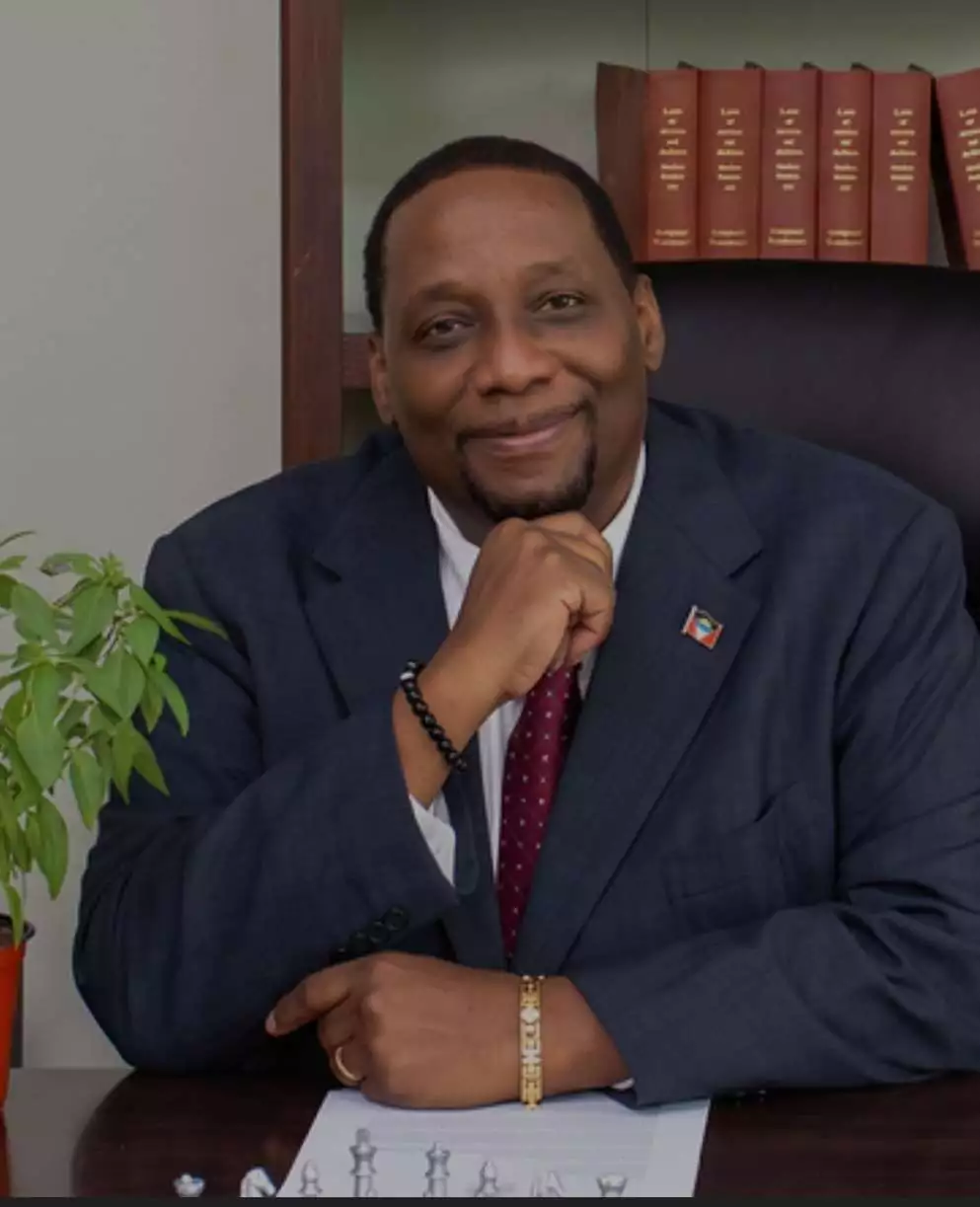
By Dr. Clarence E. Pilgrim
Six years after COVID-19 brought much of humanity to a standstill, the world has largely resumed its rhythm. Borders are busy, stadiums are full, aircraft crowd the skies, and masks have mostly disappeared.
But normality is not resolution.
The unfinished business of the pandemic is not only scientific; it is also moral, institutional, and deeply human.
More than 779 million confirmed COVID-19 cases and over seven million deaths have been reported to the World Health Organization, which acknowledges that the true numbers are higher. Against a global population of approximately 8.3 billion people, few societies escaped the pandemic’s reach.
Millions survived but did not fully recover. WHO estimates that about 6% of people with symptomatic COVID-19 develop Long COVID, with some experiencing respiratory, neurological, cardiovascular, and other problems for months or years.
For them, the pandemic is not history. It still haunts the living.
I understand something of its psychological reach personally. The pandemic made my circle of friends smaller and taught me to become apprehensive of even a friendly handshake—an instinct that remains with me today. After workplace exposure, I was immediately quarantined until testing confirmed that I was free of infection.
The uncertainty, fear of becoming ill, concern about possibly exposing others, and suspicion of ordinary human contact reflected what millions experienced worldwide. COVID-19 changed more than health systems; for a time, it changed the meaning of proximity itself. A handshake, an embrace, or a conversation at close quarters became a potential source of danger.
SARS-CoV-2 continues to circulate and evolve. WHO is monitoring variants including XFG, NB.1.8.1, PQ.16.1.1, and BA.3.2. The emergency ended; the virus did not.
Neither did the questions surrounding its origin.
The guilty plea of Dr. David Morens, a former senior adviser at the US National Institute of Allergy and Infectious Diseases, has reopened difficult questions about institutional credibility. Morens admitted involvement in efforts to evade federal public-record requirements relating to coronavirus research and official communications, including matters connected with a bat-coronavirus research grant involving the Wuhan Institute of Virology.
These facts do not prove that SARS-CoV-2 escaped from a laboratory, nor do they establish criminal wrongdoing by Dr. Anthony Fauci.
They do, however, establish that relevant official communications were deliberately concealed from normal transparency mechanisms.
That warrants a simple question: Why?
WHO’s scientific assessment says the weight of available evidence favours zoonotic spillover. Yet important information remains unavailable, including early viral sequences, details concerning animals sold in Wuhan markets, and information about laboratory work and biosafety conditions.
The responsible position is therefore neither to proclaim a laboratory origin proven nor dismiss it as impossible.
Science should follow evidence, not defend predetermined conclusions.
The same standard of evidence and transparency that should govern the origin debate must also govern how we assess the benefits and harms of vaccination.
I chose to receive the COVID-19 vaccine and a booster because I trusted the recommendations of WHO and the international public-health community.
There is strong evidence that vaccination reduced severe illness, hospitalization, and death. But acknowledging those benefits does not require denying genuine risks.
Regulators across Europe, Africa, India, and Russia broadly reached the same conclusion: vaccines provided important protection, but continuing safety monitoring was necessary. European regulators recognized rare myocarditis and pericarditis after some mRNA vaccines. African authorities monitored rare clotting disorders. India recognized thrombosis with thrombocytopenia associated with adenovirus-vector vaccines while continuing surveillance of other reported conditions. Russia issued formal contraindications and clinical guidance.
Across very different regulatory systems, the common lesson was not that vaccination was risk-free, but that benefit and risk had to be assessed together and continually.
COVID-19 vaccines provided important protection, but risk was not zero.
It should therefore be possible to say that vaccines saved lives without pretending that no one was harmed by them. It should also be possible to recognize genuine vaccine injuries without claiming that every illness or unexplained death following vaccination was caused by it.
Those positions are not contradictory. They are the minimum requirements of intellectual honesty.
In the United States, 11,055 claims alleging COVID-19 vaccine injury or death had been filed through the federal compensation programme by July 2026. A claim is not proof of causation, and many did not meet evidentiary requirements. Nevertheless, some vaccine-related injuries have been officially recognized.
Where injury is scientifically established, those affected should not disappear behind statistics.
Treat what can be treated. Rehabilitate where possible. Compensate fairly where responsibility is established.
Human dignity should never be measured by prevalence.
The same intellectual discipline applies to cardiovascular disease. WHO identifies cardiovascular disease as the world’s leading cause of death, a reality that long predates COVID-19. It cannot credibly be presented as proof of widespread vaccine injury.
Yet legitimate questions remain. COVID-19 itself can affect the cardiovascular system. Long COVID may contribute to illness. Traditional risk factors and disrupted healthcare remain important. Rare vaccine-associated cardiovascular complications have also been documented.
The question therefore is not whether vaccines caused post-pandemic cardiovascular disease, but how much illness resulted from COVID infection, existing disease, interrupted healthcare, or recognized vaccine complications.
There is no credible global figure that answers that fully. The absence of an answer should encourage research, not speculation.
History also warns us that another pandemic will come. Major respiratory pandemics struck in 1889–90, 1918, 1957, 1968, 2009, and 2019. Their timing was irregular, so no responsible formula can predict the next one. But another pandemic within the lifetime of much of today’s population is entirely plausible.
The true reckoning, therefore, is not about vindicating one government, scientist, institution, or vaccine.
It is about whether humanity learns enough to protect everyone better next time—the majority who benefit from effective medical interventions, the minority who may suffer genuine harm, the vulnerable, and generations yet unborn.
Progress that protects millions while abandoning the few who are genuinely harmed is incomplete. Equally, concern for the injured cannot justify denying interventions that saved lives on a vast scale.
The higher obligation is to pursue both: protection and accountability, scientific advancement and human dignity, institutional strength and transparency.
I trusted the international public-health system enough to receive a vaccine and booster.
That trust should never require silence.
Science earns authority through evidence. Institutions earn legitimacy through transparency. Leadership earns confidence through accountability.
The dead cannot demand answers.
The living can.
And before another pandemic tests humanity, we should establish what was right, acknowledge what was wrong, repair what can still be repaired, and build systems capable of protecting both the many and the few.
The next response must be not merely faster, but wiser, fairer, more transparent, and directed toward the greatest good of all.
Disclaimer
The views expressed are those of the writer.
This story was first published by Antigua News on : antigua.news/2026/09/22/opinion-covid-19-pandemic-reckoning-what-the-world-still-deserves-to-know-and-what-still-haunts-the-living. © 2026 Antigua News. Republication without permission is not allowed.

About the author
The Editorial Staff refers to all reporters employed by Antigua.news. When an article is not an original creation of Antigua.news—such as when it is based on a press release, other media articles, letters to the editor, or court decisions—one of our staff members is responsible for overseeing its publication.
Read our editorial standards and corrections policy. Spotted an error? Contact the newsroom.
More from Antigua and Barbuda
View section
National Youth Ambassador Kristine Louisa and Barbados’ Ashley Lashley Donate Essential Supplies to Sir Lester Bird Medical Centre
The Hopeful Hearts Foundation and Ashley Lashley Foundation have provided clothing, blankets, diapers and a television to support the hospital’s Paediatrics and Social Services Departments.
By Cory Wayland

Young Fencer Zuri Alfred Ventures Into Technology, Fashion and Entrepreneurship
After earning international recognition in fencing, the young athlete is turning her attention to innovative projects aimed at making the sport more accessible while exploring opportunities in business.
By Cory Wayland

Solid Waste Authority Warns Coconut Vendor of Possible Penalties Over Improper Waste Disposal
The National Solid Waste Management Authority says business operators must take responsibility for their commercial waste following a viral video in which a coconut vendor called for the Authority to clean up his business location.
By Cory Wayland

Michael Joseph Selected to Lead CARICOM Climate Finance and Science Negotiations at COP31
Antigua and Barbuda's Environment Minister will take on two major negotiating responsibilities as Caribbean countries push for stronger climate financing, scientific action and protection of the 1.5°C temperature goal.
By Cory Wayland
Comments (5)
Observer September 22, 2026, 9:18 AM
Well-known September 22, 2026, 12:23 PM
Informed citizen September 22, 2026, 12:12 PM
Informed citizen September 22, 2026, 12:22 PM
Tianna September 22, 2026, 7:48 PM