
The Role of the Church | Editorial


By Kieron Murdoch | Opinion Contributor
As the nation came together on Thursday, led by churches across Antigua and Barbuda, we found ourselves asking what role the Church ought to play in addressing the violence that has so worried good citizens. It is an interesting question, the reason being that despite the tendency of the Church to often clash with the more secular norms of society, many still feel that faith should be the foundation of society’s values.
Naturally therefore, when the people see violence claiming lives, and violent crime being perpetrated by young people, they ask for the clergy’s intervention in the hopes that the institution of faith will be able to affect some change. “Where is the Church?” people like to ask. Nevertheless, we encourage our fellow citizens to ask whether the Church alone can be the answer to the troubles we face.
We know religion has the power to unify people, often despite challenging circumstances, and inspire them towards good behaviour and good deeds. In communities plagued by broken homes, poverty, delinquency, addiction, and violence, churches and faith organisations have often been able to use the power of belief to provide a vision of hope and purpose in spite of dire circumstances.
But the answer to the trouble we face must be a holistic approach which not only calls upon our churches, but more so involves the many strategies that have been discussed nationally over the past few weeks, whether in the press, on the airwaves, at the Cabinet level, in the forums held on youth and crime, and in the private conversations of citizens worried about their safety and that of their neighbours.
Debates have focused on the need for a structured youth intervention programme, penal reform with a view to reducing recidivism, and consistent investment in law enforcement’s crime fighting capacity and improving their working conditions. If these measures are deployed in tandem with the efforts of civil society (the Church included), only then can we expect to see a permanent long term reduction in the type of criminal violence we have been witnessing.
As residents come away from the National Day of Prayer with a sense of togetherness, we must hold our elected officials to account for the promises they have made on other fronts. We know many of these promises cannot be realised overnight, but let us not forget them in the long run. It is important to also acknowledge that the Church is not the only institution responsible for transmitting values in the society. This happens in our families, our schools, our sports clubs, our after school programmes and in our community groups as well.
Among those listed, the family is the most important institution. Young people will learn more from their parents (or guardians) than from any other source. They will pick up good or bad habits,values, attitudes, and norms in the home, not even realising that they are doing so. This then greatly impacts their chances in life. “Train up a child in the way he should go: and when he is old, he will not depart from it,” is an often quoted proverb from the King James Bible. We cannot disagree. Inadequate parenting is a bigger crisis than juvenile offending.
In order to increase the chances that more young people will have a stable and nurturing home life with parents capable of providing it, civil society (the Church included) and the state must work together on multiple issues that trouble families and create troubled homes.
These include combatting domestic violence, sexual violence and incest; combatting alcoholism and substance addition; curbing access to drugs; supporting families under the greatest material strain; providing support for parents in crisis; realising that children will become parents, and ensuring that each child leaves school with good chances of economic success; answering the challenge of negative sexual behaviours with comprehensive sex education for our youth (who will be adults soon); legalising access to abortion and removing the stigma; and reducing teenage pregnancy.
The list is not exhaustive, but is sufficiently extensive to demonstrate that we must remember that we need a multifaceted approach. We need effective social services, competent social workers, rehabilitative approaches, more mental health professionals, and a better system to identify and support at-risk young people. We need as well to be far more concerned about the conditions under which our police have to work, and how that affects their performance.
However, the focus at times seems to be squarely on faith and not evenly distributed across the varied approaches necessary to tackle the problem. We see a wave of juvenile offending and violence, and we say that prayer should be more present in schools. We do not ask for sex education to help combat attitudes conducive to sexual violence. We do not ask for a conflict resolution course to be taught to encourage our youngsters to dialogue over disagreements and temper their egos. We do not ask for a programme of aggression counselling for students who are acting out. Why not?
Undoubtedly, it was good that people came together under one banner for the National Day of Prayer with a desire to end violence, see better for our young people, and promote peace and stability in society. This sense of purpose and unity can be the basis for continued progress. But let us not lose sight of all that is truly needed. We end with a passage from the Book of James of the King James Bible that we hope will have particular resonance for those of the Christian faith, and one which we believe captures the essence of what we discussed.
“What does it profit, my brethren, if someone says he has faith but does not have works? Can faith save him? If a brother or sister is naked and destitute of daily food, and one of you says to them, “Depart in peace, be warmed and filled,” but you do not give them the things which are needed for the body, what does it profit? Thus also faith by itself, if it does not have works, is dead.”
About the writer:
Kieron Murdoch worked as a journalist and later as a radio presenter in Antigua and Barbuda for eight years, covering politics and governance especially. He is an opinion contributor at antigua.news. If you have an opinion on the issues raised in this editorial and you would like to submit a response by email to be considered for publication, please email [email protected].

This story was first published by Antigua News on : antigua.news/2024/09/13/the-role-of-the-church-editorial. © 2024 Antigua News. Republication without permission is not allowed.

About the author
The Editorial Staff refers to all reporters employed by Antigua.news. When an article is not an original creation of Antigua.news—such as when it is based on a press release, other media articles, letters to the editor, or court decisions—one of our staff members is responsible for overseeing its publication.
Read our editorial standards and corrections policy. Spotted an error? Contact the newsroom.
More from Editorial
View section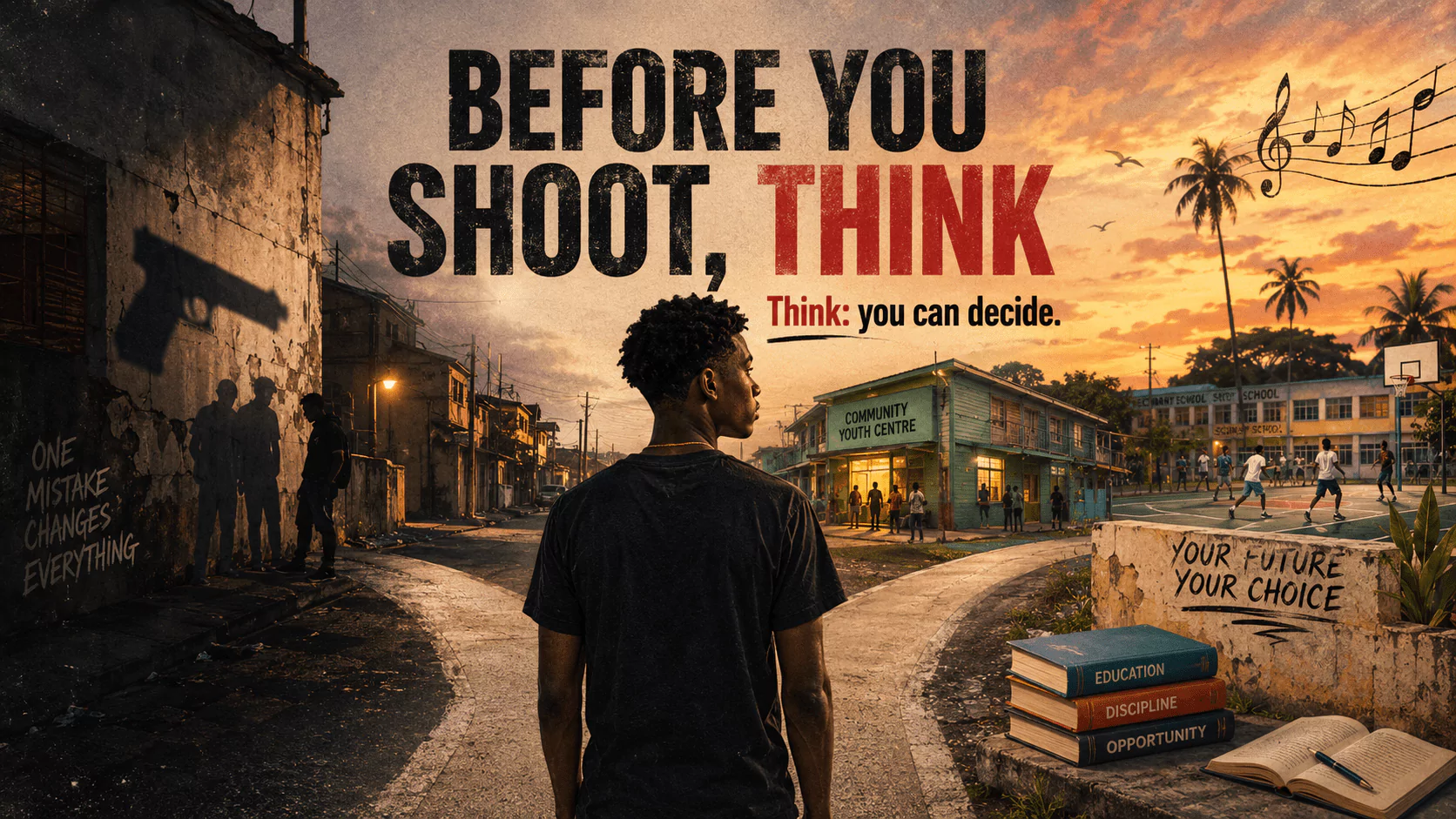
Before You Shoot, Think: An Open Letter to the Young People of Antigua and Barbuda
By Dario Item

From Captive Child to Russian General: Hannibal, the Unconquered Mind and the Unfinished Work of Emancipation
By Editorial Staff
LETTER: Our Children Need Extra Protection
By Editorial Staff

Water, Flour, And Smoke: Assertion Is Not Fact—And Propaganda Is Not Proof | EDITORIAL
By Editorial Staff
Comments (9)
Jim Jones September 13, 2024, 11:03 AM
Stephen September 13, 2024, 11:06 AM
Martha September 13, 2024, 11:27 AM
Kieron September 13, 2024, 11:28 AM
Bryon September 13, 2024, 11:30 AM
Yanick September 13, 2024, 12:50 PM
Teacher for Life September 13, 2024, 4:58 PM
anon September 14, 2024, 6:04 AM
Good has nothing to do with evil. Sure, we should put in some work to solving social problems while trusting God to have our backs, but we should only use measures that are clearly good. Encouraging abortion encourages disrespect of human life. You can’t demand that youths stop disrespecting human life by committing violent acts whilst simultaneously promoting violent acts that are convenient to you or that you think should be followed because they are popular in some countries at this point in history. This inconsistency in values aka hypocrisy by many in society is part of the reason why those delinquent youths don’t take society and it’s so-called values seriously, hence the violence.
Cheryl September 14, 2024, 3:36 PM