
















The Cabinet say it plans to seek further talks with stakeholders as the National Minimum Wage Advisory Committee says it submitted a summary report to Cabinet recommending an increase to the national minimum wage.
Labour Minister Sir Steadroy Benjamin revealed the findings to fellow ministers, which did not include a specific figure.
“Cabinet has determined that there should be some additional consultations and discussions on the proposals in that report,” Director General for Communications in the Prime Minister’s Office, Maurice Merchant said.
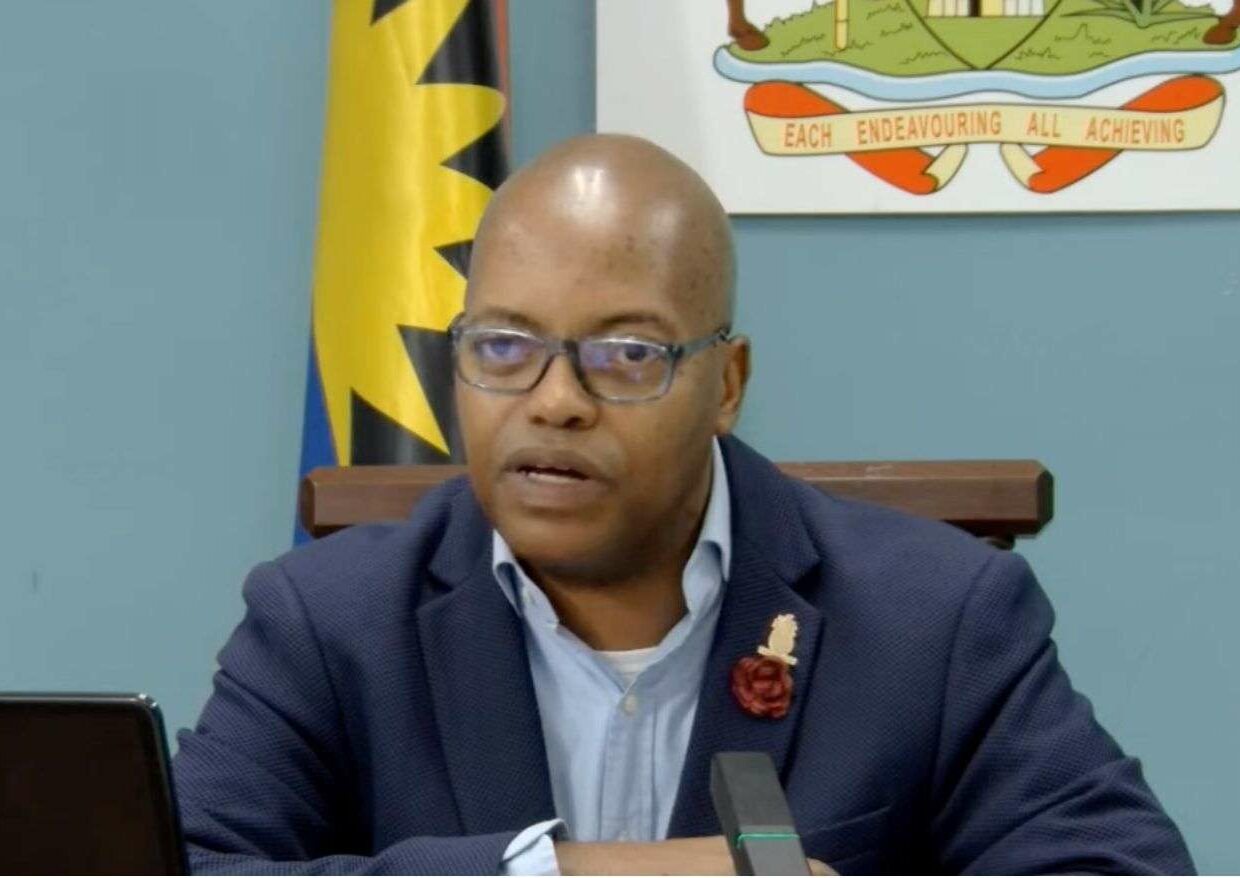
Director General of Communications in the Prime Minister’s Office, Maurice Merchant (screenshot of state media)
Chaired by Pedro Corbin and deputy chaired by Janelle Wenner-Watts, the committee consists of government officials, employer organisations, and trade unions and associations, and was convened to review the existing minimum wage framework following structured stakeholder consultations.
There was reportedly broad agreement among both the committee and Cabinet that the existing rate is no longer adequate.
“No longer is $9 per hour as minimum wage the thing to adequately serve economies, not only Antigua and Barbuda’s economy, but economies across the region within the OECS, as the cost of living has increased drastically since that $9 minimum wage was instituted,” Merchant noted.
The primary concern identified, however, centred on the size and speed of the proposed increase with the committee presenting a variety of options to the government from a two-year phase to a five-year timescale.
However, many stakeholders felt even two years was too compressed.
Cabinet, meanwhile, expressed the view that introducing a large adjustment in a single phase could have adverse effects on businesses, particularly smaller operators.
“The size of the increase may be a bit much, particularly to introduce in one fell swoop,” Merchant said, adding that a phased rollout over several years was seen as a more manageable path to reaching the committee’s recommended rate.

The committee itself recommended a structured implementation period of between four and five years, with alignment to existing union contracts cited as a key consideration.
Sector-specific impacts were also examined, particularly within hospitality and tourism, where workers already receive service charges and tips that effectively push hourly compensation above the base rate.
The potential impact on employment levels was also a central discussion point. Merchant acknowledged that businesses would need time to assess how a wage increase would affect staffing decisions.
“Would they have to let go of individuals to meet their budgets?” he said, underscoring the rationale for a gradual approach.
Stakeholder input was gathered through structured consultations and surveys across key sectors including hospitality, tourism services, and associated industries.
Further consultations are expected in the coming weeks as the government works toward a final determination on both the rate and timeline for implementation.



I understand they have to phase it in, but workers suffering right now.
IT SHOULD BE NOTHING LESS THAN $12 ESPECIALLY WITH WHATS HAPPENING RIGHT NOW
Finally! $9 an hour cannot survive in Antigua anymore. Everything expensive now. GOOOD MOVE
Hospitality workers might be okay with tips but what about cleaners, security and retail workers?