












Antiguan and Barbudan communications specialist and mental health advocate Chaneil C. Imhoff has begun her first assignment as Caribbean Ambassador for the Global Organization for Heritage, Environment and Tourism Development (GOHETD), representing the organisation at a major regional conference on reparatory justice in Barbados.
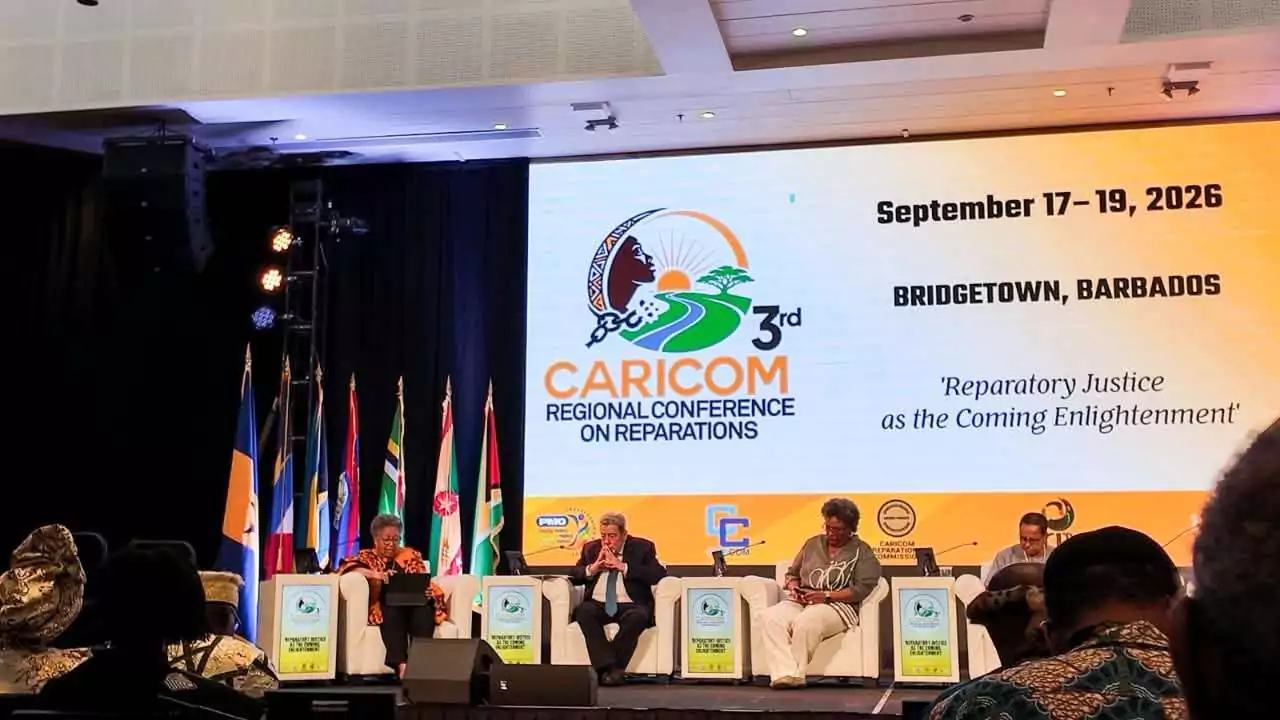
Imhoff is attending the Third CARICOM Regional Conference on Reparations, being held from September 17 to 19 at the Wyndham Grand Barbados Sam Lord’s Castle Resort under the theme, “Reparatory Justice as the Coming Enlightenment.”
The conference is organised by the CARICOM Secretariat and the CARICOM Reparations Commission, with support from the Government of Barbados and the Barbados Reparations Task Force.
Her participation forms part of GOHETD’s regional outreach efforts, with particular attention to heritage preservation, responsible tourism, environmental development and youth involvement.
During the conference’s opening dialogue on the global reparatory justice movement, Imhoff highlighted the need for reparations to move beyond moral support and translate into practical improvements in people’s lives.
She identified stronger cooperation between the Caribbean, Africa and the diaspora, recognition of Rastafari’s longstanding advocacy, and the relationship between reparatory justice and climate justice as key themes emerging from the discussions.
Among the proposals captured in her session notes were the establishment of national technical teams of historians and economists to document historical harms and develop specific demands, as well as a global petition to mobilise public support.
Imhoff also pointed to the responsibility of governments and institutions, including churches, to contribute to meaningful repair while acknowledging the Caribbean’s own responsibility to pursue self-repair.

“Reparatory justice must translate into changes that people can see and experience in their lives,” Imhoff said.
“That includes access to education, the protection of our heritage and a meaningful role for communities in deciding what development should look like. These priorities connect directly with the work I am undertaking through GOHETD.”
The conference programme features regional and international voices, including CARICOM Secretary-General Dr. Carla Barnett, Barbados Prime Minister Mia Mottley, Professor Sir Hilary Beckles and Antigua and Barbuda’s Ambassador Dorbrene O’Marde.
Sessions are addressing issues such as Pan-African reparations jurisprudence, Indigenous rights, recognition and resettlement, and the role of international institutions in advancing reparatory justice.
Imhoff said the discussions reinforced the importance of recognising the distinct histories and priorities of Indigenous peoples and ensuring that Rastafari and other communities have a meaningful role in shaping heritage and development initiatives.
“The people who have preserved our culture and sustained the demand for justice must help shape what comes next,” she added.
“Our responsibility is to ensure that heritage and development initiatives respect their knowledge, strengthen their participation and create opportunities within their communities.”
The Barbados conference follows previous CARICOM reparations gatherings held in St. Vincent and the Grenadines in 2013 and Antigua and Barbuda in 2014.
Through her assignment, Imhoff is expected to identify potential partnerships and recommendations to guide GOHETD’s future engagement across the Caribbean.
She is also the founder of the Wadadli Initiative for Self-care and Healing (WISH), with professional experience spanning communications, media production, mental health advocacy and community development in Antigua and Barbuda.



0 Comments